Introduction
Urban sociology examines how social life, power relations, culture, economy, and inequality are shaped within cities. European metropolitan centres provide particularly rich cases because of their long histories, layered social structures, and contemporary global roles. Among them, Paris, Berlin, and London stand out as three global cities with distinct urban trajectories.
Although all three are major political, economic, and cultural hubs, their urban forms reflect different historical experiences—revolutionary centralization in Paris, division and reunification in Berlin, and imperial expansion and globalization in London. This article analyzes these cities from an urban sociological perspective, focusing on history, class structure, migration, spatial segregation, governance, culture, and contemporary challenges.
Understanding Urban Sociology in the European Context
Urban sociology, influenced by thinkers like Georg Simmel, Max Weber, and the Chicago School, emphasizes how urban spaces shape social interaction and identity. European cities differ from many American cities due to:
- Older historical cores
- Strong welfare-state traditions
- Dense public transport systems
- Clearer symbolic and political centers
Paris, Berlin, and London illustrate how cities are not merely physical spaces but social products shaped by power, ideology, and collective memory.
Urban Sociology of Paris
Historical Urban Formation
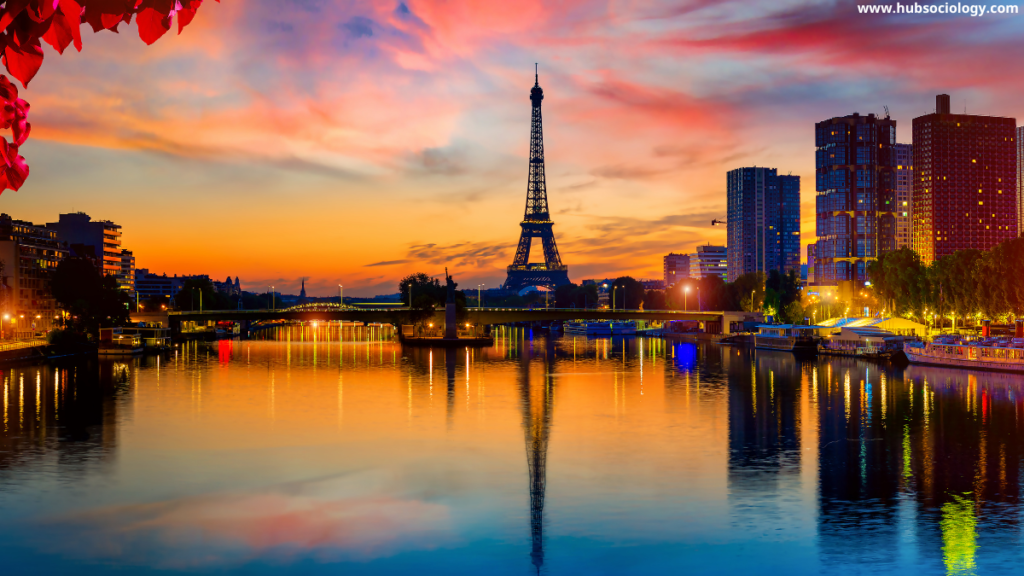
Paris’s urban structure was dramatically shaped in the 19th century by Baron Haussmann’s redesign under Napoleon III. Broad boulevards, monumental architecture, and centralized planning transformed Paris into a symbol of modernity and state power. Sociologically, this reorganization displaced working-class populations to the outskirts while consolidating elite control over the city center.
Class and Spatial Inequality
Paris exhibits a clear socio-spatial divide:
- Inner Paris (arrondissements): Dominated by middle and upper classes, cultural elites, and tourists.
- Banlieues (suburbs): Home to working-class populations, immigrants, and ethnic minorities.
The banlieues have become symbolic of exclusion, unemployment, and marginalization. Urban sociologists view them as spaces where structural inequality, racism, and state neglect intersect.
Migration and Identity
Post-colonial migration from North and West Africa has deeply shaped Parisian urban life. Immigrant communities contribute to cultural diversity but also face discrimination, policing, and limited upward mobility. Periodic unrest in the banlieues highlights tensions between republican ideals of equality and lived realities of exclusion.
Governance and Urban Policy
Paris follows a centralized model of urban governance, with strong state involvement in housing, transport, and urban renewal. Large-scale social housing projects aimed at inclusion often inadvertently reinforce segregation, a key sociological critique.
Urban Sociology of Berlin
A City Shaped by Division
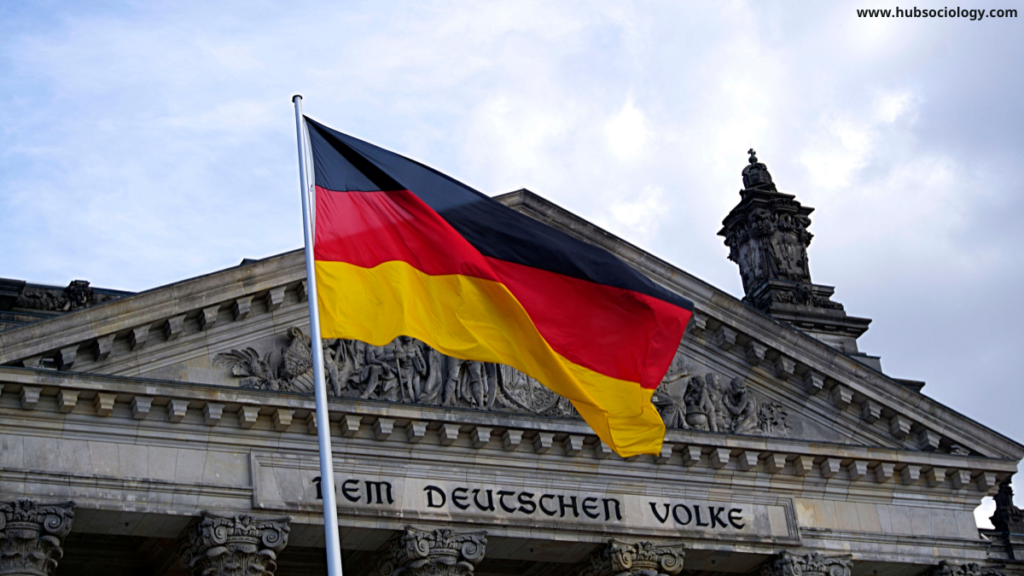
Berlin’s urban sociology cannot be separated from its Cold War history. The division between East and West Berlin (1961–1989) created two contrasting urban systems—capitalist and socialist. After reunification, Berlin faced the challenge of integrating these divergent social, economic, and spatial realities.
Post-Socialist Urban Transformation
Since reunification, Berlin has undergone rapid transformation:
- Deindustrialization and creative economy growth
- Urban regeneration of former industrial zones
- Rising property values and gentrification
Neighborhoods like Kreuzberg and Prenzlauer Berg became symbols of counterculture but later sites of displacement for working-class and migrant residents.
Migration and Multiculturalism
Berlin hosts significant immigrant populations, particularly from Turkey, the Middle East, and Eastern Europe. Unlike Paris’s assimilationist model, Berlin increasingly embraces multicultural urban policies. Yet inequalities persist in education, housing, and employment.
Urban Culture and Social Life
Berlin is often portrayed as a “creative city,” attracting artists, students, and entrepreneurs. Sociologically, this highlights how symbolic capital and cultural production shape urban economies—but also how creativity-driven development can deepen inequality.
Urban Sociology of London
Imperial Roots and Global City Status
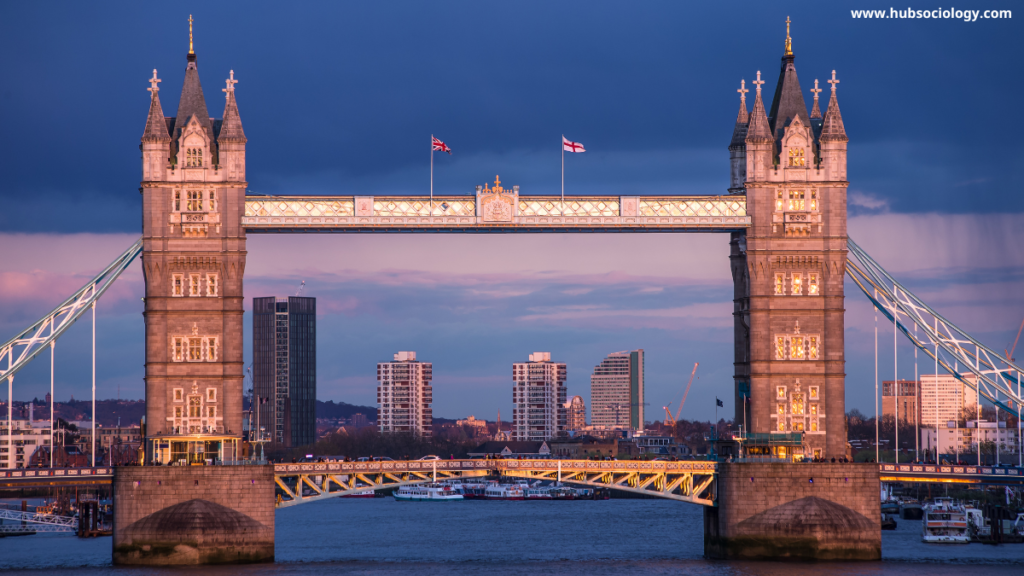
London’s urban structure reflects its imperial past and contemporary role as a global financial center. Sociologist Saskia Sassen categorizes London as a “global city,” where finance, migration, and transnational networks dominate urban life.
Extreme Social Polarization
London displays stark inequality:
- Affluent areas: Canary Wharf, Kensington, and Chelsea
- Deprived zones: Parts of East and South London
Housing affordability is a major crisis, with rising rents and declining social housing. Urban sociologists argue that neoliberal policies have intensified class divisions.
Migration and Super-Diversity
London is one of the world’s most multicultural cities. Migration from former colonies, Europe, Africa, and Asia has produced what sociologists call “super-diversity”—multiple ethnicities, languages, and identities coexisting within small areas.
While diversity enriches cultural life, it also raises questions of integration, social cohesion, and inequality, particularly after Brexit.
Governance and Urban Inequality
London’s governance model combines local councils with a powerful global market. Urban development often prioritizes investors over residents, leading to displacement and protest movements demanding the “right to the city.”
Comparative Sociological Analysis
1. Urban Form and Planning
- Paris: Centralized planning, symbolic architecture, strong state role
- Berlin: Fragmented, experimental, shaped by historical rupture
- London: Market-driven, finance-oriented, spatially polarized
2. Class and Inequality
All three cities exhibit inequality, but patterns differ:
- Paris: Center–periphery divide
- Berlin: Gentrification-driven displacement
- London: Extreme wealth gaps within close proximity
3. Migration and Multiculturalism
- Paris: Assimilationist republican model
- Berlin: Emerging multicultural inclusion
- London: Super-diverse, pluralistic urban society
4. Culture and Identity
Each city constructs a distinct urban identity:
- Paris as cultural and political capital
- Berlin as creative and alternative hub
- London as global, cosmopolitan metropolis
Contemporary Urban Challenges
Housing Crisis
Rising rents, shrinking social housing, and speculative development affect all three cities. Housing has become a key site of urban struggle.
Social Exclusion and Segregation
Despite welfare systems, marginalized groups remain concentrated in disadvantaged neighborhoods, reinforcing cycles of poverty.
Sustainability and Urban Futures
Climate change, transport congestion, and environmental justice increasingly shape urban policy debates, linking sociology with urban planning and ecology.
Conclusion
From an urban sociological perspective, Paris, Berlin, and London reveal how cities are shaped by history, power, and social relations. While all three are global cities, their urban experiences differ due to political systems, planning models, and cultural ideologies.
Paris illustrates centralized state power and post-colonial inequality, Berlin reflects the legacy of division and creative transformation, and London embodies global capitalism and extreme social polarization. Together, these cities demonstrate that urban spaces are not neutral backdrops but active forces shaping social life, identity, and inequality.
Understanding their urban sociology deepens our insight into contemporary European societies and the broader challenges facing cities in the 21st century.
FAQs on Urban Sociology
- What is Urban Sociology?
Urban Sociology is a branch of sociology that studies social life, interactions, institutions, and problems in urban areas, focusing on how cities shape human behavior and social structures. - Why is Urban Sociology important in the modern world?
Urban Sociology helps us understand issues like migration, housing, inequality, crime, and governance in rapidly growing cities. - How does Urban Sociology explain social inequality in cities?
Urban Sociology shows how class, race, and power relations create spatial segregation, unequal access to resources, and uneven development within cities. - What is the relationship between Urban Sociology and urbanization?
Urban Sociology analyzes the social consequences of urbanization, including population concentration, cultural change, and transformation of social institutions. - How does Urban Sociology study migration in cities?
Urban Sociology examines rural–urban migration, international migration, ethnic enclaves, integration, and the challenges migrants face in urban settings. - What role does culture play in Urban Sociology?
Urban Sociology highlights cities as cultural centers where art, lifestyles, identities, and subcultures are produced and contested. - How does Urban Sociology explain urban poverty?
Urban Sociology links urban poverty to structural factors such as unemployment, housing inequality, weak welfare policies, and spatial exclusion. - What is spatial segregation in Urban Sociology?
Spatial segregation refers to the physical separation of social groups in cities based on class, ethnicity, or race, a key concern of Urban Sociology. - How is housing studied in Urban Sociology?
Urban Sociology studies housing in terms of affordability, gentrification, homelessness, state policies, and residents’ right to the city. - What is gentrification according to Urban Sociology?
In Urban Sociology, gentrification is the process where affluent groups move into urban neighbourhoods, raising property values and displacing existing residents.