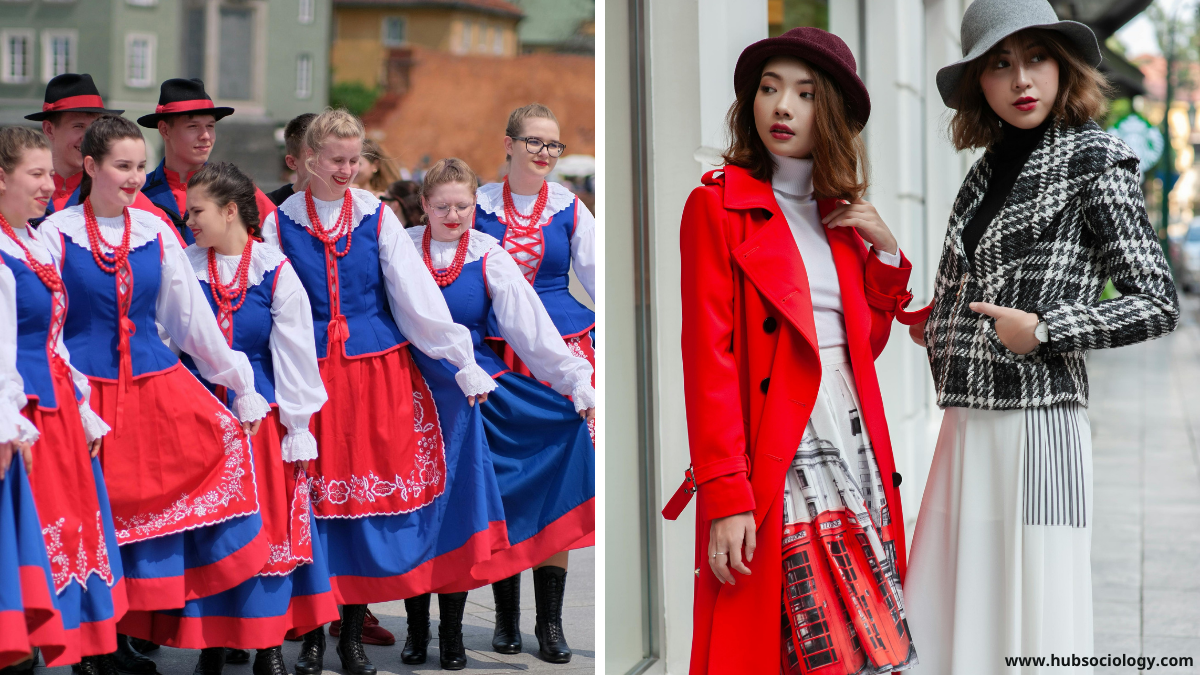
Introduction
The tension between tradition and modernity in contemporary Europe is one of the most defining sociological themes in contemporary Europe. As European societies undergo rapid technological advancement, economic restructuring, and cultural globalization, long-standing traditions related to family, religion, community life, and cultural identity continue to persist—sometimes harmoniously, sometimes in conflict. This dynamic interaction between the old and the new shapes social institutions, individual identities, and collective values across the continent of Europe.
From rural villages preserving centuries-old customs to metropolitan cities driven by digital capitalism and multiculturalism, Europe presents a complex sociological landscape. This article examines how tradition and modernity coexist, clash, and transform each other in contemporary European societies, using classical and modern sociological theories alongside real-world social changes.

Understanding Tradition and Modernity: A Sociological Framework
Tradition in Sociology
Tradition refers to inherited beliefs, customs, practices, and social norms passed down through generations. In Europe, traditions are deeply rooted in:
- Religious institutions (Christianity, Judaism, Islam)
- Family structures and kinship patterns
- National and regional cultures
- Language, folklore, and rituals
Classical sociologist Émile Durkheim viewed tradition as a source of social cohesion, particularly in societies bound by shared moral values and collective conscience.
Modernity in Sociology
Modernity represents a shift toward rationality, scientific thinking, individualism, industrialization, and bureaucratic governance. Max Weber emphasized rationalization as the hallmark of modern society, where efficiency and calculation often replace emotional and traditional decision-making.

In Europe, modernity manifests through:
- Technological innovation
- Secularization
- Urbanization
- Capitalist economies
- Expansion of human rights and democracy
Historical Roots of the Tradition–Modernity Divide in Europe
Europe’s encounter with modernity began with the Enlightenment, Industrial Revolution, and the rise of nation-states. These historical processes weakened feudal traditions while promoting scientific reasoning, secular governance, and individual freedoms.
However, unlike some regions where modernization led to the near-erasure of tradition, Europe retained many cultural practices. Sociologically, this reflects a hybrid model of modernization, where tradition adapts rather than disappears.
Family and Kinship: From Tradition to Choice
Traditional Family Structures
Historically, European families were patriarchal, extended, and closely tied to religious norms. Marriage was considered a social duty, and gender roles were clearly defined.
Modern Family Patterns
In contemporary Europe, sociological data shows:
- Rise of nuclear and single-person households
- Increasing acceptance of cohabitation and same-sex families
- Declining marriage and fertility rates
- Delayed parenthood
Yet, tradition persists. In Southern and Eastern Europe, family solidarity and intergenerational living remain strong. This coexistence reflects what sociologists call “negotiated modernity”, where individuals selectively adopt modern values while retaining traditional emotional bonds.
Religion and Secularism: Faith in a Modern Age
Decline of Institutional Religion
Modern Europe is often described as secular. Church attendance has declined, and religious authority over law and education has weakened, especially in Western and Northern Europe.
Persistence of Religious Traditions
Despite secularization:
- Religious festivals remain central to cultural identity
- Christianity continues to influence moral debates
- Islam has become a visible part of European public life due to migration
This creates sociological tensions around multiculturalism, national identity, and integration, particularly in debates on dress codes, religious symbols, and public space.
Culture, Identity, and National Traditions
Cultural Preservation
European nations invest heavily in preserving language, heritage sites, folk music, and traditional arts. These efforts reflect resistance to cultural homogenization caused by globalization.
Modern Cultural Expressions
At the same time:
- Youth culture embraces global music, fashion, and digital media
- Social media reshapes identity formation
- English increasingly dominates communication
Sociologist Anthony Giddens argues that modern identity is reflexive—individuals constantly reinterpret traditions in light of new information and experiences.
Economy and Work: Stability vs Flexibility
Traditional Work Ethics
European work traditions emphasized:
- Long-term employment
- Skilled craftsmanship
- Strong labor unions
- Welfare-state protection
Modern Economic Transformations
Contemporary Europe faces:
- Gig economy and flexible labor
- Automation and AI
- Decline of industrial jobs
- Rise of service and knowledge sectors
This transition creates generational divides. Older workers often value job security rooted in tradition, while younger generations prioritize flexibility and self-expression—illustrating a sociological conflict between stability and adaptability.

Politics and Governance: Tradition under Pressure
Traditional Political Institutions
Europe’s political traditions include parliamentary democracy, constitutional monarchy, and welfare-state models.
Modern Challenges
Globalization, migration, and digital politics have transformed governance:
- Rise of populism and nationalism
- Skepticism toward supranational bodies like the European Union
- Increased citizen activism through digital platforms
Modern political movements often invoke tradition (nation, culture, sovereignty) while using modern tools such as social media—highlighting a paradoxical blend of old symbols and new strategies.
Education: Knowledge, Values, and Social Change
Traditional European education emphasized discipline, classical knowledge, and national history. Modern education focuses on:
- Critical thinking
- STEM and digital skills
- Global citizenship
- Gender and social equality
However, debates continue over curriculum content, moral education, and cultural values, showing how schools become key sites where tradition and modernity are negotiated.
Migration, Multiculturalism, and Social Integration
Migration has intensified the tradition–modernity debate in Europe. Migrants bring their own traditions, challenging established cultural norms while enriching social diversity.
Sociologically, this raises questions about:
- Assimilation vs multiculturalism
- Cultural relativism
- Social cohesion
- Identity politics
Some European societies adapt through inclusive policies, while others respond with cultural anxiety and exclusionary nationalism.
Gender Roles: Tradition Rewritten
Traditional European gender roles assigned women to domestic spheres and men to public life. Modern Europe has seen:
- Expansion of women’s education and employment
- Legal gender equality
- LGBTQ+ rights recognition
Yet, wage gaps, care burdens, and cultural expectations persist. Feminist sociology highlights how tradition continues to influence gender norms even within modern institutional frameworks.
Media, Technology, and Everyday Life
Digital technology accelerates modernity by:
- Changing communication patterns
- Weakening traditional authority
- Creating virtual communities
At the same time, digital platforms revive tradition through:
- Online religious services
- Cultural revival movements
- Heritage content
Thus, technology does not simply erase tradition; it often reshapes and redistributes it.
Sociological Interpretation: Conflict, Adaptation, or Synthesis?
From a sociological standpoint, tradition vs modernity in Europe should not be seen as a zero-sum conflict. Instead, it represents:
- Conflict: When traditional values clash with modern norms (e.g., gender, religion)
- Adaptation: When traditions evolve to fit modern contexts
- Synthesis: When new social forms combine elements of both
Contemporary Europe increasingly reflects a post-traditional society, where individuals choose which traditions to follow rather than inheriting them unquestioned.
Conclusion
Tradition and modernity in contemporary Europe exist in a complex, dynamic relationship. While modernization has transformed European societies economically, politically, and culturally, tradition remains a powerful force shaping identity, values, and social cohesion.
Rather than disappearing, European traditions are being reinterpreted, negotiated, and sometimes contested within modern frameworks. This ongoing dialogue between past and present defines Europe’s sociological character—making it a region where history and innovation continually interact.
Understanding this balance is essential for analyzing Europe’s future social development, cultural resilience, and democratic stability.
FAQs: Modernity in Contemporary Europe
- What is meant by modernity in contemporary Europe?
Modernity in contemporary Europe refers to social changes driven by industrialization, digitalization, individualism, secularism, and rational thinking that reshape traditional institutions and lifestyles. - How does modernity affect traditional European values?
Modernity in Contemporary Europe challenges traditional values related to family, religion, and community, but often leads to their adaptation rather than complete disappearance. - Is modernity in contemporary Europe the same across all countries?
No, modernity varies across Europe. Western and Northern Europe show higher levels of secularism and individualism, while Southern and Eastern Europe retain stronger traditional influences. - How has Modernity in Contemporary Europe changed family life in contemporary Europe?
Modernity has led to smaller families, delayed marriage, cohabitation, declining birth rates, and greater acceptance of diverse family forms. - What role does technology play in modernity in contemporary Europe?
Technology accelerates Modernity in Contemporary Europe by transforming communication, work, education, and social interaction, while also reshaping traditional practices. - How is religion influenced by modernity in contemporary Europe?
Modernity in Contemporary Europe has reduced the institutional power of religion, but religious traditions still influence cultural identity, festivals, and moral debates. - Does modernity in contemporary Europe promote individualism?
Yes, modernity strongly promotes individual choice, personal freedom, and self-identity over collective and traditional obligations. - How does modernity impact European youth culture?
Modernity shapes youth culture through global media, digital platforms, flexible lifestyles, and changing attitudes toward work, relationships, and identity. - What is the relationship between globalization and modernity in contemporary Europe?
Globalization strengthens modernity by increasing cultural exchange, migration, and economic integration, while also creating tensions with local traditions. - How has modernity affected work and employment in Europe?
Modernity has shifted employment toward flexible jobs, the gig economy, automation, and knowledge-based work, reducing traditional lifelong employment. - Is modernity in contemporary Europe responsible for cultural conflict?
Yes, modernity can generate conflict when modern values clash with traditional norms, especially regarding gender roles, religion, and national identity. - How does education reflect modernity in contemporary Europe?
Modern education emphasizes critical thinking, digital skills, innovation, and global awareness, often challenging traditional moral and cultural teachings. - What is meant by a post-traditional society in contemporary Europe?
A post-traditional society allows individuals to choose which traditions to follow rather than accepting them automatically. - How does modernity influence gender roles in contemporary Europe?
Modernity promotes gender equality, women’s participation in public life, and LGBTQ+ rights, though traditional expectations still persist in some contexts. - Can tradition and modernity coexist in contemporary Europe?
Yes, modernity in contemporary Europe often coexists with tradition through adaptation, reinterpretation, and cultural synthesis rather than complete replacement.
1 thought on “Tradition vs Modernity in Contemporary Europe: A Sociological Perspective”