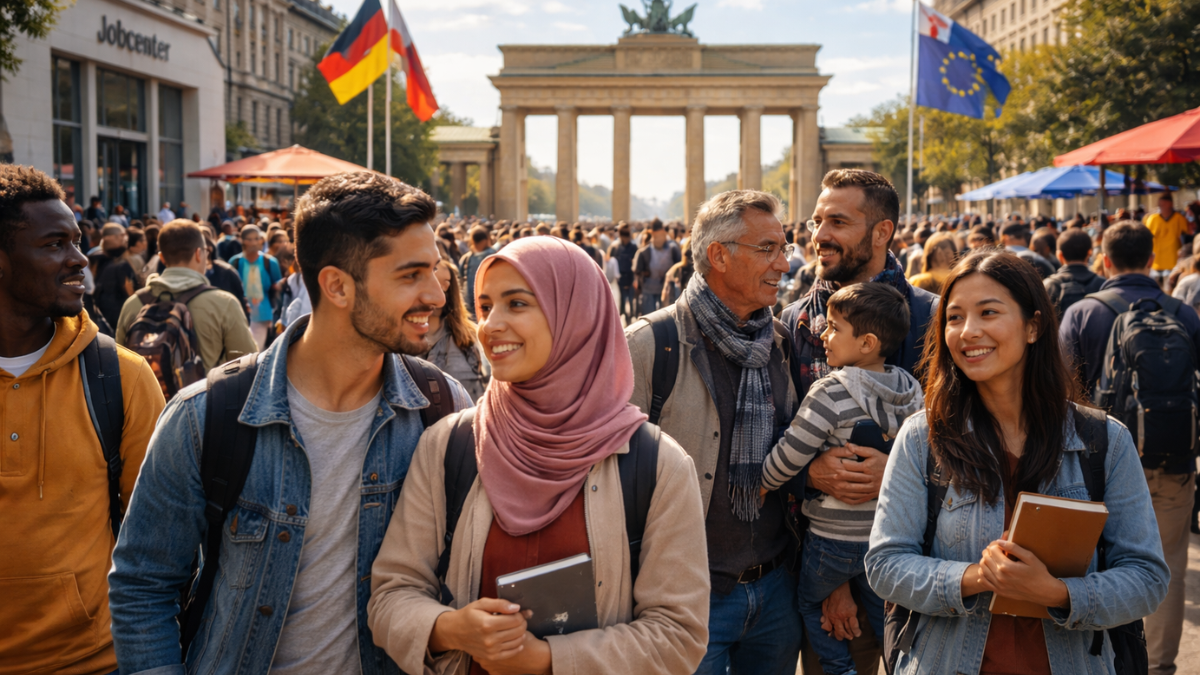
Migration has become one of the defining social processes of the twenty-first century, reshaping nations economically, culturally, and politically. Germany, as Europe’s largest economy and one of its most influential states, has experienced significant migration waves over the last seven decades. From post-war labor recruitment programs to the recent arrival of refugees from conflict zones, migration has profoundly transformed German society. The question is no longer whether Germany is a country of immigration, but how it manages migration and integration challenges in Germany in a way that promotes social cohesion, equality, and democratic stability.
This article examines migration and integration challenges in Germany from a sociological perspective. It explores historical patterns, theoretical interpretations, structural inequalities, cultural debates, and policy responses. Understanding these dimensions is essential for evaluating how German society is evolving and how it may continue to change in the future.
Historical Context of Migration in Germany

The history of migration in modern Germany began in earnest during the post-World War II economic boom. In the 1950s and 1960s, West Germany signed recruitment agreements with countries such as Italy, Turkey, and Greece to bring in so-called Gastarbeiter (guest workers). These workers were expected to stay temporarily, fill labor shortages, and eventually return home. However, many settled permanently, brought their families, and established communities.
After reunification in 1990, Germany experienced new migration flows from Eastern Europe. Later, in 2015, Germany became a central destination during the European refugee crisis, particularly for Syrians fleeing civil war. Under the leadership of Angela Merkel, Germany adopted a relatively open policy, welcoming over one million asylum seekers.
These historical waves highlight a key sociological theme: migration in Germany has shifted from temporary labor mobility to long-term settlement and multicultural transformation. Despite early reluctance to acknowledge itself as an immigration country, Germany now faces the complex task of integrating diverse populations into its social, economic, and political systems.
Theoretical Approaches to Integration
Sociologists use several theoretical frameworks to analyze migration and integration challenges in Germany. Classical assimilation theory suggests that migrants gradually adopt the cultural norms, language, and values of the host society. Over time, ethnic differences diminish, and migrants become indistinguishable from the majority population.
However, critics argue that assimilation is neither linear nor uniform. Segmented assimilation theory proposes that integration pathways vary depending on class, education, ethnicity, and state policies. Some groups achieve upward mobility, while others experience downward mobility and social exclusion.
Multiculturalism offers another perspective, emphasizing the coexistence of multiple cultural identities within one society. Instead of demanding cultural uniformity, multiculturalism supports the recognition of ethnic diversity. Yet this model has also faced criticism in Germany, where debates about “parallel societies” and cultural integration have intensified.
From a structural perspective, integration is not solely about cultural adaptation but about access to institutions—education, labor markets, housing, and political participation. Therefore, migration and integration challenges in Germany must be understood as systemic rather than purely cultural issues.
Economic Integration and Labor Market Inequality
Economic participation is a central dimension of integration. Germany’s economy relies heavily on migrant labor, particularly in sectors such as manufacturing, healthcare, construction, and services. Migrants contribute significantly to tax revenues and help mitigate demographic decline in an aging society.

Despite these contributions, labor market inequality persists. Migrants and refugees often face higher unemployment rates, lower wages, and limited career mobility. Language barriers, non-recognition of foreign qualifications, and discrimination in hiring processes create structural disadvantages.
Sociological research shows that even second-generation immigrants—those born and educated in Germany—sometimes encounter subtle forms of exclusion. Name-based discrimination in job applications has been documented, indicating that integration is not merely about skills but also about social perceptions and stereotypes.
Furthermore, the concentration of migrants in low-income neighborhoods reinforces cycles of inequality. Spatial segregation affects access to quality schools, social networks, and economic opportunities, thereby complicating long-term integration.
Education and Social Mobility
Education plays a critical role in shaping life chances. Germany’s early tracking system, which separates students into different educational paths at a young age, has been criticized for disproportionately affecting children from migrant backgrounds.
Children of immigrants are statistically overrepresented in lower-tier schools and underrepresented in academic tracks leading to university. Sociologists argue that this reflects both socioeconomic disadvantages and institutional biases. Teachers’ expectations, parental familiarity with the education system, and language proficiency all influence educational outcomes.
However, there have been improvements. Many second-generation immigrants achieve high levels of education and professional success, challenging earlier pessimistic narratives. Universities in cities such as Berlin, Munich, and Hamburg now host increasingly diverse student populations, reflecting gradual social mobility.
The education system thus becomes a site of both inequality and opportunity. Addressing migration and integration challenges in Germany requires sustained investment in inclusive schooling, language support programs, and anti-discrimination measures.
Cultural Identity and Social Belonging
Cultural integration remains one of the most debated aspects of migration in Germany. Questions of national identity, citizenship, and belonging have become politically sensitive. Historically, German citizenship law was based on jus sanguinis (right of blood), meaning citizenship was tied to ancestry rather than birthplace. Reforms in the early 2000s introduced elements of jus soli (right of soil), enabling children born in Germany to foreign parents to acquire citizenship under certain conditions.
Identity formation among migrants is often complex. Many individuals develop hybrid identities—simultaneously German and Turkish, German and Syrian, or German and Polish. Sociologically, this reflects the concept of transnationalism, where migrants maintain connections across borders while integrating locally.
Yet public debates sometimes frame integration in binary terms: either migrants fully adopt “German values” or remain outsiders. Media representations and political rhetoric can amplify fears about cultural incompatibility, particularly concerning Islam. This dynamic has fueled the rise of right-wing populist movements and parties that question multicultural policies.
At the same time, civil society initiatives, intercultural dialogue programs, and grassroots organizations promote inclusion and mutual understanding. Everyday interactions in workplaces, schools, and neighborhoods often demonstrate pragmatic coexistence rather than conflict.
Refugees and Humanitarian Challenges
The arrival of refugees in 2015 marked a turning point in migration discourse. Germany’s decision to accept large numbers of asylum seekers was praised internationally but also triggered domestic tensions.
Refugees face distinct integration challenges. Many arrive with interrupted education, trauma, and uncertain legal status. Access to housing, language courses, and employment is often delayed by bureaucratic procedures. Long asylum processes can hinder psychological well-being and economic self-sufficiency.
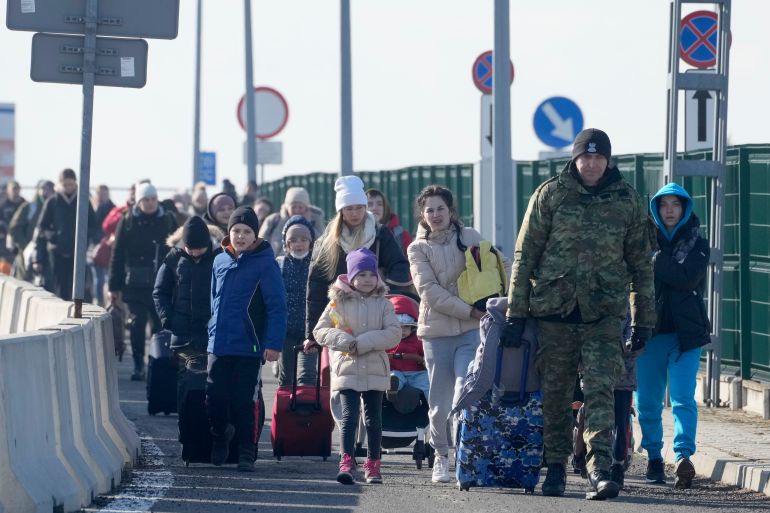
Nevertheless, numerous local communities mobilized to support newcomers. Volunteer networks, religious institutions, and NGOs provided assistance with language learning, job placement, and social orientation. These efforts highlight the role of social capital in facilitating integration.
Sociologically, the refugee experience underscores the intersection of migration with global inequality, war, and geopolitics. Migration and integration challenges in Germany cannot be separated from broader international dynamics.
Political Polarization and Public Opinion
Migration has become a central issue in German politics. Debates about border control, asylum law, and integration policies influence electoral outcomes and public discourse. The rise of populist parties reflects anxieties about cultural change, economic competition, and national sovereignty.
Public opinion surveys show ambivalence: while many Germans recognize the economic necessity of immigration, concerns about social cohesion and security persist. Media narratives can shape these perceptions, sometimes emphasizing isolated incidents over broader trends.
Polarization poses a challenge for democratic stability. When migration becomes a symbolic battlefield, constructive dialogue becomes difficult. Sociologists argue that inclusive political participation and transparent policy-making are crucial for reducing tensions.
Policy Responses and Future Directions
Germany has implemented various integration policies, including mandatory language courses, vocational training programs, and anti-discrimination laws. The Federal Office for Migration and Refugees coordinates many of these initiatives, aiming to balance humanitarian commitments with social stability.
Recent reforms have also targeted skilled migration to address labor shortages in technology and healthcare sectors. This shift reflects recognition that Germany’s aging population requires sustained immigration to maintain economic productivity.
However, effective integration requires more than formal policies. It depends on everyday practices of inclusion, institutional reforms, and public narratives that frame diversity as an asset rather than a threat.
Looking ahead, migration and integration challenges in Germany will likely intensify due to climate change, global inequality, and geopolitical conflicts. Preparing for these realities demands long-term strategies rooted in social justice and equality.
Conclusion
Migration has transformed Germany into a diverse, multicultural society. The process has generated economic benefits, cultural enrichment, and demographic renewal. Yet it has also exposed structural inequalities, cultural tensions, and political divisions.
From a sociological perspective, migration and integration challenges in Germany are not merely issues of individual adaptation but of institutional reform and social restructuring. Economic inequality, educational disparities, and identity politics intersect to shape integration outcomes.
The future of German society depends on its ability to reconcile diversity with cohesion. Policies promoting equal opportunities, combating discrimination, and fostering inclusive identities are essential. Ultimately, integration is a two-way process: migrants adapt to the host society, and the host society evolves in response to migration.
Germany’s experience offers valuable lessons for other nations grappling with similar dynamics. By addressing structural barriers and nurturing democratic dialogue, Germany can transform migration from a source of tension into a foundation for social innovation and solidarity.
FAQs – Focus Keyword: Challenges in Germany
- What are the main migration-related Challenges in Germany today?
The main Challenges in Germany include labor market inequality, educational disparities, housing shortages, cultural integration debates, and political polarization. - How do economic factors contribute to integration Challenges in Germany?
Economic Challenges in Germany arise from unemployment gaps, wage inequality, and difficulties in recognizing foreign qualifications. - Why is language considered one of the key Challenges in Germany?
Limited German language proficiency restricts access to education, employment, and social participation, making it a major integration barrier. - How does the education system create Challenges in Germany for migrant children?
Early academic tracking and social inequalities often disadvantage children from migrant backgrounds, affecting long-term mobility. - What role does discrimination play in migration-related Challenges in Germany?
Discrimination in hiring, housing, and public services intensifies social exclusion and deepens existing inequalities. - Are housing issues part of the broader Challenges in Germany?
Yes, affordable housing shortages and urban segregation are significant Challenges in Germany, particularly in major cities. - How do refugee arrivals increase social Challenges in Germany?
Refugee inflows require expanded infrastructure, social services, and employment programs, creating administrative and social pressures. - What political factors shape migration-related Challenges in Germany?
Political polarization and the rise of populist movements amplify debates about identity, borders, and national cohesion. - How do cultural identity debates influence Challenges in Germany?
Discussions about national identity, religion, and multiculturalism often intensify integration tensions. - Are second-generation immigrants affected by ongoing Challenges in Germany?
Yes, despite being born or raised in Germany, some still face discrimination and limited opportunities. - How does Germany’s aging population relate to economic Challenges in Germany?
While migration can solve labor shortages, integrating skilled workers effectively remains a challenge. - What social cohesion issues are linked to Challenges in Germany?
Social trust and mutual understanding may decline if integration policies fail to promote inclusion. - How does media representation affect public perception of Challenges in Germany?
Media framing can either reduce fear through balanced reporting or intensify anxiety by highlighting isolated incidents. - What institutional reforms can reduce Challenges in Germany?
Policy improvements in education, employment access, anti-discrimination laws, and housing can address structural inequalities. - What is the future outlook for migration-related Challenges in Germany?
The future will depend on inclusive policies, economic stability, and Germany’s ability to balance diversity with social unity.