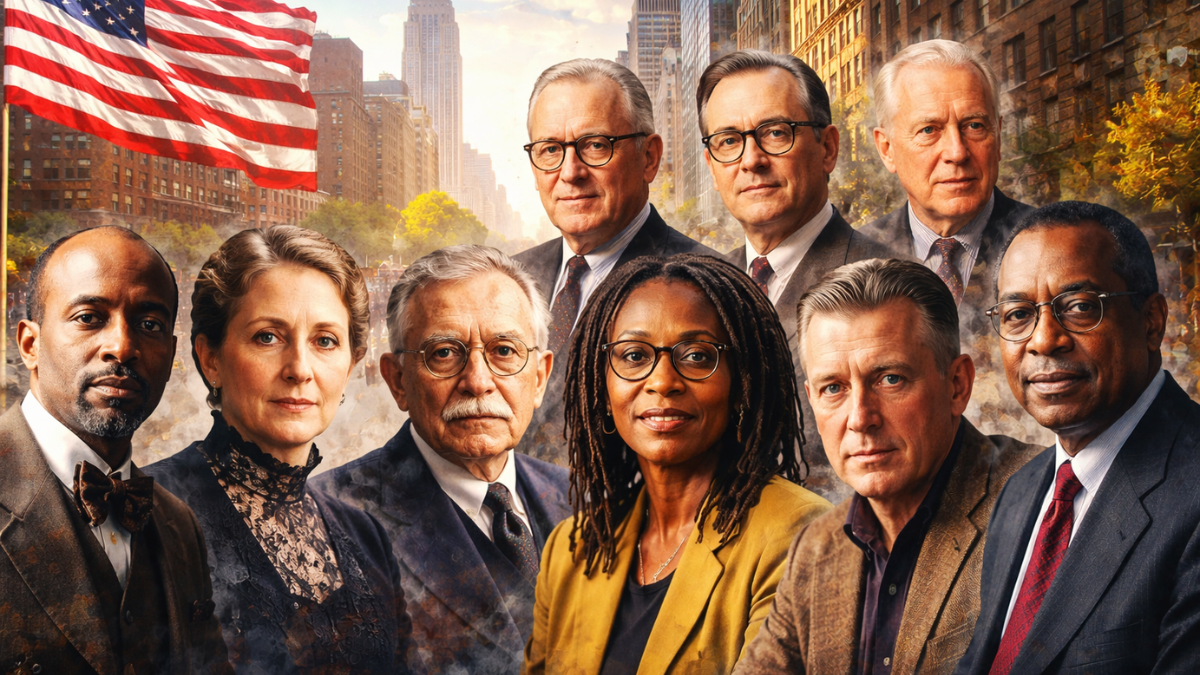
American society has long been a central subject of sociological inquiry. From the rise of industrial capitalism and urbanization to race relations, immigration, gender inequality, and globalization, sociologists have examined how social structures, institutions, and cultural values shape everyday life in the United States. The development of American sociology is deeply intertwined with the country’s historical transformations—slavery and emancipation, rapid industrial growth, the Great Depression, civil rights struggles, and contemporary debates about inequality and diversity.
This article explores major sociologists who studied American society, highlighting their theoretical contributions and empirical research. These scholars not only shaped sociology as a discipline but also influenced public policy, civil rights movements, and our understanding of democracy, inequality, and social change.
1. W.E.B. Du Bois
W.E.B. Du Bois stands as one of the most significant sociologists in the study of American society, particularly regarding race and inequality. His pioneering work challenged dominant racial ideologies and introduced rigorous empirical research into sociology.

Du Bois’s landmark book, The Philadelphia Negro (1899), was one of the first systematic sociological studies of an African American community. Through fieldwork, surveys, and statistical analysis, he demonstrated that racial inequality was not the result of inherent deficiencies but of structural discrimination and limited opportunities.
In The Souls of Black Folk (1903), Du Bois introduced the concept of “double consciousness,” describing how African Americans experience a divided identity—seeing themselves through their own perspective and through the prejudiced gaze of a white-dominated society. This idea remains central to discussions of identity, marginalization, and systemic racism.
Du Bois also emphasized the importance of education and political activism in achieving racial justice. As a co-founder of the NAACP, he combined scholarship with social action, embodying a model of engaged sociology.
2. Robert E. Park and the Chicago School
Robert E. Park was a leading figure of the Chicago School of Sociology, which emerged in the early twentieth century. The Chicago School focused on urban life, immigration, race relations, and social disorganization in rapidly growing American cities.
Park viewed the city as a “social laboratory” where different groups interacted, competed, and adapted. He developed the concept of the “race relations cycle,” describing stages of contact, conflict, accommodation, and assimilation among ethnic groups. His work reflected the intense immigration waves that shaped American urban centers during the early 1900s.
Under Park’s leadership, the Chicago School pioneered qualitative methods such as participant observation and case studies. Their studies of neighborhoods, gangs, and marginalized communities laid the groundwork for urban sociology.
3. Talcott Parsons
Talcott Parsons was one of the most influential sociological theorists of the mid-twentieth century. He developed structural functionalism, a theory that views society as a complex system of interrelated parts working together to maintain stability.
Parsons argued that institutions such as family, education, religion, and government perform essential functions for social order. In the context of American society, he saw shared values—particularly those emphasizing achievement, individualism, and meritocracy—as central to social integration.

His theory reflected the relative stability and economic growth of post-World War II America. Critics later argued that structural functionalism underestimated social conflict and inequality, but Parsons’ work shaped American sociology for decades.
4. Robert K. Merton
Robert K. Merton refined and extended functionalist theory while introducing new analytical concepts. He distinguished between manifest functions (intended consequences) and latent functions (unintended consequences) of social institutions.
Merton’s strain theory, developed in the context of American society, explained deviance as a result of the gap between culturally approved goals (such as financial success) and legitimate means of achieving them. In a society that emphasizes the “American Dream,” individuals who lack access to opportunities may turn to alternative or illegal means.
His work connected structural inequality with individual behavior, offering a nuanced explanation of crime, deviance, and social mobility.
5. C. Wright Mills
C. Wright Mills offered a critical perspective on American society, challenging dominant functionalist theories. In The Power Elite (1956), he argued that a small group of political, military, and corporate leaders held disproportionate power in the United States.
Mills introduced the concept of the “sociological imagination,” which encourages individuals to connect personal troubles with public issues. For example, unemployment should not be viewed merely as an individual failure but as linked to broader economic structures.
His work emphasized inequality, power concentration, and the erosion of democratic ideals. Mills remains influential in critical sociology and studies of political economy.
6. Herbert Blumer
Herbert Blumer developed symbolic interactionism, a micro-level theory focusing on everyday interactions and the meanings people assign to social reality. Blumer argued that society is constructed through shared symbols, language, and interpretation.
In studying American society, symbolic interactionists explored how identities—such as race, gender, and class—are socially constructed through interaction. Blumer’s work highlighted the importance of subjective experience and human agency.
This approach contributed significantly to studies of social movements, identity formation, and media representation in American culture.
7. Erving Goffman
Erving Goffman, though Canadian-born, made profound contributions to American sociology. In The Presentation of Self in Everyday Life (1959), he used a dramaturgical perspective to analyze social interaction as a theatrical performance.

Goffman argued that individuals manage impressions in different social settings, presenting themselves strategically. His studies of mental institutions, stigma, and total institutions revealed how power and labeling shape identities.
In the context of American society, Goffman’s insights help explain workplace dynamics, social media self-presentation, and the management of public and private identities.
8. Jane Addams
Jane Addams was both a sociologist and a social reformer. As founder of Hull House in Chicago, she worked closely with immigrants and the urban poor.
Her research combined empirical study with activism, focusing on poverty, labor rights, women’s suffrage, and child welfare. Addams emphasized the importance of community engagement and social responsibility.
She broadened sociology’s scope by integrating ethics, reform, and social justice into academic research, influencing the development of applied sociology in the United States.
9. Patricia Hill Collins
Patricia Hill Collins is a leading contemporary sociologist known for developing Black feminist thought. She introduced the concept of intersectionality—though originally coined by Kimberlé Crenshaw—which examines how race, class, gender, and other identities intersect to produce complex forms of inequality.
Collins analyzed American society through the lens of structural oppression and cultural representation. Her work highlights how systems of domination operate simultaneously and reinforce one another.
Her scholarship has significantly influenced feminist theory, race studies, and contemporary debates about social justice.
10. William Julius Wilson
William Julius Wilson examined urban poverty and racial inequality in late twentieth-century America. In The Truly Disadvantaged (1987), he argued that economic restructuring and deindustrialization contributed to concentrated poverty in inner cities.
Wilson shifted attention from purely cultural explanations of poverty to structural economic factors. He emphasized job loss, spatial isolation, and policy failures as key causes of inequality.
His research continues to inform discussions about urban policy, labor markets, and systemic racism.
Broader Contributions to Understanding American Society
These major sociologists collectively shaped our understanding of American society from multiple perspectives:
- Du Bois and Collins emphasized race and intersectionality.
- Park and the Chicago School analyzed urbanization and immigration.
- Parsons and Merton developed structural-functional explanations of stability and deviance.
- Mills critiqued power structures and elite dominance.
- Blumer and Goffman explored everyday interaction and identity.
- Wilson highlighted structural economic change and urban poverty.
- Addams integrated reform with research.
Together, they demonstrate that American society cannot be understood through a single theoretical lens. It requires analyzing structure and agency, macro-level institutions and micro-level interactions, stability and conflict, privilege and marginalization.
Conclusion
The study of American society has been enriched by diverse sociological traditions. From early empirical investigations of race and urban life to contemporary analyses of intersectionality and globalization, sociologists have consistently sought to explain how inequality, power, culture, and institutions shape the American experience.
Major sociologists who studied American society not only built theoretical frameworks but also engaged with pressing social issues—racial injustice, poverty, gender inequality, and democratic governance. Their work reminds us that sociology is not merely an academic discipline but a tool for critical reflection and social transformation.
Understanding their contributions allows students and scholars to critically evaluate current social challenges, including widening economic inequality, political polarization, and debates over immigration and identity. As American society continues to evolve, the insights of these sociologists remain vital for analyzing change and envisioning a more just and equitable future.
FAQs – Sociologists Who Studied American Society
1. Who are the major Sociologists Who Studied American Society?
Major Sociologists Who Studied American Society include W.E.B. Du Bois, Robert E. Park, Talcott Parsons, Robert K. Merton, C. Wright Mills, Jane Addams, Herbert Blumer, Erving Goffman, Patricia Hill Collins, and William Julius Wilson.
2. Why are Sociologists Who Studied American Society important?
Sociologists Who Studied American Society are important because they analyzed race, class, gender, urbanization, inequality, and power structures, helping us understand social problems and policy issues in the United States.
3. How did W.E.B. Du Bois contribute to Sociologists Who Studied American Society?
Du Bois contributed by conducting empirical research on race relations and introducing the concept of double consciousness, shaping race studies in American sociology.
4. What role did the Chicago School play among Sociologists Who Studied American Society?
The Chicago School focused on urban life, immigration, and social disorganization, making it central to early Sociologists Who Studied American Society.
5. How did Talcott Parsons influence Sociologists Who Studied American Society?
Parsons developed structural functionalism, explaining how American institutions maintain social order and stability.
6. What is strain theory in the work of Sociologists Who Studied American Society?
Strain theory, developed by Robert K. Merton, explains deviance as a result of the gap between cultural goals and institutional means in American society.
7. How did C. Wright Mills critique American society?
Among Sociologists Who Studied American Society, Mills criticized the concentration of power in political, corporate, and military elites.
8. What is symbolic interactionism in Sociologists Who Studied American Society?
Symbolic interactionism, developed by Herbert Blumer, studies everyday interactions and how individuals create social meanings.
9. How did Jane Addams contribute to Sociologists Who Studied American Society?
Jane Addams combined research with social reform, focusing on poverty, immigration, and women’s rights.
10. What is intersectionality in the context of Sociologists Who Studied American Society?
Intersectionality, developed in Black feminist thought and expanded by Patricia Hill Collins, explains how race, gender, and class intersect in American society.
11. How did William Julius Wilson analyze poverty?
Wilson, among leading Sociologists Who Studied American Society, emphasized structural economic changes and urban job loss as causes of concentrated poverty.
12. What methods did Sociologists Who Studied American Society use?
They used surveys, fieldwork, participant observation, statistical analysis, theoretical modeling, and critical analysis.
13. How do Sociologists Who Studied American Society explain inequality?
They explain inequality through structural factors such as capitalism, racism, gender discrimination, and institutional power.
14. How are Sociologists Who Studied American Society relevant today?
Their theories help explain current issues like racial injustice, economic inequality, political polarization, and identity politics.
15. What can students learn from Sociologists Who Studied American Society?
Students can learn how to apply sociological theories and methods to understand American institutions, social problems, and social change.