Introduction
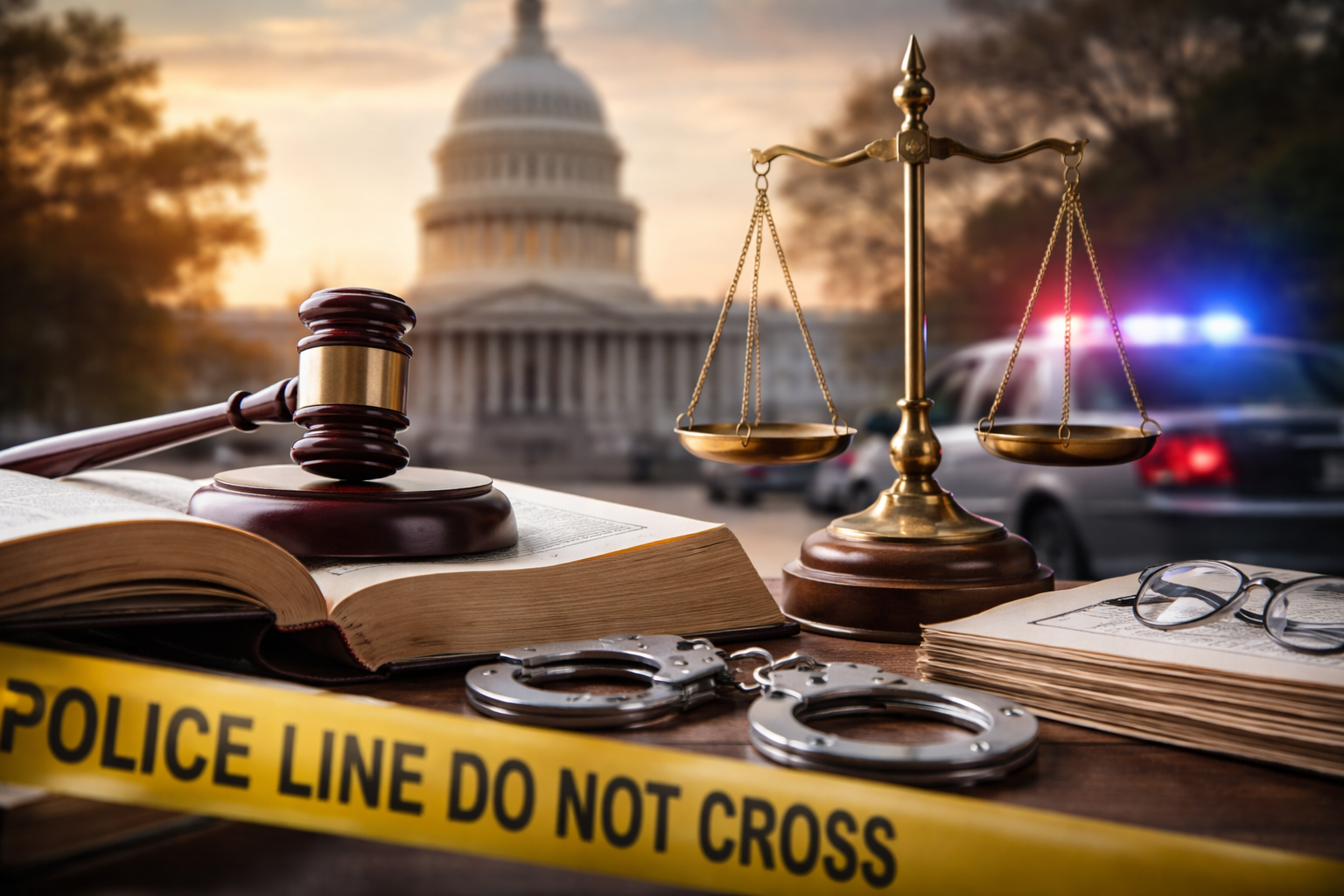
Law, crime, and social control are central themes in sociology because they reveal how societies define acceptable behavior, maintain order, and exercise power. In the United States, these concepts are deeply intertwined with social structures such as class, race, gender, and political authority. From criminal law and policing to prisons and informal norms, American society employs multiple mechanisms to regulate behavior and manage deviance. Sociology does not view crime merely as an individual moral failure; instead, it examines crime as a social phenomenon shaped by economic inequality, cultural values, political interests, and historical conditions.
This article explores law, crime, and social control in America from a sociological perspective. It examines how laws are created, how crime is socially constructed, how social control operates formally and informally, and how power and inequality influence the justice system. By doing so, it highlights the broader social meanings of crime and punishment in American society.

Sociology of Law: Law as a Social Institution
In sociology, law is understood not simply as a set of rules but as a social institution that reflects the values, conflicts, and power relations within society. Laws are created by those who hold political and economic power, and therefore they often protect dominant interests. In the American context, law has historically evolved alongside capitalism, state expansion, and social movements.
The sociological approach challenges the idea that law is neutral or purely objective. Instead, it emphasizes that laws are shaped by social norms, cultural beliefs, and political struggles. For example, labor laws, civil rights laws, and criminal laws have emerged through conflicts between social groups, including workers, minorities, and elites. Sociologists argue that what is considered legal or illegal changes over time, reflecting shifts in social priorities and moral values.
Law also serves as a mechanism of social control by defining deviance and prescribing punishment. At the same time, law can be a tool for social change, as seen in legislation addressing racial discrimination, gender equality, and human rights in America.
Crime as a Social Construction
Crime is not an absolute or universal category; it is socially constructed. Sociologists emphasize that behaviors become crimes only when society labels them as such through legal definitions. Acts that were once legal, such as slavery or child labor, are now considered serious crimes, while other behaviors, such as marijuana use, have shifted from criminalization to partial legalization in many American states.
This perspective highlights the role of power in defining crime. White-collar crimes like corporate fraud or environmental pollution often receive less attention and lighter punishment compared to street crimes, despite causing greater social harm. This unequal treatment reflects the influence of economic and political elites in shaping legal priorities.

Sociological theories of crime help explain why certain groups are more likely to be labeled as criminals. Poverty, lack of education, unemployment, and social marginalization increase exposure to criminalization. Thus, crime rates cannot be understood without examining broader structural inequalities in American society.
Theoretical Perspectives on Crime and Law
Different sociological theories offer distinct explanations for crime and social control in America.
From a functionalist perspective, crime is seen as a normal and necessary part of society. Émile Durkheim argued that crime reinforces social norms by clarifying what is acceptable and unacceptable behavior. In this view, punishment strengthens social solidarity by reaffirming shared values.
Conflict theory, influenced by Marxist thought, views law and crime as products of social inequality. Laws primarily serve the interests of the powerful, while the poor and marginalized are more likely to be criminalized. In the United States, this perspective helps explain racial disparities in policing, sentencing, and incarceration.
Symbolic interactionism focuses on how individuals become labeled as criminals through social interactions. The labeling theory suggests that once a person is labeled deviant, they may internalize this identity, leading to further criminal behavior. This theory is particularly relevant in understanding juvenile delinquency and recidivism in America.
Social Control: Meaning and Forms
Social control refers to the ways society regulates individual behavior to maintain order and conformity. In American society, social control operates through both formal and informal mechanisms.
Formal social control includes institutions such as the police, courts, prisons, and legal codes. These institutions enforce laws through surveillance, arrest, trial, and punishment. Informal social control, on the other hand, includes family, schools, religion, peer groups, and community norms that guide behavior through socialization, approval, and disapproval.
Sociologists argue that informal social control is often more effective than formal punishment because it is internalized. When individuals conform due to moral beliefs or social expectations, less coercion is required. However, as communities weaken due to urbanization, economic instability, and social fragmentation, reliance on formal social control increases.
Policing and Law Enforcement in America
Policing plays a crucial role in enforcing law and maintaining social order in the United States. Sociologically, police are not just crime fighters but also agents of social control. Their discretionary power allows them to decide whom to stop, search, arrest, or ignore, which can lead to unequal treatment.
Studies show that racial minorities, particularly African Americans and Hispanics, are disproportionately targeted by law enforcement. Practices such as stop-and-frisk and racial profiling reflect broader patterns of structural racism. Sociologists argue that policing often focuses more on controlling marginalized populations than addressing root causes of crime.
At the same time, policing has expanded in scope, with increased surveillance, militarization, and use of technology. While these developments are justified in the name of public safety, critics argue that they threaten civil liberties and deepen mistrust between communities and the state.
Courts, Punishment, and the Criminal Justice System
The American criminal justice system includes courts, judges, prosecutors, and correctional institutions. Sociologically, this system reflects social inequalities and power dynamics. Access to quality legal representation often depends on economic resources, leading to unequal outcomes for the rich and the poor.
Punishment in America has shifted over time from rehabilitation to retribution and deterrence. Since the late twentieth century, policies such as mandatory minimum sentences and “three strikes” laws have contributed to mass incarceration. The United States now has one of the highest incarceration rates in the world.

From a sociological perspective, mass incarceration functions as a form of social control over marginalized groups. It not only punishes individuals but also disrupts families, communities, and labor markets, reinforcing cycles of poverty and crime.
Prisons as Institutions of Social Control
Prisons are central institutions of formal social control in America. Sociologists view prisons as total institutions where individuals are isolated from society and subjected to strict rules and surveillance. Beyond punishment, prisons shape identities, behaviors, and social relations.
The growth of private prisons and the prison-industrial complex highlights the economic dimensions of punishment. Incarceration has become a profitable industry, raising ethical concerns about incentives to maintain high imprisonment rates.
Furthermore, prisons often fail to rehabilitate offenders. High rates of recidivism suggest that incarceration alone does not address the social causes of crime, such as lack of education, employment, and social support.
Race, Class, and Inequality in Crime Control
One of the most significant sociological findings is the unequal application of law in America. Race and class strongly influence who is policed, prosecuted, and punished. African Americans are disproportionately represented at every stage of the criminal justice process, from arrest to incarceration.
Class inequality also shapes experiences with law. Wealthy individuals can avoid criminalization through legal resources, settlements, or political influence, while the poor face harsher penalties for minor offenses. This pattern reinforces the argument that law functions as a tool of social control over disadvantaged populations.
Gender also plays a role, as men are more likely to be criminalized, while women’s crimes are often judged through moral and cultural stereotypes.
Informal Social Control and Changing Society
Informal social control in America has been affected by social change, including urbanization, family transformation, and digital technology. Traditional institutions like family and religion have weakened in some areas, reducing their regulatory influence.
At the same time, new forms of social control have emerged through media, social networks, and public opinion. Social shaming, online surveillance, and cancel culture represent informal mechanisms that regulate behavior without legal intervention.
Sociologists note that these changes raise questions about privacy, freedom, and social conformity in modern American society.
Crime, Media, and Moral Panic
The media plays a powerful role in shaping public perceptions of crime. Sensational reporting often exaggerates crime rates and focuses on violent offenses, creating fear and moral panic. This fear influences public opinion and policy, leading to harsher laws and increased policing.
Sociologists argue that media-driven moral panics often target specific groups, such as youth, immigrants, or racial minorities, reinforcing stereotypes and social divisions. Thus, crime is not only a social reality but also a cultural narrative shaped by media representation.
Law, Social Control, and Social Change
While law and social control often reinforce inequality, they can also promote social justice. Social movements have used law to challenge discrimination, expand civil rights, and reform the criminal justice system. Movements against police brutality, mass incarceration, and racial injustice reflect ongoing struggles over the meaning and function of law in America.
Sociology emphasizes that meaningful crime control requires addressing root causes such as poverty, inequality, and lack of opportunity. Without social reform, legal punishment alone cannot create a just and safe society.
Conclusion
From a sociological perspective, law, crime, and social control in America are deeply embedded in social structures, power relations, and cultural values. Crime is not merely an individual act but a reflection of social conditions, while law functions as both a mechanism of order and an instrument of power. Formal and informal social control shape behavior, often reinforcing existing inequalities.
Understanding these dynamics is essential for creating a more equitable and effective justice system. Sociology challenges us to move beyond punishment and toward policies that address social inequality, promote rehabilitation, and strengthen community-based forms of social control. In doing so, it offers critical insights into the relationship between law, crime, and society in America.
Frequently Asked Questions
1. What is meant by Social Control in America?
Social Control in America refers to the methods used by society to regulate individual behavior and maintain social order through laws, norms, institutions, and cultural practices.
2. Why is Social Control important in American society?
Social Control in America is important because it helps maintain stability, ensures conformity to social norms, and prevents chaos in a diverse and complex society.
3. What are the main types of Social Control in America?
The two main types of Social Control in America are formal social control, enforced by laws and institutions, and informal social control, maintained through family, community, and social norms.
4. How does formal Social Control operate in America?
Formal Social Control in America operates through institutions such as police, courts, prisons, and legal systems that enforce laws and punish deviant behavior.
5. What is informal Social Control in America?
Informal Social Control in America includes non-legal mechanisms such as socialization, peer pressure, moral values, and cultural expectations that guide behavior.
6. How does Social Control in America relate to crime?
Social Control in America defines what behaviors are considered criminal and determines how society responds to law-breaking through punishment or correction.
7. What role does law play in Social Control in America?
Law plays a central role in Social Control in America by formally defining deviance, setting penalties, and reinforcing dominant social values.
8. How does Social Control in America differ across social groups?
Social Control in America is applied unevenly, often affecting racial minorities, the poor, and marginalized communities more strictly than privileged groups.
9. What is the role of police in Social Control in America?
Police act as key agents of Social Control in America by enforcing laws, maintaining public order, and exercising discretionary authority.
10. How do prisons function as Social Control in America?
Prisons serve as institutions of Social Control in America by isolating offenders, disciplining behavior, and deterring future crime.
11. How does media influence Social Control in America?
Media shapes Social Control in America by influencing public perceptions of crime, creating fear, and supporting stricter law enforcement policies.
12. What is the relationship between Social Control in America and inequality?
Social Control in America often reflects social inequality, as laws and punishments disproportionately impact lower-income and minority populations.
13. How has Social Control in America changed over time?
Social Control in America has evolved from community-based regulation to more institutionalized and technologically advanced forms of surveillance and punishment.
14. Can Social Control in America promote social change?
Yes, Social Control in America can support social change when laws and norms are reformed to promote justice, equality, and human rights.
15. What are the criticisms of Social Control in America?
Critics argue that Social Control in America can become oppressive, restrict freedoms, and reinforce power imbalances rather than address root causes of crime.