Introduction
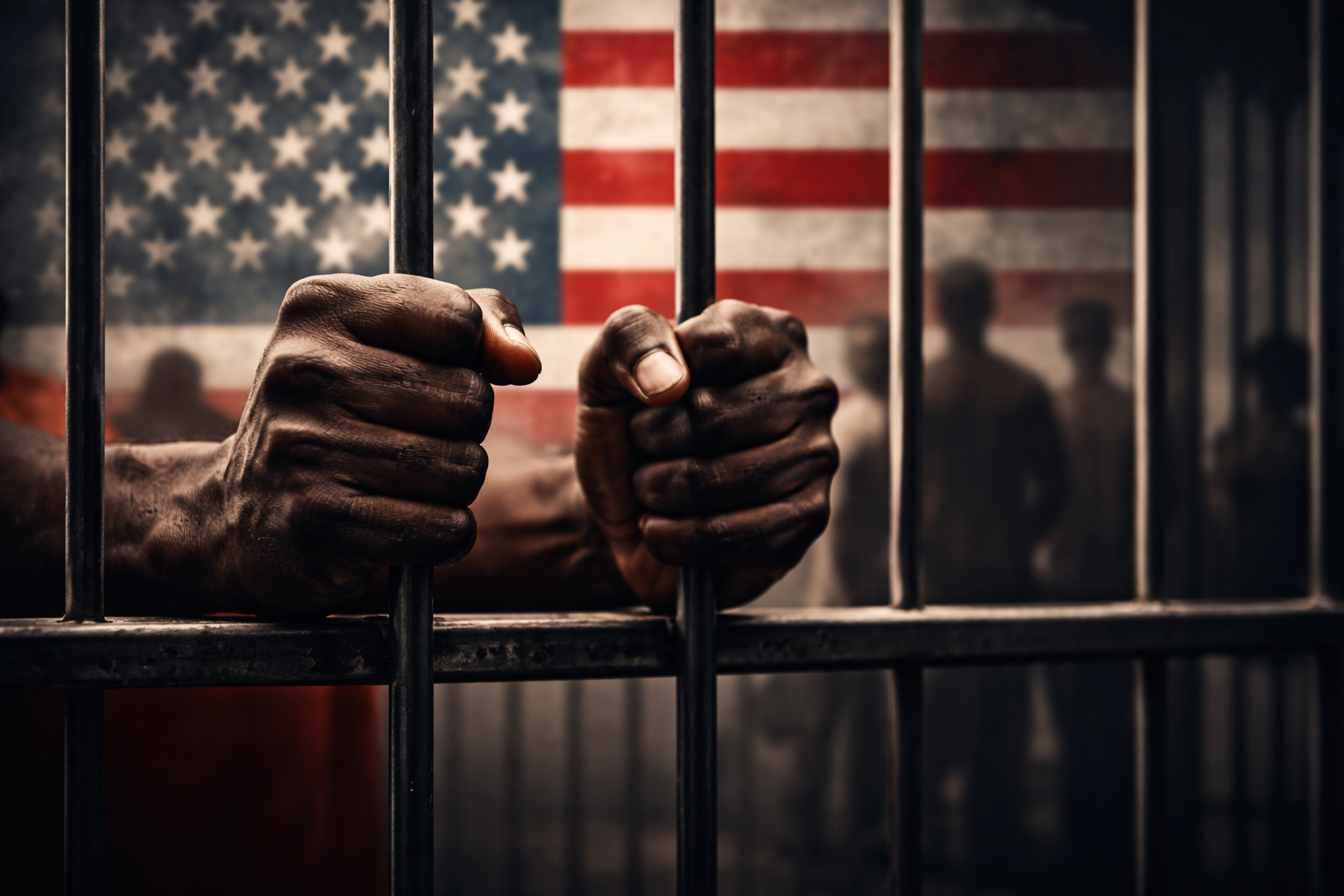
Mass incarceration has become one of the most defining social issues in contemporary American society. With less than five percent of the world’s population, the United States houses nearly a quarter of the world’s prison population. This extraordinary reliance on imprisonment is not evenly distributed across society. Instead, it follows deeply entrenched racial lines, disproportionately affecting African Americans, Latinos, and other marginalized communities. From a sociological perspective, mass incarceration is not merely a response to crime but a structural mechanism that reproduces racial inequality, social exclusion, and economic disadvantage.
Understanding mass incarceration requires moving beyond individual criminal behavior and examining broader social forces such as racism, economic inequality, political power, and institutional control. Sociologists argue that the American criminal justice system functions as a modern system of social control that continues the legacy of racial domination established during slavery, segregation, and discriminatory policing.
This article explores the relationship between mass incarceration and racial inequality in America through sociological theories, historical developments, institutional practices, and social consequences.
Historical Roots of Racialized Incarceration
The roots of racial inequality in the American penal system can be traced back to slavery. During slavery, Black bodies were controlled through physical force and legal ownership. After the abolition of slavery, new systems emerged to maintain racial hierarchy. Black Codes, vagrancy laws, and convict leasing criminalized everyday behaviors of formerly enslaved people, leading to their re-enslavement through the prison system.
During the Jim Crow era, the criminal justice system reinforced segregation and racial discipline. Policing practices, sentencing laws, and prison labor ensured that African Americans remained economically and socially subordinate. Sociologically, this demonstrates how legal institutions adapt over time to preserve existing power relations.
The civil rights movement dismantled formal segregation, but it did not eliminate racial inequality. Instead, new mechanisms emerged. The late twentieth century marked the beginning of what sociologists identify as the era of mass incarceration, particularly after the declaration of the “War on Drugs” in the 1970s and 1980s. Though drug use rates were similar across racial groups, enforcement targeted poor and minority neighborhoods, leading to a dramatic rise in incarceration among African Americans and Latinos.
Sociological Theories Explaining Mass Incarceration
From a conflict theory perspective, mass incarceration serves the interests of dominant groups by controlling marginalized populations. Conflict theorists argue that laws are not neutral but reflect the values and interests of those in power. Criminalizing certain behaviors common in disadvantaged communities while ignoring crimes committed by elites reinforces class and racial inequality.
Critical race theory further emphasizes that racism is embedded within legal institutions. According to this approach, racial disparities in arrest rates, sentencing, and imprisonment are not accidental but systemic. The criminal justice system operates within a society shaped by historical racism, making racial bias a structural feature rather than an individual flaw.

Labeling theory also provides insight into mass incarceration. Once individuals are labeled as criminals, they face stigma that limits their access to employment, education, and social acceptance. For racial minorities, this labeling is intensified due to pre-existing racial stereotypes. Over time, entire communities become associated with criminality, reinforcing cycles of surveillance, arrest, and incarceration.
Functionalist perspectives argue that punishment serves social order by reinforcing norms. However, sociologists critical of this view note that mass incarceration has failed to reduce crime proportionately and instead destabilizes families and communities. Thus, its social dysfunctions outweigh any claimed benefits.
Racial Disparities in Policing and Sentencing
One of the most visible aspects of racial inequality in mass incarceration is policing. Minority neighborhoods experience higher levels of police surveillance, stop-and-frisk practices, and arrests. Sociological research shows that implicit bias and institutional priorities lead law enforcement to associate race with criminality.
Sentencing disparities further deepen inequality. Mandatory minimum sentences, three-strikes laws, and sentencing guidelines disproportionately impact people of color. Drug sentencing laws historically punished crack cocaine, more prevalent in Black communities, far more harshly than powder cocaine, which was more common among white users. These legal distinctions had profound racial consequences.
Judicial discretion also plays a role. Studies indicate that defendants of color often receive harsher sentences than white defendants for similar offenses. From a sociological viewpoint, this reflects broader racial hierarchies and cultural stereotypes embedded within legal decision-making.
Prisons as Institutions of Social Control
Sociologists view prisons not only as places of punishment but as institutions of social control. They regulate marginalized populations that are economically surplus in a post-industrial economy. As stable manufacturing jobs declined, particularly in urban areas, incarceration became a way to manage unemployment, poverty, and social unrest.
Prisons also function as total institutions, reshaping individual identities through rigid routines, surveillance, and loss of autonomy. For racial minorities, incarceration reinforces feelings of alienation from mainstream society. Instead of rehabilitation, prisons often deepen social exclusion.
The growth of private prisons adds another layer of inequality. Profit motives encourage longer sentences and higher incarceration rates. Marginalized communities become sources of economic extraction, as incarceration generates revenue through prison labor, contracts, and government funding.
Impact on Families and Communities
The effects of mass incarceration extend far beyond prison walls. Families of incarcerated individuals experience emotional trauma, financial strain, and social stigma. Children with incarcerated parents face higher risks of poverty, educational failure, and future involvement with the criminal justice system.
Communities with high incarceration rates suffer from weakened social bonds. The removal of large numbers of working-age adults disrupts family structures, reduces economic stability, and erodes informal social control. Sociologists describe this as community destabilization, where incarceration becomes a self-perpetuating cycle rather than a solution to crime.
Racial inequality is intensified as entire neighborhoods become trapped in patterns of surveillance and punishment. Instead of addressing root causes such as unemployment, inadequate education, and housing segregation, the state relies on incarceration as a substitute for social welfare.
Mass Incarceration and Citizenship
Incarceration has profound implications for citizenship and democracy. In many states, formerly incarcerated individuals face restrictions on voting, employment, housing, and access to public benefits. These civil disabilities disproportionately affect racial minorities, effectively creating a second-class citizenship.
Sociologically, this resembles what scholars call “civic exclusion.” Individuals are formally free but substantively marginalized. The loss of political voice weakens democratic participation in communities most affected by incarceration, reinforcing political inequality along racial lines.
The sociologist Michelle Alexander famously described mass incarceration as a “new caste system” in her influential work The New Jim Crow. Her argument highlights how criminal records function like racial markers, limiting life chances and reinforcing structural inequality long after individuals leave prison.
Resistance and Reform Movements
Despite its scale, mass incarceration has not gone unchallenged. Grassroots movements, civil rights organizations, and scholars have brought attention to racial injustice in the criminal justice system. Sociological activism emphasizes decarceration, restorative justice, and community-based alternatives to punishment.
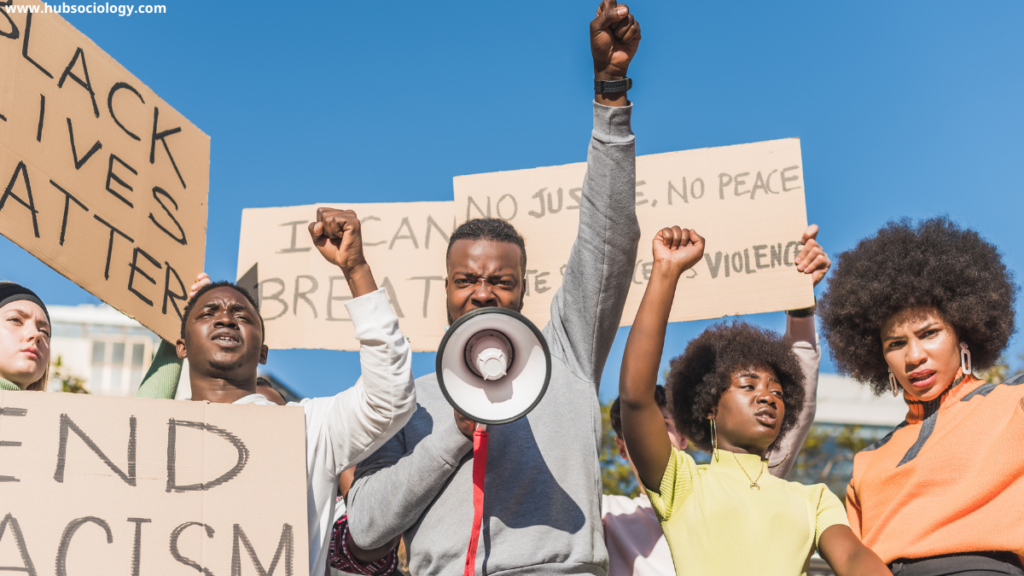
Reform efforts include sentencing reform, decriminalization of minor offenses, bail reform, and investment in education and social services. While some progress has been made, sociologists caution that reforms must address structural racism rather than merely reducing prison populations.
True change requires rethinking the purpose of punishment and redefining public safety. A sociological approach prioritizes social inclusion, economic opportunity, and racial justice over punitive control.
Conclusion
Mass incarceration in America is not simply a response to crime but a powerful social institution that reproduces racial inequality. Through historical legacies, biased policing, discriminatory sentencing, and social exclusion, the criminal justice system has become a central mechanism of racial stratification.
From a sociological perspective, addressing mass incarceration requires confronting broader issues of racism, economic inequality, and political power. Reducing incarceration without addressing these root causes risks reproducing inequality in new forms. A more just society demands policies that emphasize rehabilitation, social investment, and equal citizenship.
Mass incarceration is ultimately a mirror reflecting America’s unresolved racial contradictions. Understanding it sociologically allows us not only to analyze its harms but also to imagine alternatives grounded in equality, dignity, and collective responsibility.
FAQs on Racial Inequality in America
1. What is meant by racial inequality in America?
Racial Inequality in America refers to the unequal distribution of social, economic, political, and legal opportunities among different racial groups, particularly affecting African Americans and other minorities due to historical and structural discrimination.
2. How is racial inequality in America connected to mass incarceration?
Racial Inequality in America is closely linked to mass incarceration because minority communities face disproportionate policing, harsher sentencing, and higher imprisonment rates compared to white Americans.
3. Why are African Americans overrepresented in U.S. prisons?
African Americans are overrepresented due to systemic factors such as racial profiling, discriminatory drug laws, sentencing disparities, and long-standing economic inequalities rooted in racial inequality in America.
4. Does racial inequality in America exist in policing practices?
Yes, racial inequality in America is evident in policing through practices like stop-and-frisk, racial profiling, and unequal use of force against minority populations.
5. How does the War on Drugs contribute to racial inequality in America?
The War on Drugs intensified racial inequality in America by targeting minority neighborhoods, criminalizing minor drug offenses, and imposing mandatory sentences that disproportionately affected people of color.
6. What role does the justice system play in racial inequality in America?
The justice system reinforces racial inequality in America through biased arrests, unequal legal representation, discriminatory sentencing laws, and limited rehabilitation opportunities for marginalized groups.
7. How does racial inequality in America affect families?
Racial inequality in America disrupts families through high incarceration rates, economic hardship, emotional trauma, and long-term stigma faced by incarcerated individuals and their relatives.
8. Is racial inequality in America a structural problem?
Yes, racial inequality in America is structural because it is embedded in institutions such as education, housing, employment, and the criminal justice system rather than being the result of individual prejudice alone.
9. How does incarceration worsen racial inequality in America?
Incarceration worsens racial inequality in America by limiting access to jobs, voting rights, housing, and social mobility, creating cycles of poverty and exclusion.
10. What sociological theories explain racial inequality in America?
Conflict theory, critical race theory, and labeling theory help explain racial inequality in America by showing how power, discrimination, and social stigma shape unequal outcomes.
11. Does racial inequality in America impact democracy?
Yes, racial inequality in America undermines democracy by restricting political participation through voter disenfranchisement and reduced civic engagement among incarcerated and formerly incarcerated populations.
12. Can racial inequality in America be reduced through prison reform?
Prison reform can reduce racial inequality in America, but only if it addresses systemic racism, sentencing laws, policing practices, and broader social inequalities.
13. How does poverty intersect with racial inequality in America?
Poverty intensifies racial inequality in America because marginalized racial groups are more likely to experience unemployment, poor education, and increased contact with the criminal justice system.
14. What are the long-term effects of racial inequality in America on society?
Long-term effects include weakened social cohesion, economic inefficiency, intergenerational inequality, and persistent racial divisions within American society.
15. Why is understanding racial inequality in America important for sociology students?
Understanding racial inequality in America helps sociology students analyze how institutions, power structures, and historical processes shape unequal life chances and social injustice.