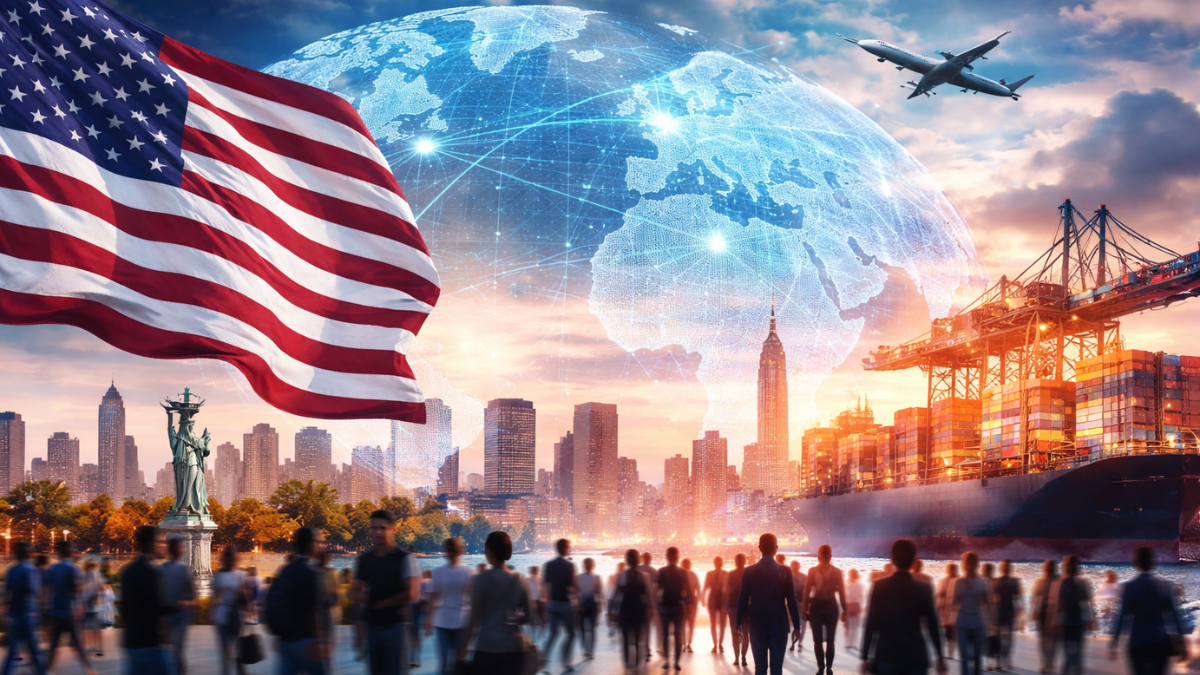
Globalization is one of the most transformative forces shaping modern societies. In the context of the United States, globalization has profoundly influenced economic structures, cultural identities, political institutions, and social relationships. Sociologically, globalization refers to the increasing interconnectedness of societies through trade, communication, migration, technology, and cultural exchange. For American society, this interconnectedness has created both opportunities and tensions, reshaping social stratification, labor markets, family life, and national identity.
The impact of globalization on American society cannot be understood solely through economic statistics. It must be analyzed through sociological theories that explain power, inequality, cultural diffusion, and social change. Thinkers such as Immanuel Wallerstein, Anthony Giddens, and Manuel Castells provide conceptual frameworks that help us understand how global processes restructure local realities. This article explores how globalization has reshaped American society in economic, cultural, political, and social dimensions, while also examining its contradictions and future implications.

Understanding Globalization in Sociological Perspective
Globalization is more than international trade. Sociologically, it involves the compression of time and space, where technological advancements allow instantaneous communication across continents. Anthony Giddens describes globalization as the intensification of worldwide social relations linking distant localities in such a way that local happenings are shaped by events occurring miles away.
Similarly, Immanuel Wallerstein’s World-Systems Theory divides the world into core, semi-periphery, and periphery nations. The United States, positioned as a core nation, benefits from global trade systems, but this position also creates internal inequalities and global dependencies.
Globalization in American society is therefore both a macro-level economic phenomenon and a micro-level cultural and social transformation.
Economic Restructuring and Labor Markets
One of the most visible impacts of globalization on American society is economic restructuring. Since the late twentieth century, manufacturing jobs in traditional industrial regions have declined due to outsourcing and automation. Many corporations moved production to countries where labor costs are lower, leading to deindustrialization in parts of the United States.
This transformation contributed to the rise of the service and knowledge economy, especially in cities like New York City and San Francisco. Technology companies, financial institutions, and global corporations have expanded, creating wealth in urban centers. However, this wealth distribution is uneven.
From a conflict theory perspective, globalization has intensified class inequality. High-skilled workers in technology and finance benefit from global markets, while low-skilled workers face job insecurity. The growth of the gig economy further reflects the precarious nature of modern labor under global capitalism. Sociologists argue that globalization has strengthened corporate power while weakening labor unions, contributing to widening income inequality.
At the same time, globalization has increased consumer access to affordable goods. Imported products lower prices, benefiting consumers but also reinforcing global supply chains that depend on unequal labor conditions abroad.
Cultural Globalization and Identity
Cultural globalization has reshaped American society in profound ways. The United States has long been both a producer and consumer of global culture. Hollywood films, American music, and fast-food chains have spread worldwide, creating a form of cultural influence often described as “Americanization.”
At the same time, American society has become increasingly multicultural due to immigration and cultural exchange. Cities like Los Angeles and Houston reflect diverse cultural landscapes shaped by Latin American, Asian, African, and Middle Eastern communities.
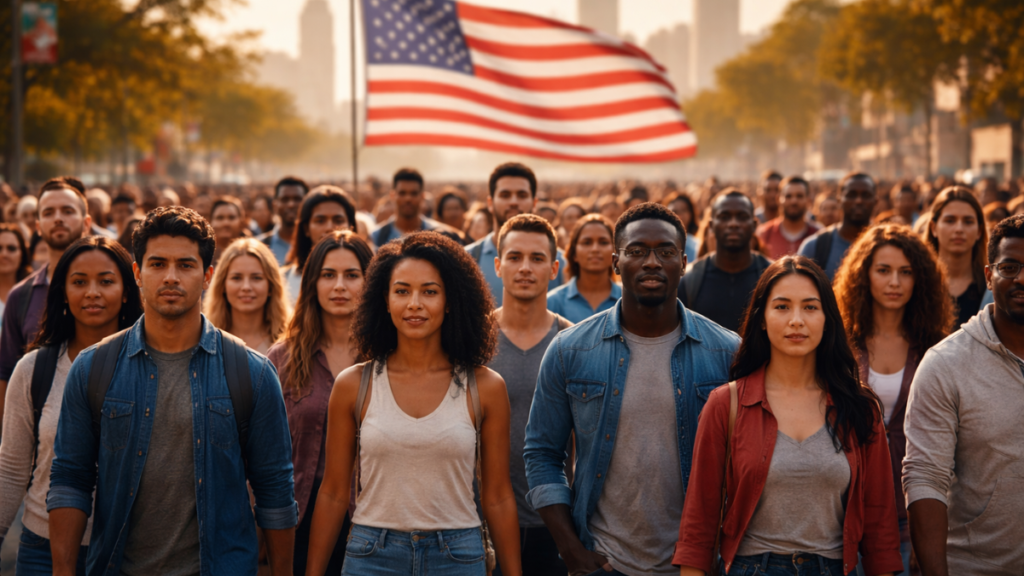
This cultural diversity has enriched American society by introducing new cuisines, languages, festivals, and artistic expressions. However, it has also sparked debates about national identity, assimilation, and multiculturalism. Some groups view globalization as a threat to traditional American values, while others see it as an opportunity for cultural pluralism.
From a symbolic interactionist perspective, globalization influences everyday interactions. Social media platforms connect Americans to global conversations, reshaping how individuals perceive identity, belonging, and citizenship. Global cultural flows challenge the idea of a fixed national culture, replacing it with hybrid identities.
Immigration and Demographic Change
Globalization has accelerated migration flows, making the United States one of the most ethnically diverse countries in the world. Immigration has historically shaped American society, but contemporary globalization has intensified these movements.
Economic disparities, political instability, and global labor demands drive migration patterns. Immigrants contribute significantly to sectors such as healthcare, agriculture, and technology. Sociologically, immigration influences family structures, education systems, and urban development.
However, globalization-related migration has also fueled political polarization. Debates over border control, citizenship, and refugee policies reflect broader anxieties about economic competition and cultural change. These tensions reveal how globalization intersects with nationalism, often producing contradictory social attitudes.
Political Globalization and Sovereignty
Political globalization involves the growing influence of international institutions, trade agreements, and transnational governance structures. Organizations such as the World Trade Organization and the United Nations shape global economic and political policies that affect American laws and regulations.
Trade agreements like North American Free Trade Agreement (NAFTA) transformed economic relations between the United States, Canada, and Mexico. Supporters argue that such agreements promote economic growth, while critics claim they undermine domestic industries and workers.
From a sociological perspective, globalization challenges national sovereignty. Policy decisions are increasingly influenced by global markets and international pressures. This shift can weaken democratic accountability, as citizens may feel disconnected from decision-making processes that occur at transnational levels.
Technology, Media, and Social Networks
Technological globalization has perhaps the most immediate impact on daily life in American society. The rise of the internet, smartphones, and social media platforms has created a global communication network. According to Manuel Castells, we now live in a “network society,” where power and information flow through digital networks.
American society is deeply embedded in this global digital infrastructure. Social movements such as Black Lives Matter gain international attention through online platforms. Global news circulates instantly, shaping public opinion and political discourse.
However, digital globalization also raises concerns about misinformation, surveillance, and data privacy. Global tech corporations hold enormous power, influencing elections, consumer behavior, and cultural trends. The sociological implications include shifts in social interaction patterns, community formation, and political mobilization.
Education and Global Competitiveness
Globalization has transformed American education systems. Universities compete globally for students, research funding, and academic rankings. International students contribute to campus diversity and economic revenue.
Educational curricula increasingly emphasize global awareness, foreign languages, and technological skills. The demand for STEM education reflects global labor market competition.

Yet globalization also creates inequality in educational access. Wealthier families can afford international opportunities, while disadvantaged communities struggle with underfunded schools. This disparity reproduces social stratification across generations.
Social Inequality and Stratification
One of the most debated sociological consequences of globalization is its impact on inequality. While globalization has generated immense wealth, it has also widened the gap between rich and poor within American society.
Urban centers with global industries experience economic growth, while rural areas and former manufacturing hubs face economic decline. This spatial inequality contributes to political resentment and social fragmentation.
Race and gender also intersect with globalization. Immigrant women often occupy low-wage service jobs, reflecting global gendered labor patterns. Minority communities may face both opportunities and vulnerabilities within global economic systems.
From a structural-functional perspective, globalization integrates American society into a broader world system. From a conflict perspective, it reinforces capitalist inequalities and corporate dominance.
Environmental Implications
Globalization intensifies environmental challenges in American society. Global supply chains contribute to carbon emissions and resource exploitation. Climate change is a global problem requiring international cooperation.
American environmental policies are influenced by global agreements and climate negotiations. Sociologically, environmental globalization raises questions about sustainability, corporate responsibility, and intergenerational justice.
Communities disproportionately affected by pollution often belong to marginalized groups, highlighting the link between globalization and environmental inequality.
Globalization and American Values
Globalization challenges traditional notions of American exceptionalism. Exposure to diverse cultures and global norms reshapes values related to democracy, human rights, and social justice.
At the same time, globalization can provoke nationalist reactions. Movements advocating economic protectionism and cultural preservation reflect anxieties about losing national control.
The coexistence of global openness and nationalist sentiment illustrates the dual nature of globalization in American society. It fosters interconnectedness while generating resistance.
Conclusion
The impact of globalization on American society is complex and multifaceted. Economically, it has transformed labor markets and intensified inequality. Culturally, it has diversified identities while challenging traditional norms. Politically, it has reshaped sovereignty and governance structures. Technologically, it has created a network society that redefines communication and power.
From a sociological perspective, globalization is neither entirely beneficial nor entirely harmful. It is a dynamic process that redistributes power, resources, and identities across social structures. American society continues to negotiate the opportunities and tensions that globalization presents.
Understanding globalization requires analyzing its structural dimensions and lived experiences. As global interdependence deepens, the future of American society will depend on how institutions, communities, and individuals adapt to this interconnected world.
FAQs on Impact of Globalization on American Society
1. What is the Impact of Globalization on American Society?
The Impact of Globalization on American Society refers to the economic, cultural, political, and social changes resulting from increased global interconnectedness through trade, migration, technology, and communication.
2. How has the Impact of Globalization on American Society affected employment?
The Impact of Globalization on American Society has shifted jobs from manufacturing to service and technology sectors, increasing high-skilled opportunities while reducing many low-skilled industrial jobs.
3. Does the Impact of Globalization on American Society increase inequality?
Yes, the Impact of Globalization on American Society has widened income gaps between skilled and unskilled workers, contributing to greater economic inequality.
4. How does the Impact of Globalization on American Society influence cultural identity?
The Impact of Globalization on American Society promotes multiculturalism and cultural exchange, but it also creates debates over national identity and traditional values.
5. What is the Impact of Globalization on American Society in terms of immigration?
The Impact of Globalization on American Society has increased migration flows, making the U.S. more ethnically diverse and shaping demographic patterns.
6. How has technology shaped the Impact of Globalization on American Society?
The Impact of Globalization on American Society is strongly influenced by digital technology, social media, and global communication networks that connect individuals worldwide.
7. What role does education play in the Impact of Globalization on American Society?
Education prepares individuals for global competition, and the Impact of Globalization on American Society has increased the demand for STEM skills and international awareness.
8. How does the Impact of Globalization on American Society affect small businesses?
The Impact of Globalization on American Society creates both opportunities for global markets and challenges due to international competition.
9. What is the political Impact of Globalization on American Society?
The Impact of Globalization on American Society influences trade policies, international agreements, and debates about national sovereignty.
10. How has the Impact of Globalization on American Society changed family structures?
The Impact of Globalization on American Society has influenced dual-income households, migration-related family separation, and global communication within families.
11. What is the Impact of Globalization on American Society in rural areas?
Rural communities often experience economic decline due to outsourcing and reduced manufacturing, highlighting uneven development patterns.
12. Does the Impact of Globalization on American Society affect consumer behavior?
Yes, the Impact of Globalization on American Society provides access to global products, shaping consumption habits and lifestyle choices.
13. How does the Impact of Globalization on American Society influence social movements?
Global communication allows American social movements to gain international attention and solidarity, expanding their reach.
14. What are the environmental dimensions of the Impact of Globalization on American Society?
Global supply chains and industrial expansion contribute to environmental challenges, linking American society to global climate issues.
15. Is the Impact of Globalization on American Society positive or negative?
The Impact of Globalization on American Society is mixed—it creates economic growth and cultural diversity but also produces inequality and social tensions.