
The Decline of Social Trust in America has become one of the most discussed themes in contemporary sociology. Social trust—often referred to as generalized trust—is the belief that most people in society can be trusted, that institutions function fairly, and that social interactions are guided by shared norms. It is the invisible glue that binds communities, stabilizes institutions, and enables democracy to function effectively.
Over the past several decades, surveys and sociological studies have shown a steady erosion of trust among Americans—trust in neighbors, trust in government, trust in media, and even trust in science. This decline is not merely a psychological shift; it reflects deep structural changes in American society.
By examining this phenomenon through classical and contemporary sociological theories, we can better understand its causes, consequences, and possible future directions.
Understanding Social Trust in Sociological Perspective
Social trust can be divided into two broad categories: interpersonal trust and institutional trust. Interpersonal trust refers to trust between individuals—neighbors, coworkers, strangers. Institutional trust refers to confidence in social institutions such as the government, media, judiciary, educational system, and corporations.
The classical sociologist Émile Durkheim emphasized the importance of social solidarity in maintaining cohesion. In his theory, mechanical solidarity characterized traditional societies, while organic solidarity defined modern industrial societies. In both cases, trust played a crucial role in maintaining order. Without trust, social norms weaken and anomie—normlessness—emerges.
Similarly, Max Weber linked trust to rational-legal authority. In modern societies, people obey institutions not because of tradition but because they believe in the legitimacy and fairness of bureaucratic systems. A decline in trust thus threatens the legitimacy of these systems.
In contemporary sociology, Robert D. Putnam popularized the concept of social capital in his influential book Bowling Alone. Putnam argued that Americans have become increasingly disconnected from civic organizations, community groups, and social networks. As civic engagement declines, social capital—and consequently social trust—also declines.
Historical Trends of Social Trust in America
Survey data since the mid-20th century shows that trust in government peaked during the 1950s and early 1960s. However, events such as the Vietnam War, civil rights conflicts, political scandals, and economic crises contributed to declining institutional trust.
The Pew Research Center and the General Social Survey have consistently reported a downward trend in Americans’ trust in government and in one another. While interpersonal trust has fluctuated slightly, it has not returned to the high levels seen in the post-war period.
The 21st century introduced new stressors: terrorist attacks, financial crises, increasing political polarization, and rapid technological change. Each of these has contributed to skepticism toward institutions and fellow citizens.
Causes of the Decline of Social Trust in America
1. Economic Inequality
Economic inequality has widened significantly in recent decades. Sociologists argue that inequality fosters social distance between classes. When wealth and opportunity are unevenly distributed, people feel disconnected from those in different socioeconomic positions.

Trust thrives in relatively equal societies because individuals perceive fairness and shared opportunity. However, in highly unequal societies, suspicion and resentment increase. The belief that the system is rigged undermines trust in institutions and in other individuals.
2. Political Polarization
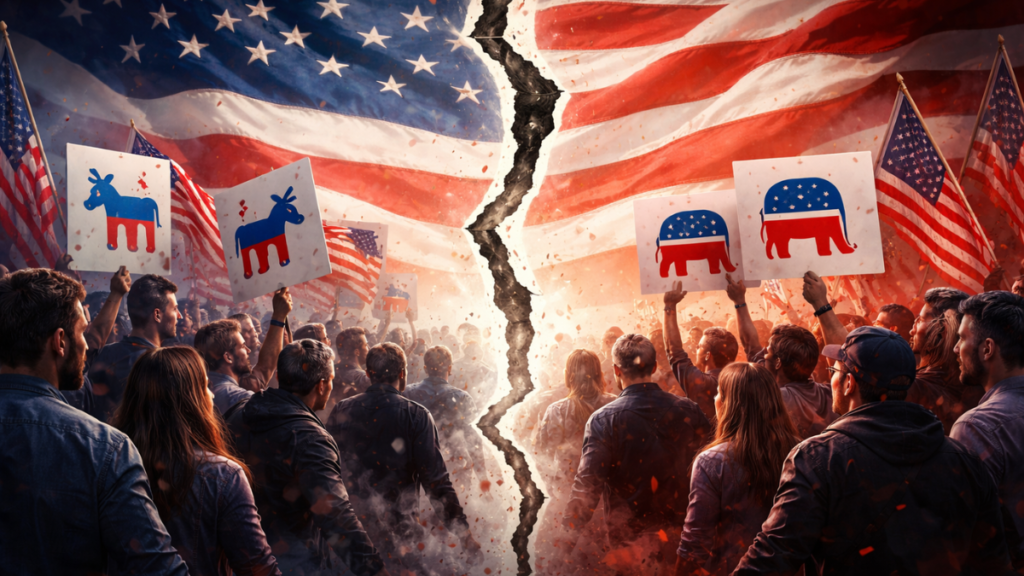
Political polarization has deepened dramatically. Partisan identities increasingly shape personal identities, social networks, and media consumption patterns.
Research suggests that Americans not only disagree politically but also view members of opposing parties with hostility. This phenomenon, known as affective polarization, erodes interpersonal trust. Political debates are no longer merely ideological disagreements; they are perceived as moral battles.
3. Media Fragmentation and Digital Culture
The rise of social media and 24-hour news cycles has transformed information consumption. While digital platforms have increased access to information, they have also created echo chambers and facilitated misinformation.
Algorithm-driven content often amplifies sensational or divisive narratives. As a result, individuals encounter conflicting versions of reality, leading to confusion and distrust. When citizens cannot agree on basic facts, social trust weakens.
4. Decline in Civic Engagement
Community organizations, religious participation, and local associations have historically fostered trust by bringing diverse individuals together. Putnam’s analysis in Bowling Alone showed that membership in civic organizations declined significantly after the 1960s.
As Americans spend more time online or in individualized leisure activities, opportunities for face-to-face interaction decrease. Reduced social interaction diminishes empathy and weakens communal bonds.
5. Institutional Failures and Scandals
Corporate fraud, political corruption, and institutional mismanagement have contributed to cynicism. Financial crises, for example, reinforced the perception that elites are not held accountable.
When institutions fail to meet expectations of fairness and transparency, public confidence erodes. Trust, once broken, is difficult to restore.
Sociological Theories Explaining the Decline
From a functionalist perspective, society functions like a system of interconnected parts. Trust is a key mechanism that ensures cooperation and stability. When institutions fail to perform their functions effectively, dysfunction arises, leading to distrust.
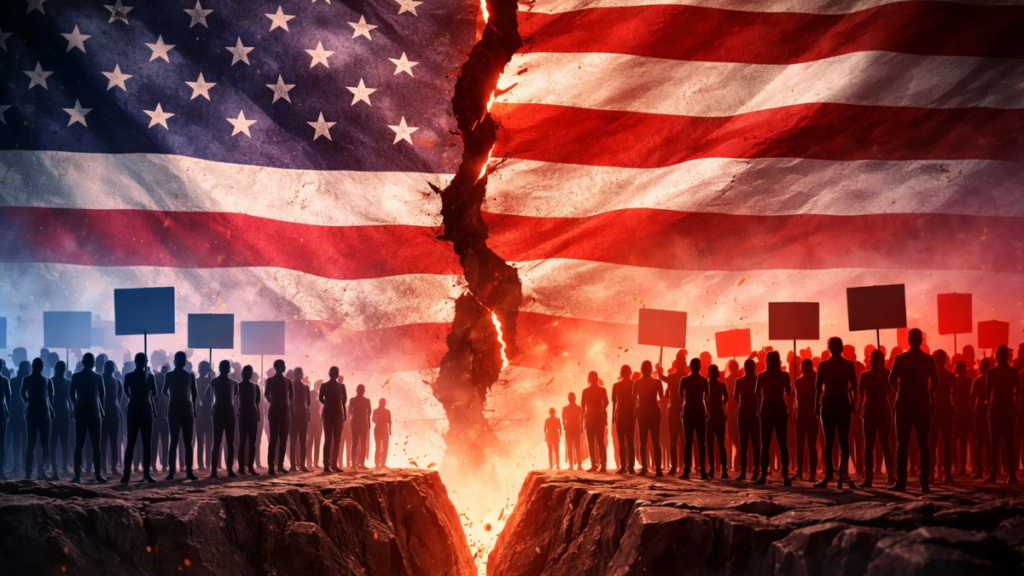
Conflict theory, influenced by thinkers like Karl Marx, offers another explanation. According to this view, declining trust reflects underlying class struggles and power inequalities. Institutions often serve dominant groups, and marginalized populations may distrust systems that perpetuate inequality.
Symbolic interactionism focuses on everyday interactions and shared meanings. Trust is constructed through repeated social interactions. When communication becomes mediated by digital platforms and shaped by anonymity, traditional cues of trust—such as facial expressions and tone—are diminished.
Consequences of the Decline of Social Trust in America
The consequences are far-reaching and affect multiple dimensions of social life.
1. Democratic Instability
Democracy depends on trust—trust in elections, in representatives, and in the rule of law. When citizens doubt the legitimacy of democratic processes, political participation may decline or take radical forms.
2. Public Health Challenges
Trust in science and medical institutions is essential during crises. If citizens distrust health authorities, compliance with public health measures decreases, leading to social conflict and prolonged crises.
3. Economic Impact
Markets rely on trust. Contracts, investments, and transactions assume a baseline level of confidence. When trust declines, transaction costs increase, and economic cooperation becomes more difficult.
4. Social Isolation and Mental Health
Low trust correlates with feelings of isolation and insecurity. Individuals who perceive society as hostile are less likely to engage in community life, potentially increasing anxiety and depression.
The Role of Diversity and Demographic Change
America is becoming increasingly diverse in terms of race, ethnicity, religion, and immigration status. Sociologists debate whether diversity reduces or enhances trust. Some argue that rapid demographic change may temporarily lower trust as groups adjust to new social realities. Others contend that inclusive institutions and intergroup contact can strengthen trust over time.
The key factor appears to be integration. When diversity is accompanied by segregation and inequality, trust declines. When diversity is accompanied by inclusive policies and shared civic identity, trust can flourish.
Can Social Trust Be Rebuilt?
Rebuilding trust requires structural and cultural interventions. Policies that reduce economic inequality can foster a sense of fairness. Transparent governance and accountability mechanisms can restore institutional credibility.
Strengthening local communities is equally important. Encouraging civic participation, volunteering, and intergroup dialogue can rebuild interpersonal trust. Education also plays a critical role in promoting critical thinking and media literacy, helping citizens navigate misinformation.
Digital platforms must be addressed as well. While technology cannot be reversed, promoting responsible algorithms and fact-based journalism can mitigate polarization.
Ultimately, rebuilding trust requires collective effort. Trust is not restored overnight; it develops gradually through consistent positive experiences.
Conclusion
The Decline of Social Trust in America is a complex sociological phenomenon rooted in economic inequality, political polarization, institutional failures, and technological change. From Durkheim’s concept of social solidarity to Putnam’s analysis of social capital, sociological theories provide valuable frameworks for understanding this transformation.
Trust is foundational to democracy, economic stability, and social well-being. Its erosion signals deeper structural tensions within American society. Yet decline is not destiny. Through inclusive policies, civic renewal, and institutional reform, social trust can be gradually rebuilt.
In the sociological imagination, personal troubles are linked to public issues. The loss of trust is not merely an individual feeling; it reflects broader social transformations. Understanding these transformations is the first step toward strengthening the bonds that hold society together.
FAQs on Social Trust in America
1. What is Social Trust in America?
Social Trust in America refers to the level of confidence people have in one another and in major institutions such as government, media, courts, and businesses.
2. Why is Social Trust in America declining?
Social Trust in America is declining due to political polarization, economic inequality, media fragmentation, institutional scandals, and reduced civic engagement.
3. How does political polarization affect Social Trust in America?
Political polarization creates hostility between groups, reducing interpersonal trust and weakening confidence in democratic institutions.
4. What role does economic inequality play in Social Trust in America?
Rising inequality increases social distance between classes, leading people to feel that the system is unfair, which reduces Social Trust in America.
5. How has technology influenced Social Trust in America?
Social media and digital platforms have amplified misinformation and echo chambers, contributing to confusion and declining Social Trust in America.
6. Is Social Trust in America lower than in the past?
Yes, survey data over several decades shows that Social Trust in America has generally declined compared to mid-20th-century levels.
7. How does Social Trust in America impact democracy?
Low Social Trust in America can weaken democratic participation, reduce voter confidence, and increase political instability.
8. What is the relationship between Social Trust in America and civic engagement?
Higher civic participation strengthens Social Trust in America by fostering interaction, cooperation, and shared responsibility.
9. Does diversity reduce Social Trust in America?
Diversity alone does not necessarily reduce Social Trust in America; inclusive institutions and integration policies can strengthen trust over time.
10. How does Social Trust in America affect the economy?
Markets depend on trust. Declining Social Trust in America can increase transaction costs and reduce economic cooperation.
11. What sociological theories explain Social Trust in America?
Functionalism, conflict theory, and symbolic interactionism all provide insights into the causes and consequences of changes in Social Trust in America.
12. How does Social Trust in America influence public health?
Low Social Trust in America can reduce compliance with public health policies and weaken collective responses during crises.
13. Can education improve Social Trust in America?
Yes, education that promotes civic values, media literacy, and critical thinking can help rebuild Social Trust in America.
14. How does institutional transparency affect Social Trust in America?
Greater transparency and accountability in institutions can significantly improve Social Trust in America.
15. Can Social Trust in America be rebuilt?
Yes, through reducing inequality, promoting inclusive governance, strengthening local communities, and improving institutional credibility, Social Trust in America can gradually be restored.