Introduction
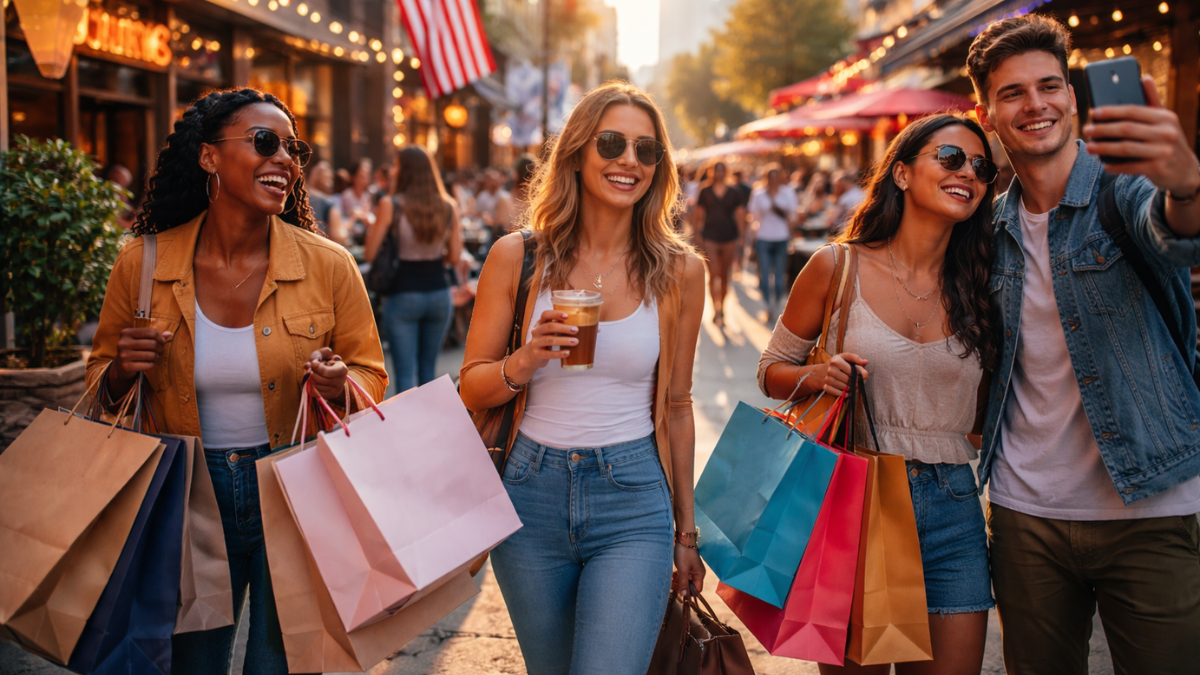
Consumerism has become one of the defining characteristics of modern American society. It shapes not only economic practices but also personal identities, cultural values, political discourse, and everyday life. In the United States, consumption is more than the act of buying goods and services; it is a way of expressing selfhood, achieving social status, constructing lifestyles, and participating in the broader culture. The American Dream itself has often been framed in material terms—home ownership, automobile possession, fashionable clothing, and access to leisure and technology.
From a sociological perspective, consumerism must be understood not merely as an economic phenomenon but as a cultural system. It organizes meanings, influences social relationships, and structures inequalities. Lifestyle culture in America reflects patterns of consumption that signal class position, gender identity, ethnicity, and generational belonging. Thus, the study of consumerism reveals deeper insights into power, stratification, socialization, and globalization.

This article examines the development of consumerism in America, theoretical interpretations, the relationship between consumption and identity, the impact of media and technology, environmental implications, and the sociological consequences of lifestyle-based differentiation.
Historical Roots of American Consumerism
The rise of consumerism in the United States can be traced back to the late nineteenth and early twentieth centuries. The Industrial Revolution transformed production systems, making mass production possible. Factories began to produce goods at unprecedented scales, and corporations needed consumers to purchase these products.
The growth of department stores, mail-order catalogs such as those from Sears, Roebuck and Co., and advertising industries helped shape a national consumer culture. During the 1920s, installment buying and credit systems expanded purchasing power. After World War II, suburbanization, automobile expansion, and television advertising accelerated consumerism. The postwar boom created a middle-class society centered around home appliances, cars, and modern conveniences.
In the late twentieth century, globalization and digital technology reshaped consumer practices. Online platforms like Amazon revolutionized shopping habits, creating a 24/7 marketplace. Consumerism became increasingly individualized, data-driven, and global in scope.
Theoretical Perspectives on Consumerism
Karl Marx and Commodity Fetishism
Karl Marx argued that in capitalist societies, commodities appear to have intrinsic value independent of the labor that produces them. This concept, known as commodity fetishism, explains how social relations between people become masked as relationships between things. In American consumer culture, brand loyalty and attachment to products reflect this fetishism. People often associate emotional meaning and identity with commodities, overlooking the labor conditions behind production.
Max Weber and Rationalization
Max Weber emphasized rationalization and bureaucratic organization. Modern consumer markets operate through systematic planning, efficiency, and calculability. Shopping malls, fast-food chains, and online retail systems embody Weber’s idea of rationalization, where consumption becomes standardized and predictable.
Thorstein Veblen and Conspicuous Consumption
Thorstein Veblen introduced the concept of conspicuous consumption in his work The Theory of the Leisure Class. He argued that individuals consume luxury goods to display wealth and social status. In American lifestyle culture, designer brands, luxury cars, and upscale neighborhoods serve as status symbols.
Pierre Bourdieu and Cultural Capital
Pierre Bourdieu highlighted how taste and lifestyle reflect social class. According to Bourdieu, cultural capital—knowledge, education, and aesthetic preferences—shapes consumption patterns. Organic food choices, art appreciation, fitness culture, and travel experiences often signal class distinction in America.
Consumerism and Identity Formation
In American society, identity is increasingly constructed through consumption. Clothing brands, technological devices, entertainment preferences, and dietary choices communicate who a person is. Lifestyle culture emphasizes self-expression through purchasing decisions.
Teenagers and young adults, in particular, are socialized into consumer identities. Social media platforms like Instagram and TikTok amplify consumer trends. Influencers promote products as part of a curated lifestyle. The concept of the “influencer economy” demonstrates how personal identity and commercial marketing merge.

Consumption also intersects with gender. Beauty products, fashion, and fitness industries often reinforce traditional gender norms while simultaneously offering empowerment narratives. Similarly, ethnic identity may be expressed through cultural commodities such as music, cuisine, and fashion.
Media, Advertising, and the Culture Industry
The expansion of mass media has been central to American consumerism. Advertising does more than inform; it shapes desires and aspirations. From television commercials to targeted online ads, consumers are constantly exposed to persuasive messages.
The Frankfurt School theorists, particularly Theodor W. Adorno and Max Horkheimer, criticized what they called the “culture industry.” They argued that mass-produced culture standardizes tastes and manipulates public consciousness. In the American context, blockbuster films, celebrity endorsements, and branded entertainment contribute to homogenized consumer desires.
Today, algorithms personalize advertising. Data analytics track browsing habits, creating individualized marketing strategies. This digital surveillance capitalism deepens consumer engagement while raising ethical concerns about privacy.
Consumerism and Social Stratification
Consumer practices both reflect and reproduce social inequality. While the ideology of consumer culture suggests equal opportunity to purchase, income disparities limit access to high-status goods. Luxury lifestyles remain accessible primarily to upper and upper-middle classes.
Credit systems allow lower-income individuals to participate in consumption but often lead to debt cycles. Student loans, credit card debt, and housing mortgages illustrate how financialization shapes lifestyle aspirations. Sociologically, this creates a paradox: consumption promises mobility, yet economic structures constrain it.
Neighborhoods in America also demonstrate lifestyle stratification. Gentrification transforms urban spaces into consumption-oriented zones—coffee shops, art galleries, boutique stores—often displacing working-class communities. Thus, consumerism influences spatial inequality.
Lifestyle Culture and Health
Lifestyle culture in America increasingly emphasizes wellness, fitness, and self-optimization. Gym memberships, organic foods, yoga studios, and wearable health technology are part of this trend. Health becomes commodified, turning well-being into a purchasable lifestyle.
However, access to healthy lifestyles is unequal. Organic food markets are often concentrated in affluent areas, while low-income neighborhoods face food deserts. Sociologically, lifestyle health culture may inadvertently blame individuals for structural inequalities.

Given your own interest in diet planning and health awareness, you may notice how wellness discourse often mixes medical advice with consumer marketing. The challenge is distinguishing genuine health improvement from commodified lifestyle branding.
Digital Consumerism and the Experience Economy
The twenty-first century has witnessed the rise of the experience economy. Consumers increasingly seek experiences rather than material goods. Travel, concerts, streaming services, and gaming communities illustrate this shift.
Platforms like Netflix and Airbnb demonstrate how digital infrastructure reshapes leisure. Experiences become shareable through social media, reinforcing identity performance.
E-commerce also fosters immediacy. Same-day delivery and digital payment systems accelerate consumption cycles. Convenience becomes a cultural value.
Environmental Consequences of Consumer Culture
American consumerism contributes significantly to environmental degradation. Fast fashion, electronic waste, and overconsumption increase carbon emissions and landfill accumulation. Sociologists examine how capitalist growth models encourage perpetual consumption.
Sustainability movements challenge this model. Ethical consumption, recycling initiatives, and minimalist lifestyles attempt to redefine consumption patterns. Yet critics argue that green consumerism often remains within market logic, offering “eco-friendly” products without addressing systemic issues.
Consumerism and Political Culture
Consumption in America also intersects with politics. Boycotts, brand activism, and corporate social responsibility illustrate how markets become arenas of political expression. Consumers may choose products aligned with their ethical values.
However, critics argue that consumer activism sometimes replaces collective political action. Purchasing becomes a substitute for deeper structural change.
Globalization and Cultural Influence
American consumer culture has global reach. Hollywood films, fast-food chains, and technology brands export American lifestyle ideals worldwide. At the same time, globalization introduces diverse cultural goods into the American market, creating hybrid identities.
This global exchange complicates traditional notions of national culture. American lifestyle becomes both a local reality and a global model.
Critiques and Alternatives
Sociologists and activists critique consumerism for fostering materialism, alienation, and ecological crisis. Minimalism, voluntary simplicity, and community-based economies offer alternative visions.
Community-supported agriculture, local cooperatives, and sharing economies attempt to rebuild social bonds weakened by individualistic consumption patterns.
Conclusion
Consumerism and lifestyle culture in America represent more than economic behavior; they are central to social identity, inequality, and cultural meaning. From Marx’s commodity fetishism to Bourdieu’s cultural capital, sociological theories illuminate how consumption structures everyday life.
American consumerism reflects historical development, media influence, digital transformation, and global integration. It shapes how individuals see themselves and how society organizes status and opportunity. While it offers avenues for self-expression and economic growth, it also produces inequality, environmental strain, and commodified identities.
For sociologists and students, the study of consumerism provides a lens to understand broader transformations in modern society. Lifestyle culture in America is both a reflection of capitalist development and a dynamic arena where identity, power, and meaning are constantly negotiated.
FAQs
1. What is Lifestyle Culture in America?
Lifestyle Culture in America refers to patterns of consumption, behavior, taste, and identity expression shaped by economic systems, media influence, and social class structures.
2. How does Lifestyle Culture in America relate to consumerism?
Lifestyle Culture in America is deeply connected to consumerism because personal identity and social status are often expressed through purchasing choices, brands, and experiences.
3. How does social class influence Lifestyle Culture in America?
Lifestyle Culture in America varies by social class. Upper classes display cultural capital through luxury goods and refined tastes, while working classes may adopt practical or aspirational consumption patterns.
4. What role does media play in shaping Lifestyle Culture in America?
Media platforms, advertising industries, and social media influencers significantly shape Lifestyle Culture in America by creating trends, desires, and lifestyle ideals.
5. Is Lifestyle Culture in America linked to identity formation?
Yes, Lifestyle Culture in America strongly influences identity formation, as individuals use fashion, technology, food, and entertainment preferences to define themselves socially.
6. How does Lifestyle Culture in America affect youth?
Youth are heavily influenced by Lifestyle Culture in America through digital media, peer groups, and influencer marketing, which shape aspirations and consumption behavior.
7. What is the connection between Lifestyle Culture in America and social inequality?
Lifestyle Culture in America often reproduces inequality because access to high-status lifestyles depends on income, education, and social capital.
8. How has digital technology transformed Lifestyle Culture in America?
E-commerce, streaming platforms, and social media have accelerated Lifestyle Culture in America by promoting instant consumption and online identity performance.
9. Does Lifestyle Culture in America promote materialism?
Critics argue that Lifestyle Culture in America encourages materialism by equating happiness and success with possessions and experiences.
10. What is the environmental impact of Lifestyle Culture in America?
Lifestyle Culture in America contributes to overconsumption, waste production, and environmental degradation, particularly through fast fashion and electronic waste.
11. How does Lifestyle Culture in America influence health trends?
Lifestyle Culture in America has commercialized wellness through gym culture, organic food markets, fitness apps, and self-care industries.
12. Can Lifestyle Culture in America be politically expressive?
Yes, consumers often use Lifestyle Culture in America to express political values through ethical consumption, brand boycotts, and socially responsible purchasing.
13. How does globalization shape Lifestyle Culture in America?
Globalization introduces diverse cultural influences into Lifestyle Culture in America while also exporting American consumer ideals worldwide.
14. Are there alternatives to dominant Lifestyle Culture in America?
Movements such as minimalism, sustainable living, and community-based economies challenge dominant Lifestyle Culture in America.
15. Why is Lifestyle Culture in America important for sociological study?
Lifestyle Culture in America reveals how identity, power, inequality, and capitalism interact in everyday life, making it a critical area of sociological analysis.