Introduction
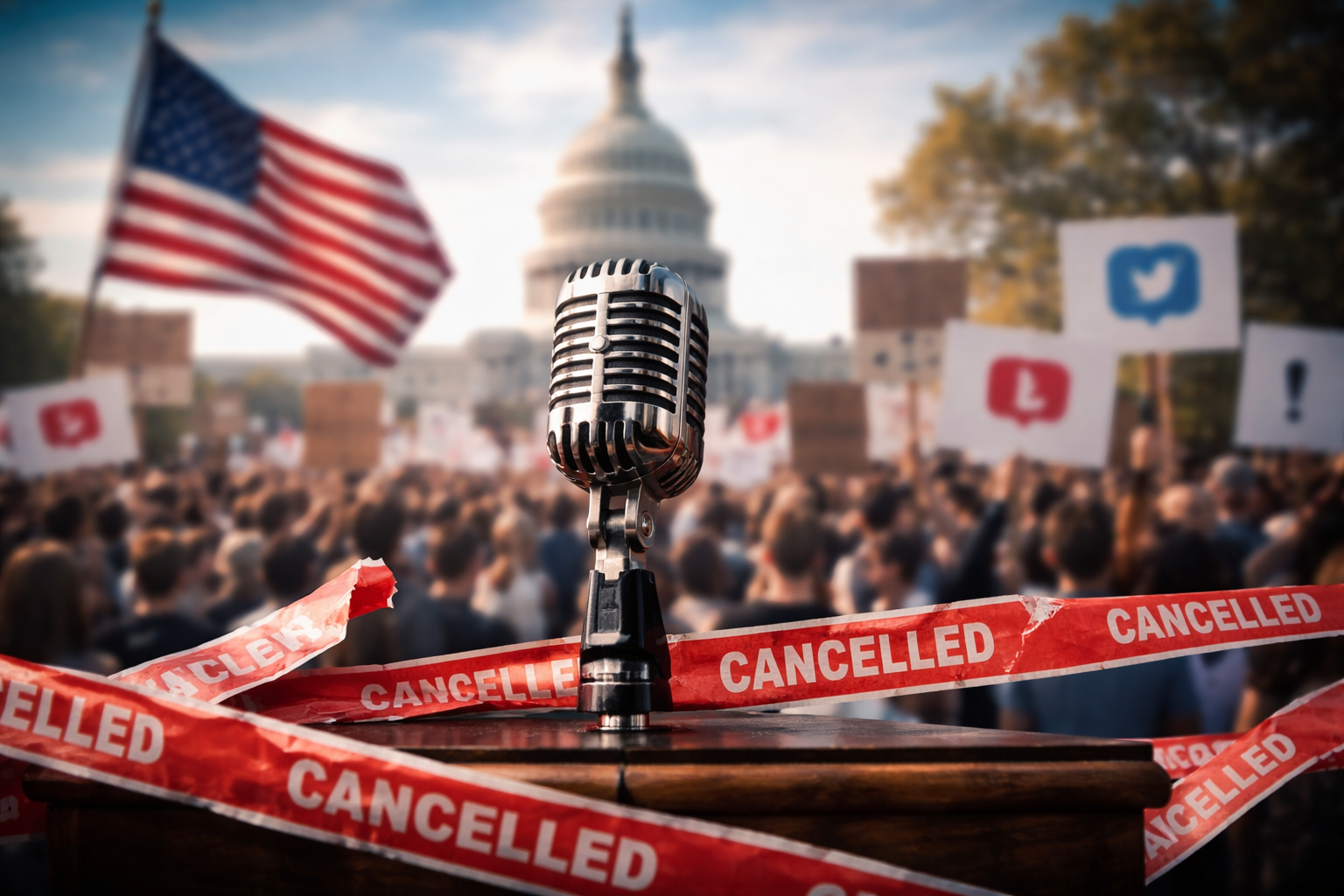
In recent years, the term cancel culture has become one of the most contested ideas in American public discourse. From celebrities losing careers after controversial statements to ordinary individuals facing social backlash on digital platforms, cancel culture has emerged as a powerful social phenomenon. At the same time, debates around free speech—a core democratic value in American society—have intensified. Supporters of cancel culture see it as a form of social accountability, while critics argue that it threatens freedom of expression and open debate. From a sociological perspective, cancel culture is not merely an internet trend; it reflects deeper power relations, social norms, moral boundaries, and transformations in public communication.
This article examines cancel culture and free speech in America through sociological theories and social realities. It explores how social media, identity politics, power structures, and cultural polarization shape this ongoing conflict and what it reveals about contemporary American society.
Understanding Cancel Culture: A Sociological Meaning
Cancel culture refers to the collective withdrawal of support—social, professional, or economic—from individuals or institutions perceived to have violated accepted social norms or moral standards. Sociologically, this practice can be understood as a form of informal social control. Unlike legal punishment imposed by the state, cancel culture operates through public opinion, social pressure, and reputational damage.
Historically, societies have always practiced social exclusion. What makes cancel culture unique in modern America is the speed, scale, and permanence enabled by digital media. Actions or statements made years earlier can resurface and trigger widespread condemnation within hours. From a sociological lens, cancel culture reflects changing norms around accountability, morality, and power in a highly mediated society.
Free Speech in American Society
Free speech has long been central to American democratic identity. Rooted in constitutional values and Enlightenment ideals, free expression is considered essential for political debate, social progress, and individual liberty. Sociologists, however, emphasize that free speech has never been absolute in practice. Social norms, power hierarchies, and institutional controls have always shaped whose voices are heard and whose are silenced.
In contemporary America, the free speech debate is no longer limited to government censorship. Instead, it increasingly concerns social censorship, where speech is legally permitted but socially punished. Cancel culture operates in this space, raising questions about whether freedom of speech includes freedom from social consequences.
Cancel Culture as Social Accountability
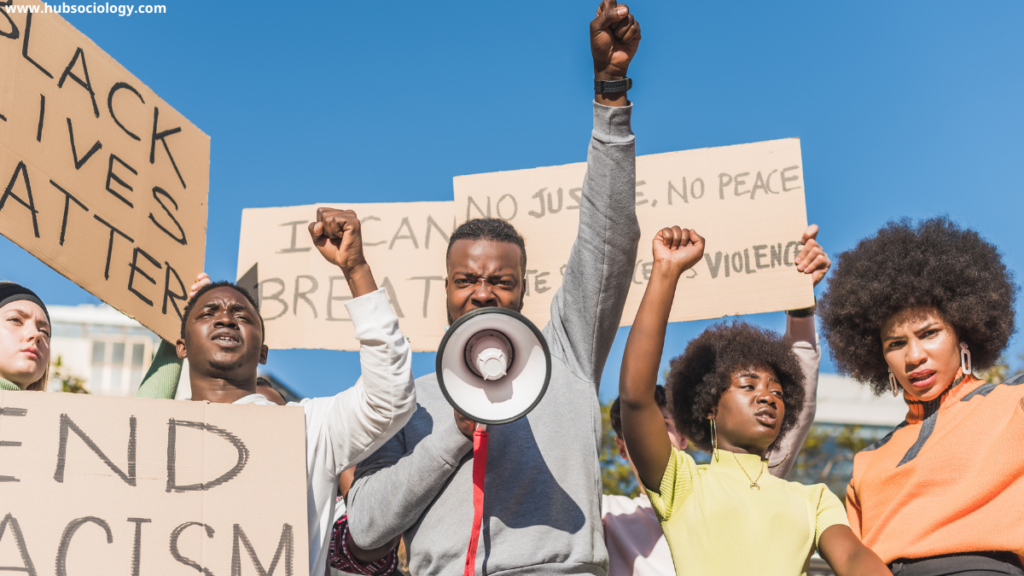
Supporters of cancel culture argue that it serves an important corrective function in society. From this perspective, cancel culture amplifies marginalized voices that were historically ignored or silenced. Sociological theories of conflict and inequality help explain this view. Groups that lack access to formal power—such as racial minorities, women, and LGBTQ+ communities—use collective action and digital platforms to challenge dominant narratives and hold powerful individuals accountable.
In this sense, cancel culture can be seen as a form of cultural resistance. It exposes discriminatory behavior, calls out abuse of power, and reshapes social norms. Many social movements, including #MeToo and racial justice campaigns, have relied on public exposure and collective pressure to bring about change where institutions failed.
Cancel Culture and Moral Regulation
From a functionalist sociological perspective, cancel culture can also be understood as a mechanism of moral regulation. Societies establish boundaries of acceptable behavior, and those who cross them face sanctions. Cancel culture reinforces shared values by signaling what is considered unacceptable.
However, moral regulation becomes problematic when norms are unclear, rapidly changing, or enforced unevenly. In American society, cultural values are deeply divided along political, generational, and ideological lines. What one group sees as accountability, another sees as persecution. This moral fragmentation contributes to confusion and fear around public expression.
Power, Inequality, and Selective Cancellation
A key sociological critique of cancel culture concerns power dynamics. Not everyone is equally vulnerable to being canceled. Celebrities, academics, journalists, and professionals with public visibility are more likely to face cancellation than powerful corporations or political elites. Moreover, individuals from marginalized backgrounds may experience harsher consequences with fewer opportunities for recovery.
This selective nature of cancellation reveals structural inequalities in American society. Sociologists argue that cancel culture often punishes individuals rather than addressing systemic problems. While a public figure may be removed from a platform, the social conditions that enabled harmful behavior often remain unchanged.
The Role of Social Media and Digital Public Space
Social media platforms have transformed the nature of public discourse in America. They function as digital public spheres where moral judgments are made collectively and instantaneously. Algorithms reward outrage, emotional reactions, and viral content, intensifying cancel culture dynamics.

From a symbolic interactionist perspective, online interactions shape identities and social meanings. Public shaming, call-outs, and online boycotts become performances of moral identity. Individuals participate not only to seek justice but also to signal belonging to a moral community. This performative aspect can blur the line between genuine accountability and social punishment.
Free Speech vs. Social Consequences
One of the central tensions in the cancel culture debate is the distinction between legal rights and social consequences. Sociologically, free speech does not exist in a vacuum; it is embedded within social relationships and power structures. While individuals may have the legal right to express controversial opinions, society also has the power to respond negatively.
Critics argue that cancel culture creates a climate of fear that discourages open discussion, particularly in academic and cultural spaces. Self-censorship becomes common as individuals avoid expressing unpopular or complex views. This phenomenon has implications for democratic deliberation and intellectual diversity in American society.
Polarization and Cultural Conflict
Cancel culture is deeply tied to political and cultural polarization in America. Sociologists view this polarization as a result of economic inequality, identity politics, and media fragmentation. Cancel culture often becomes a weapon in ideological battles, with different groups canceling each other across political lines.
This environment reduces opportunities for dialogue and increases social mistrust. Instead of debate and persuasion, moral condemnation becomes the dominant mode of interaction. As a result, cancel culture may reinforce existing divisions rather than promoting social change.
Generational Differences and Cultural Change
Generational perspectives play a significant role in attitudes toward cancel culture. Younger generations, socialized in digital environments, often view public accountability as necessary for social justice. Older generations may perceive cancel culture as intolerant and hostile to free expression.
From a sociological standpoint, this generational divide reflects broader cultural shifts in values, communication styles, and understandings of authority. Cancel culture can be interpreted as part of an ongoing negotiation over cultural norms in a rapidly changing society.
Cancel Culture in Institutions: Media, Academia, and Workplaces
Cancel culture extends beyond individuals to institutions such as universities, media organizations, and workplaces. Employees may face disciplinary action due to online behavior, raising questions about the boundaries between personal expression and professional responsibility.
In academia, debates about cancel culture intersect with academic freedom. Sociologists warn that excessive social pressure can undermine critical inquiry and intellectual risk-taking. At the same time, institutions are increasingly expected to reflect ethical and inclusive values, creating tension between freedom and responsibility.
Toward a Balanced Sociological Approach
Rather than framing cancel culture as purely good or bad, sociology encourages a nuanced understanding. Cancel culture reflects real social grievances and demands for accountability, but it also carries risks of excess, injustice, and social fragmentation.
A balanced approach would involve distinguishing between harmful behavior and unpopular opinions, emphasizing restorative justice over punishment, and fostering dialogue instead of exclusion. Sociologically informed responses focus on structural change, education, and institutional reform rather than individual scapegoating.
Conclusion
Cancel culture and free speech in America represent a complex intersection of power, morality, identity, and communication. From a sociological perspective, cancel culture is neither a sudden crisis nor a simple moral failure. It is a product of deep social transformations driven by digital media, cultural conflict, and struggles over recognition and justice.
Understanding cancel culture requires moving beyond emotional reactions and ideological slogans. Sociology offers tools to analyze how social norms are enforced, whose voices are amplified, and how democratic values can be preserved in an increasingly polarized society. The challenge for American society is not to eliminate conflict but to manage it in ways that promote accountability, dialogue, and social cohesion without undermining the fundamental principle of free expression.
FAQs on Free Speech in America
1. What is meant by Free Speech in America?
Free Speech in America refers to the constitutional right that allows individuals to express opinions, ideas, and beliefs without government interference, subject to limited legal restrictions.
2. Why is Free Speech in America important for democracy?
Free Speech in America is essential for democratic participation because it enables open debate, political criticism, and public accountability.
3. How does the Constitution protect Free Speech in America?
Free Speech in America is primarily protected by the First Amendment, which restricts the government from limiting expression.
4. Does Free Speech in America have limits?
Yes, Free Speech in America has limits, including restrictions on hate speech, incitement to violence, obscenity, and defamation.
5. How does cancel culture affect Free Speech in America?
Cancel culture affects Free Speech in America by creating social consequences for controversial speech, often leading to self-censorship.
6. Is cancel culture a violation of Free Speech in America?
Cancel culture does not legally violate Free Speech in America, but sociologists argue it may weaken the spirit of free expression.
7. How do sociologists view Free Speech in America?
Sociologists view Free Speech in America as a socially regulated practice influenced by power, norms, and inequality.
8. What role does social media play in Free Speech in America?
Social media reshapes Free Speech in America by amplifying voices while also enabling public shaming and digital surveillance.
9. Can private companies restrict Free Speech in America?
Private platforms are not bound by the First Amendment, so they can regulate speech while still influencing Free Speech in America.
10. How does political polarization impact Free Speech in America?
Political polarization narrows tolerance for opposing views, making Free Speech in America more contested and fragile.
11. Is Free Speech in America equally available to all groups?
Sociologically, Free Speech in America is unequal due to differences in social power, access, and institutional support.
12. How does academic freedom relate to Free Speech in America?
Academic freedom is a critical extension of Free Speech in America, allowing scholars to research and debate ideas freely.
13. Does Free Speech in America protect offensive speech?
Yes, Free Speech in America often protects offensive speech unless it directly causes harm or violence.
14. How has Free Speech in America changed in the digital age?
The digital age has expanded Free Speech in America while increasing social monitoring and public backlash.
15. What is the future of Free Speech in America?
The future of Free Speech in America depends on balancing accountability, inclusion, and open dialogue in a polarized society.