Introduction
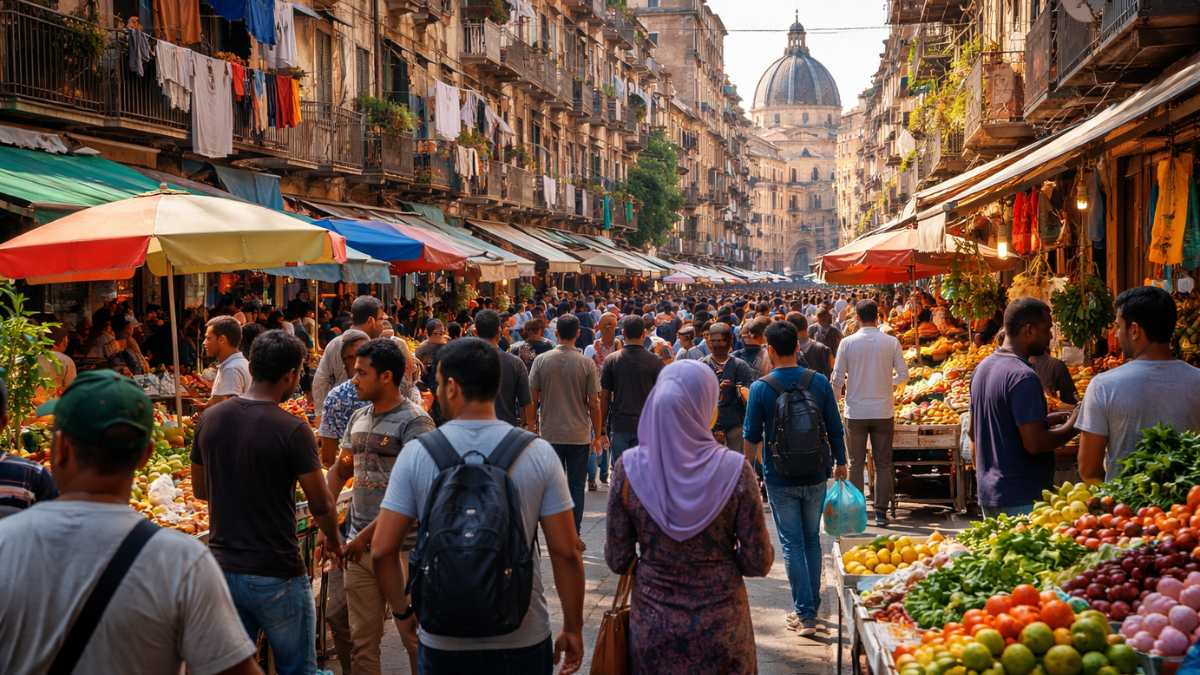
Migration has been one of the most transformative social processes shaping contemporary Europe. Among Southern European countries, Italy occupies a unique position. Historically a land of emigration, Italy has become, since the late twentieth century, a major destination for migrants from Eastern Europe, North Africa, Sub-Saharan Africa, South Asia, and Latin America. This dramatic demographic transformation has profoundly influenced Italy’s urban landscape. Cities such as Rome, Milan, Turin, and Naples have become central arenas where migration intersects with housing, labor markets, education, and welfare systems.
However, migration in Italy has not unfolded in a socially neutral space. Instead, it has interacted with pre-existing regional disparities, economic stagnation, and structural inequalities. As a result, migration and urban inequality are deeply intertwined. Migrants often occupy the most precarious positions within Italian cities, experiencing spatial segregation, labor exploitation, limited social mobility, and symbolic exclusion.

This article examines migration and urban inequality in Italy from a sociological perspective. It explores historical patterns of migration, labor market segmentation, housing segregation, education disparities, policy responses, and the broader implications for Italian society.
Historical Transformation: From Emigration to Immigration
For much of the nineteenth and twentieth centuries, Italy was a country of emigration. Millions of Italians migrated to the United States, Argentina, Germany, Switzerland, and Australia in search of employment. The shift from emigration to immigration began in the late 1970s and accelerated in the 1990s.
Several structural factors contributed to this shift. Economic growth in Northern Italy created demand for low-wage labor in construction, agriculture, domestic work, and manufacturing. Simultaneously, geopolitical transformations such as the collapse of socialist regimes in Eastern Europe and instability in North Africa increased migratory flows toward Southern Europe.
Italy’s geographic location in the Mediterranean made it a primary entry point into the European Union. Particularly after the formation of the European Union and the implementation of the Schengen Agreement, Italy became both a transit and destination country.
From a sociological viewpoint, this transformation created a new multiethnic urban society in a relatively short period. Italian cities, previously characterized by internal regional migration (South to North), now had to adapt to global migration.
Migration Flows and Urban Concentration
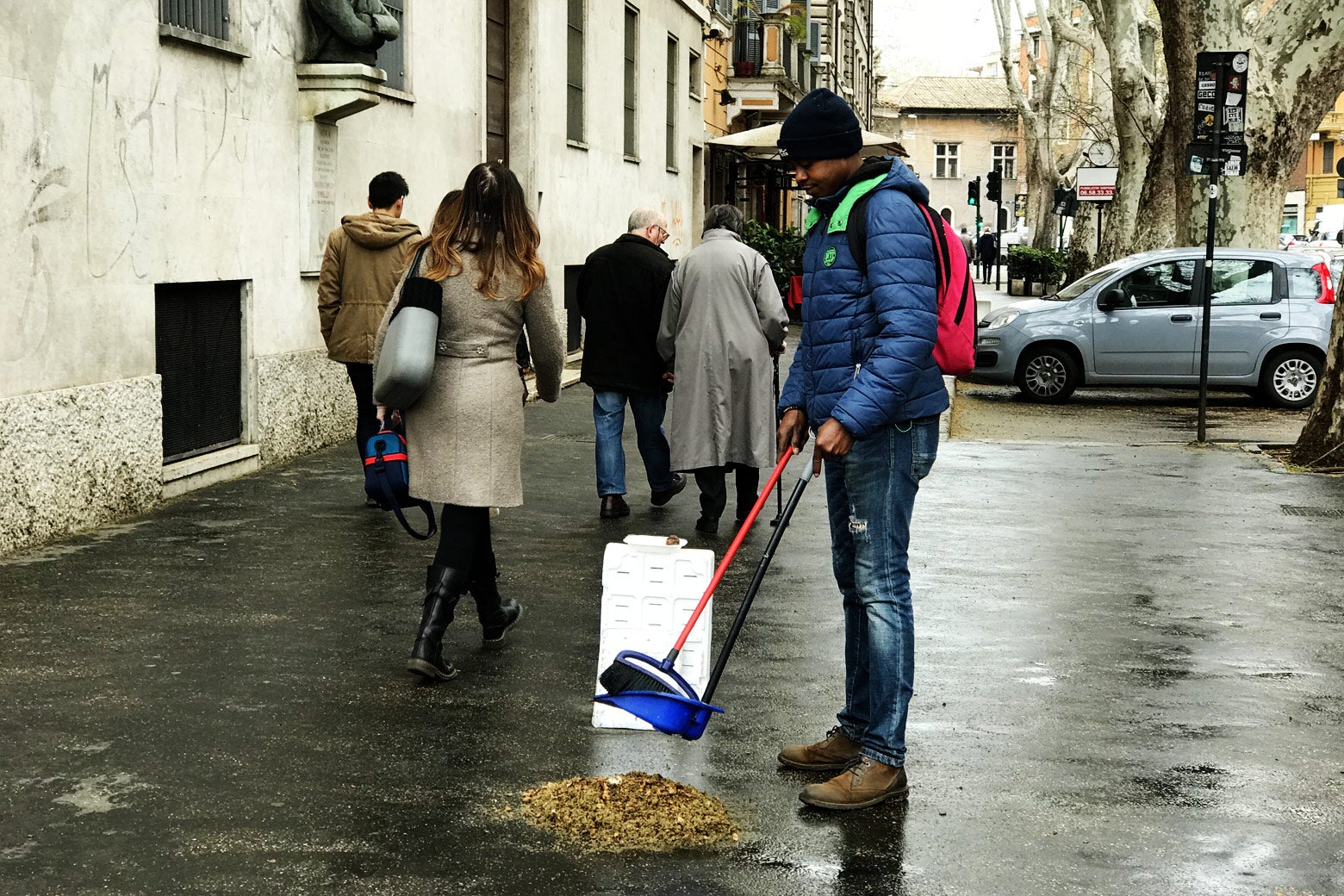
Migrants in Italy are predominantly concentrated in urban areas. The North, particularly Lombardy, Veneto, and Emilia-Romagna, hosts a large proportion of foreign residents due to stronger industrial economies. Milan, as Italy’s financial capital, attracts both high-skilled migrants and low-wage workers.
Rome, as the administrative capital, also serves as a hub for migrants working in domestic services, tourism, and public sectors. Meanwhile, agricultural zones in Southern Italy attract seasonal migrant laborers, especially in informal and exploitative conditions.
Urban concentration is not merely demographic; it is sociologically significant. Cities provide opportunities for employment, community networks, and access to services. However, they also reproduce and intensify inequalities. Migrants often cluster in peripheral neighborhoods where housing is cheaper but services are limited. This spatial distribution reflects broader structural inequalities embedded in Italian urban development.
Labor Market Segmentation
One of the central dimensions of urban inequality is labor market segmentation. Sociological theories of segmented labor markets explain how migrants are often confined to secondary sectors characterized by instability, low wages, and limited upward mobility.
In Italy, migrants are heavily represented in:
- Domestic and care work
- Construction
- Agriculture
- Cleaning and hospitality services
- Low-skilled manufacturing
This concentration is not accidental. Structural demand for flexible and low-cost labor intersects with restrictive immigration policies that tie residence permits to employment contracts. As a result, migrants often accept precarious working conditions to maintain legal status.
In cities like Milan and Turin, even second-generation migrants face barriers in accessing professional occupations. Discrimination, lack of recognition of foreign qualifications, and limited social capital restrict mobility. Sociologically, this reflects a pattern of ethnic stratification within urban economies.
Moreover, undocumented migrants are particularly vulnerable. Informal labor markets create conditions of exploitation, reinforcing economic inequality and preventing social integration.
Housing and Spatial Segregation

Urban inequality becomes visibly apparent in housing patterns. Migrants in Italy frequently face discrimination in rental markets. Landlords may refuse to rent to foreigners or demand higher deposits. Consequently, migrants are often concentrated in overcrowded apartments or peripheral neighborhoods.
In Rome’s outskirts and Milan’s peripheral districts, immigrant populations are disproportionately high. These areas tend to have weaker infrastructure, fewer public services, and limited employment opportunities. Over time, such spatial concentration can lead to stigmatization and social exclusion.
Unlike some Northern European countries, Italy has limited public housing. The scarcity of affordable housing exacerbates competition between low-income Italian citizens and migrants. This competition can fuel resentment and anti-immigrant sentiment.
Spatial segregation also affects social mobility. Living in marginalized neighborhoods restricts access to quality education, transportation, and professional networks. Sociologically, space becomes a mechanism through which inequality is reproduced.
Education and Second-Generation Inequality
The children of migrants represent a crucial dimension of Italy’s urban future. In many cities, classrooms have become increasingly multicultural. However, educational inequality remains significant.
Second-generation migrants often face linguistic barriers, especially if parents have limited Italian proficiency. Schools in peripheral neighborhoods may have fewer resources, reinforcing disadvantage.
Tracking systems in Italian secondary education can channel migrant children into vocational pathways, limiting access to university education. This educational stratification reflects broader patterns of class and ethnic inequality.
Yet, there are also signs of transformation. Many second-generation Italians actively participate in civic life and cultural production. They challenge narrow definitions of national identity and contribute to reshaping Italian society.
Regional Divide and Urban Inequality
Italy’s historic North-South divide plays a crucial role in shaping migration outcomes. Northern cities generally offer more employment opportunities and better welfare systems. Southern regions, by contrast, experience higher unemployment and weaker public services.
Migrants in Southern agricultural zones often face severe exploitation, especially in informal labor arrangements. Urban inequality in cities like Naples intersects with existing poverty and marginalization. Thus, migration does not create inequality from scratch; it interacts with pre-existing structural disparities.
From a sociological perspective, this illustrates how migration is embedded in broader political-economic contexts. Inequality is not solely ethnic but also regional and class-based.
Citizenship, Legal Status, and Political Exclusion
Italy’s citizenship laws are primarily based on jus sanguinis (right of blood), meaning citizenship is inherited rather than automatically granted by birth on Italian soil. This has significant consequences for second-generation migrants born and raised in Italy.
Without citizenship, many young people experience symbolic exclusion despite cultural integration. Political participation is limited, reinforcing democratic inequality.
Debates over citizenship reform reveal tensions within Italian society. Some advocate for inclusive policies recognizing Italy’s multicultural reality, while others fear cultural dilution. Sociologically, citizenship becomes a site of struggle over national identity and belonging.
Media Representation and Social Perception
Urban inequality is also shaped by symbolic processes. Media representations often associate migrants with crime, insecurity, or economic burden. Such narratives can legitimize restrictive policies and social exclusion.
At the same time, civil society organizations, religious groups, and grassroots movements advocate for migrant rights. In cities like Rome and Milan, local initiatives promote intercultural dialogue and social cohesion.
Symbolic inclusion is as important as economic integration. Negative stereotyping reinforces boundaries between “native” Italians and migrants, deepening urban divisions.
Policy Responses and Urban Governance
Italian migration policy has often been reactive rather than proactive. Periodic regularization programs have legalized undocumented migrants, but structural reforms remain limited.
Municipal governments play a crucial role in addressing urban inequality. Local policies concerning housing, education, healthcare, and labor regulation significantly shape migrant experiences.
However, austerity measures and fiscal constraints have weakened local welfare capacities. Without adequate investment, urban inequality persists.
Comparatively, Italy’s integration policies are less developed than those in countries like Germany or France. This institutional gap contributes to uneven integration outcomes.
Migration, Informality, and the Urban Economy
Informal economies are deeply embedded in Italian urban life. Migrants frequently participate in informal sectors such as street vending, domestic services, and small-scale trade.
While informality provides survival strategies, it also limits social protection. Workers in informal sectors lack access to benefits, stable contracts, and legal safeguards.
Sociologically, informality reflects a broader crisis of neoliberal urban economies. Precarity affects not only migrants but also many young Italians. Thus, migration intersects with wider transformations in labor markets and welfare states.
Social Cohesion and the Future of Italian Cities
The relationship between migration and urban inequality is not static. It evolves through political decisions, economic trends, and social movements.
Italian cities are becoming increasingly diverse. This diversity can enrich cultural life, stimulate economic innovation, and strengthen demographic sustainability in an aging society. However, without inclusive policies, inequality may deepen.
The challenge for Italy lies in balancing border management with human rights, economic flexibility with social protection, and national identity with multicultural citizenship.
From a sociological perspective, migration reveals the structural tensions within contemporary capitalism and nation-states. Urban inequality is not merely a migrant issue but a reflection of broader systemic inequalities.
Conclusion
Migration and urban inequality in Italy are deeply interconnected phenomena shaped by historical transformation, economic restructuring, regional disparities, and political choices. Cities such as Rome, Milan, Turin, and Naples serve as laboratories where these dynamics unfold.
Migrants contribute significantly to Italy’s economy and social life, yet they often remain concentrated in precarious labor sectors, marginalized neighborhoods, and limited political spaces. Urban inequality is reproduced through labor market segmentation, housing discrimination, educational stratification, and restrictive citizenship laws.
A sociological understanding emphasizes that inequality is structural rather than cultural. Addressing urban inequality requires comprehensive policies targeting labor rights, affordable housing, inclusive education, and citizenship reform.
Italy’s future as a democratic and cohesive society depends on its capacity to integrate migrants not only economically but socially and politically. Migration, when managed inclusively, can become a resource rather than a source of division. The sociological task is to illuminate these dynamics and contribute to informed public debate.
FAQs on Urban Inequality in Italy
1. What is Urban Inequality in Italy?
Urban Inequality in Italy refers to the unequal distribution of resources, opportunities, housing, employment, and social services among different social groups within Italian cities.
2. How does migration contribute to Urban Inequality in Italy?
Migration contributes to Urban Inequality in Italy by concentrating migrants in low-wage jobs, marginalized neighborhoods, and precarious housing conditions.
3. Which Italian cities show the highest levels of Urban Inequality in Italy?
Major cities like Rome, Milan, Naples, and Turin show visible forms of Urban Inequality in Italy, especially in peripheral neighborhoods.
4. Is Urban Inequality in Italy linked to the North-South divide?
Yes, Urban Inequality in Italy is strongly influenced by the historical economic gap between Northern and Southern regions.
5. How does labor market segmentation affect Urban Inequality in Italy?
Labor market segmentation confines many migrants and low-income Italians to unstable jobs, reinforcing Urban Inequality in Italy.
6. What role does housing discrimination play in Urban Inequality in Italy?
Housing discrimination limits access to quality accommodation for migrants and low-income families, deepening Urban Inequality in Italy.
7. How does education impact Urban Inequality in Italy?
Educational disparities, especially in marginalized urban areas, reproduce social class differences and sustain Urban Inequality in Italy.
8. Are second-generation migrants affected by Urban Inequality in Italy?
Yes, second-generation migrants often face barriers in citizenship, education, and employment, contributing to Urban Inequality in Italy.
9. How does informal employment increase Urban Inequality in Italy?
Informal employment reduces job security and social protection, intensifying Urban Inequality in Italy.
10. Does citizenship law influence Urban Inequality in Italy?
Italy’s restrictive citizenship laws can exclude migrants from full political participation, reinforcing Urban Inequality in Italy.
11. How do media narratives shape perceptions of Urban Inequality in Italy?
Negative media portrayals of migrants may legitimize exclusionary attitudes and policies, which sustain Urban Inequality in Italy.
12. What is the relationship between poverty and Urban Inequality in Italy?
Urban poverty, particularly in peripheral districts, is a major driver of Urban Inequality in Italy.
13. Can urban policy reduce Urban Inequality in Italy?
Yes, inclusive housing, labor protection, and education reforms can significantly reduce Urban Inequality in Italy.
14. How does globalization influence Urban Inequality in Italy?
Global economic restructuring and labor flexibility increase precarity, thereby intensifying Urban Inequality in Italy.
15. What is the future outlook for Urban Inequality in Italy?
The future of Urban Inequality in Italy depends on inclusive governance, economic reforms, and integration policies that promote social cohesion.