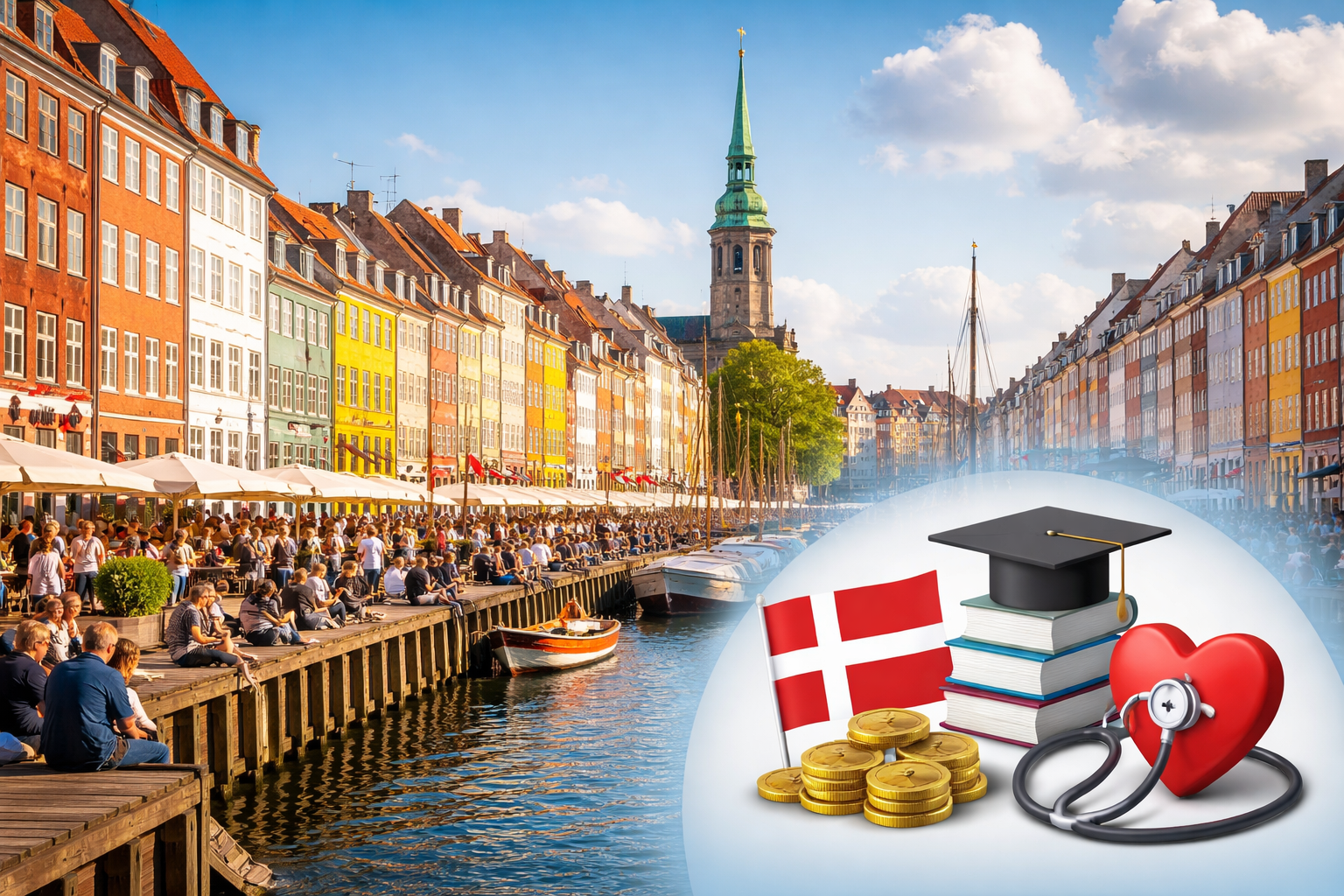
Danish society is often cited as one of the most successful examples of how modern welfare states can balance economic efficiency, social equality, and democratic participation. At the heart of this success lies the Nordic Welfare Model, a distinctive social system shared—though not identically—by the Scandinavian countries. From a sociological standpoint, Denmark offers a compelling case study of how institutions, culture, and collective values interact to shape social outcomes. This article explores Danish society through the lens of the Nordic Welfare Model, focusing on its historical roots, structural features, social impacts, and contemporary challenges.
Understanding the Nordic Welfare Model
The Nordic Welfare Model is characterized by universal social rights, extensive public services, high taxation, and a strong commitment to social equality. Unlike residual welfare systems that intervene only when markets fail, the Nordic approach treats welfare as a social right tied to citizenship rather than employment status or income level. In the Danish context, this model is deeply embedded in social norms that emphasize solidarity, trust, and collective responsibility.
Sociologically, the model reflects a social democratic ideology where the state plays an active role in reducing inequality and ensuring a high standard of living for all citizens. Welfare is not seen as charity but as a shared investment in human well-being and social cohesion.
Historical Evolution of Danish Welfare Society
The roots of Denmark’s welfare system can be traced back to the late 19th and early 20th centuries, when industrialization transformed social relations and created new social risks. Early labor movements, cooperatives, and farmers’ associations played a crucial role in shaping Denmark’s political culture. These grassroots movements laid the foundation for collective bargaining, social insurance, and democratic participation.
After World War II, the welfare state expanded rapidly. The post-war consensus favored universal education, healthcare, and social security as tools for nation-building and social stability. By the 1960s and 1970s, Denmark had established a comprehensive welfare state that covered citizens “from cradle to grave.” Sociologically, this period marked the institutionalization of equality as a core social value.
Core Features of the Danish Welfare System
One of the defining characteristics of Danish society is universalism. Public services such as healthcare, education, and childcare are accessible to all residents, largely free at the point of use. This reduces social stigma and fosters a sense of shared citizenship.
Another key feature is high taxation combined with high-quality public services. While tax rates in Denmark are among the highest in the world, public acceptance remains strong. From a sociological perspective, this acceptance is rooted in high levels of social trust—trust in institutions, in fellow citizens, and in the belief that taxes are used fairly and efficiently.
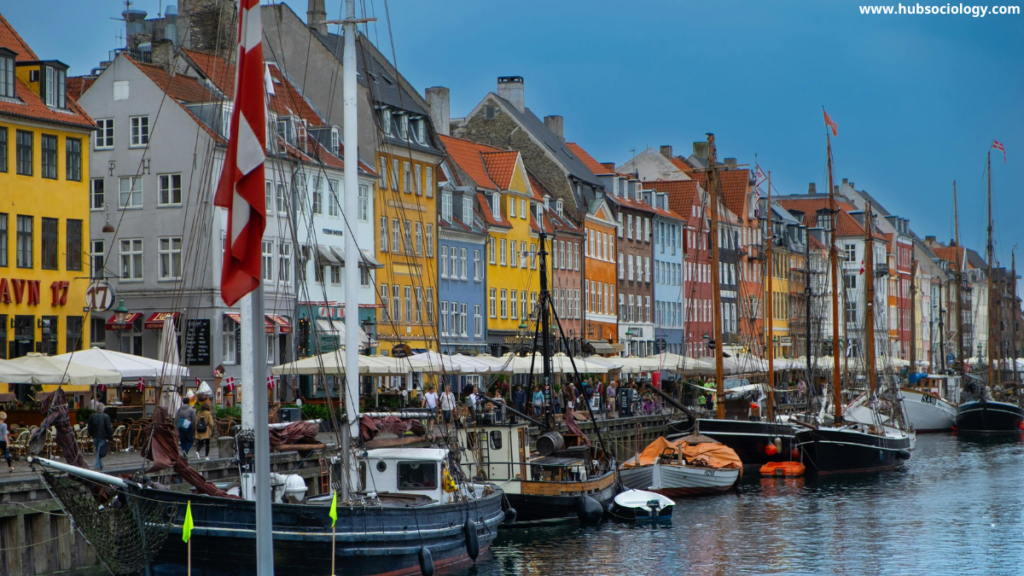
The labor market operates under a system often described as “flexicurity.” Employers enjoy flexibility in hiring and firing, while workers benefit from strong social security, unemployment benefits, and active labor market policies. This arrangement reflects a compromise between capital and labor, reducing class conflict and promoting social stability.
Social Equality and Class Structure
Danish society is frequently praised for its low levels of income inequality and poverty. Sociological analysis shows that this is not merely the result of redistribution through taxes and transfers, but also of policies that promote equal opportunities. Free education, including higher education, plays a central role in reducing intergenerational inequality.
Class distinctions certainly exist in Denmark, but they are less pronounced than in many capitalist societies. The traditional working class–middle class divide has softened, partly due to the expansion of the welfare state and the growth of public sector employment. Sociologists often describe Danish society as relatively “flattened” in terms of class hierarchy, though not entirely classless.
Family, Gender, and Welfare
The Nordic Welfare Model has had profound effects on family life and gender relations. Denmark promotes a dual-earner family model, where both men and women participate in paid work. State-supported childcare, generous parental leave, and flexible working arrangements make this possible.
From a sociological viewpoint, these policies have contributed to high levels of female labor force participation and relatively low gender inequality. Family is no longer the primary provider of care; instead, care responsibilities are socialized through public institutions. This reduces dependence within families and supports individual autonomy.
At the same time, changing family structures—such as rising cohabitation, single-parent households, and delayed marriage—are accommodated rather than penalized by welfare policies. This reflects a broader cultural acceptance of diverse lifestyles within Danish society.
Education and Social Mobility
Education is a cornerstone of the Danish welfare state. The public education system emphasizes equality, critical thinking, and lifelong learning. Sociologically, education functions not only as a means of skill development but also as a mechanism of social integration.
Free access to higher education reduces economic barriers and supports social mobility. While social background still influences educational outcomes, the gap is narrower compared to more market-driven systems. Education in Denmark also plays a cultural role, reinforcing democratic values, civic responsibility, and social cohesion.
Health, Well-being, and Social Trust
Denmark consistently ranks high in global happiness and quality-of-life surveys. Sociologists caution against simplistic interpretations of “happiness,” but there is strong evidence that the welfare system contributes to overall well-being by reducing insecurity and stress.
Universal healthcare ensures that access to medical services is based on need rather than ability to pay. Preventive care, mental health services, and community-based healthcare contribute to long life expectancy and relatively good population health.
A crucial sociological factor underlying these outcomes is social trust. Danish society exhibits high levels of generalized trust, which in turn supports cooperation, compliance with laws, and willingness to contribute to the welfare system. Trust acts as social capital, reinforcing the effectiveness of institutions.
Immigration, Integration, and Social Cohesion
In recent decades, immigration has posed new challenges to the Danish welfare model. As Denmark has become more ethnically and culturally diverse, questions of integration, social cohesion, and welfare access have gained prominence.
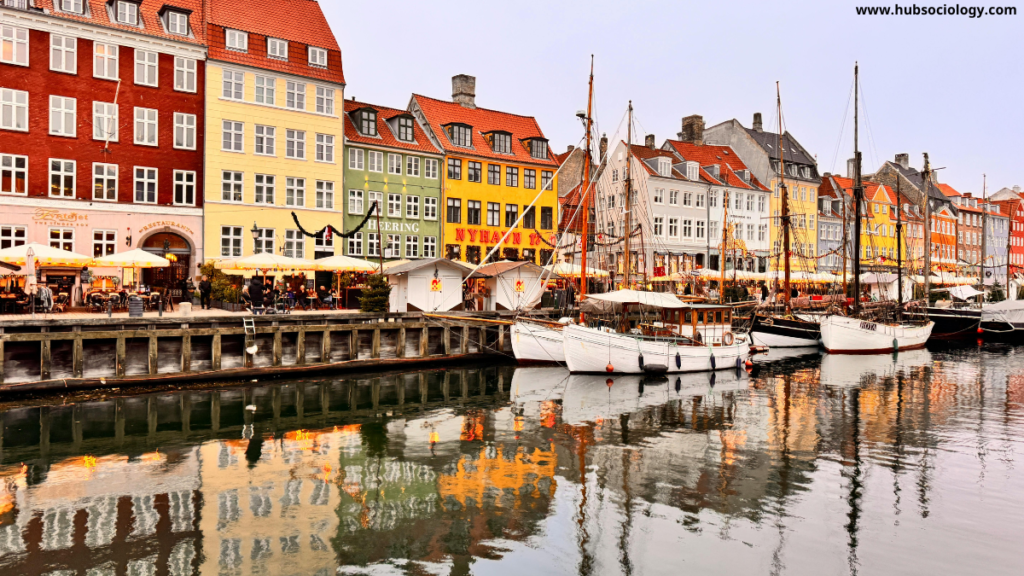
Sociologically, the tension arises from the universal nature of the welfare system combined with concerns about cultural integration and labor market participation. Public debates often revolve around whether newcomers fully share the norms of reciprocity and trust that sustain the welfare state.
Denmark has responded with integration policies that emphasize language acquisition, employment, and civic values. However, critics argue that some measures risk social exclusion and stigmatization. The challenge for Danish society is to balance inclusivity with social solidarity in an increasingly diverse context.
The Role of the State and Democracy
The Danish welfare model cannot be separated from its democratic framework. Strong local governments, transparent institutions, and active civil society organizations ensure that welfare policies are responsive to citizens’ needs.
From a sociological perspective, the welfare state enhances democracy by reducing economic inequalities that can undermine political participation. When basic needs are met, citizens are more likely to engage in civic life and democratic processes.
At the same time, the expansion of the welfare state raises questions about individual responsibility and state dependency. Danish society addresses this through active labor market policies and an emphasis on participation rather than passive support.
Critiques and Contemporary Challenges
Despite its strengths, the Nordic Welfare Model faces several challenges. Globalization has increased economic competition and put pressure on public finances. An aging population raises concerns about the sustainability of pensions and healthcare systems.
Neoliberal critiques argue that high taxes may reduce incentives for innovation and entrepreneurship. From a sociological angle, these critiques often overlook the role of social security in enabling risk-taking by reducing fear of failure.
Another challenge lies in maintaining social trust in a changing society. As inequality rises globally and cultural diversity increases, the shared norms that underpin the welfare state may be tested. Denmark’s response to these challenges will shape the future of its social model.
Denmark as a Sociological Case Study
As a society, Denmark illustrates how welfare institutions, cultural values, and political structures interact to produce distinctive social outcomes. The Danish experience challenges the assumption that economic efficiency and social equality are mutually exclusive. Instead, it suggests that well-designed welfare systems can support both.
From a sociological perspective, the Nordic Welfare Model in Denmark is not merely a set of policies but a social contract grounded in trust, solidarity, and democratic values. Its success depends as much on cultural norms and social relationships as on economic resources.
Conclusion
Danish society and the Nordic Welfare Model offer valuable insights into the possibilities and limits of modern welfare states. Through universalism, social equality, and democratic governance, Denmark has created a society characterized by high living standards, social cohesion, and individual security.
Sociologically, the Danish case demonstrates that welfare systems are deeply social institutions shaped by history, culture, and collective choices. While challenges remain, the Nordic Welfare Model continues to stand as a powerful example of how societies can organize welfare not as charity, but as a shared social responsibility.
For scholars, policymakers, and students of sociology, Denmark remains a crucial reference point in understanding the relationship between state, society, and well-being in the contemporary world.
FAQs on Danish Society
- What is meant by Danish Society in sociological terms?
Danish Society refers to a social system shaped by strong welfare institutions, high social trust, egalitarian values, and democratic participation, where the state plays a central role in ensuring social security and equality. - How does the welfare state influence Danish Society?
The welfare state deeply influences Danish Society by providing universal healthcare, education, and social security, reducing social inequality and promoting collective well-being. - Why is social trust so high in Danish Society?
High social trust in Danish Society stems from transparent governance, low corruption, social equality, and a long tradition of civic participation and institutional reliability. - How does Danish Society address social inequality?
Danish Society addresses inequality through progressive taxation, universal welfare benefits, free education, and active labor market policies that promote equal opportunities. - What role does education play in Danish Society?
Education in Danish Society functions as a tool for social mobility, civic socialization, and skill development, helping reduce class-based disparities. - How is gender equality reflected in Danish Society?
Danish Society promotes gender equality through policies like parental leave, public childcare, and equal employment opportunities, supporting a dual-earner family model. - What is the concept of flexicurity in Danish Society?
Flexicurity in Danish Society combines labor market flexibility for employers with strong social security and retraining support for workers, reducing job insecurity. - How does Danish Society view the role of the state?
In Danish Society, the state is seen as a collective institution responsible for welfare provision, social regulation, and maintaining social balance rather than as a minimal authority. - What impact has globalization had on Danish Society?
Globalization has challenged Danish Society by increasing economic competition and migration, prompting debates on welfare sustainability and social cohesion. - How does Danish Society handle immigration and integration?
Danish Society emphasizes integration through language education, employment participation, and civic norms, though debates continue over inclusion and cultural diversity. - Is Danish Society classless?
Danish Society is not classless, but class divisions are less visible due to welfare redistribution, strong middle-class presence, and reduced income inequality. - How does family structure function in Danish Society?
Danish Society supports diverse family forms, including single-parent and cohabiting families, with welfare policies reducing dependence on traditional family roles. - What role does democracy play in Danish Society?
Democracy is central to Danish Society, with high voter participation, strong local governance, and active civil society shaping welfare and social policies. - Why is Danish Society often ranked high in happiness indexes?
Danish Society ranks high due to economic security, work–life balance, social trust, and strong welfare support that reduces stress and uncertainty. - Why is Danish Society important for sociological studies?
Danish Society, particularly in Denmark, is important for sociology because it demonstrates how welfare, culture, and democracy can combine to create social equality and stability.