Introduction
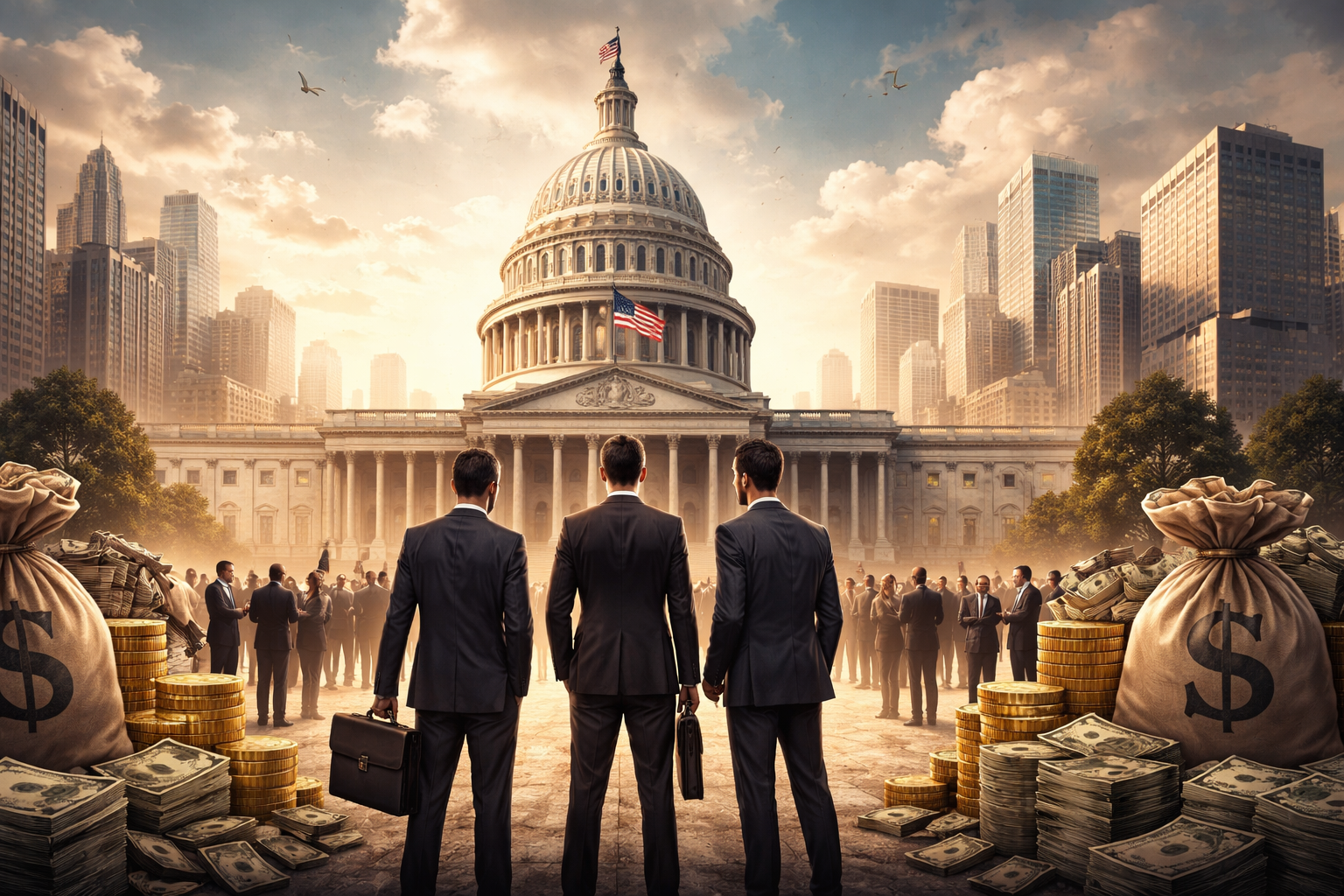
American politics is often celebrated as a model of representative democracy, grounded in constitutional values, free elections, and civic participation. However, beneath this democratic ideal lies a complex network of power relations shaped by lobbying and corporate influence. From campaign finance to public policy formulation, corporate actors and professional lobbyists play a decisive role in shaping political outcomes. Sociologically, this phenomenon raises critical questions about power, inequality, democracy, and the relationship between the state and the economy. The influence of lobbying and corporate power in American politics is not merely a political issue; it is deeply embedded in social structures, class relations, and institutional arrangements.
This article examines lobbying and corporate power from a sociological perspective, focusing on how economic elites shape political decision-making, how institutions normalize elite influence, and how these processes affect democratic participation and social inequality in the United States.

Understanding Lobbying and Corporate Power
Lobbying refers to organized efforts by individuals, corporations, or interest groups to influence government officials and public policy. In the United States, lobbying is a legal and institutionalized practice, often justified as a form of political participation and free speech. Corporate power, on the other hand, refers to the ability of large business organizations to shape political agendas, laws, and regulations in ways that protect or expand their economic interests.
From a sociological viewpoint, lobbying is not simply persuasion; it is a mechanism through which structural inequalities translate into political power. Corporations possess financial resources, expert knowledge, and institutional access that ordinary citizens lack. As a result, lobbying becomes a channel through which economic power is converted into political influence.
Sociological Theories of Power and the State
Classical and contemporary sociological theories help explain the relationship between corporate power and politics. Karl Marx viewed the state as an instrument of the ruling class, arguing that political institutions ultimately serve capitalist interests. In this framework, lobbying represents a direct expression of class domination, where corporate elites shape laws to maintain economic control.
Max Weber offered a more institutional perspective, emphasizing bureaucracy and rational-legal authority. From this view, corporate lobbying operates through formal procedures, legal frameworks, and professional expertise, making elite influence appear legitimate and routine rather than coercive.
C. Wright Mills’ concept of the “power elite” is particularly relevant. He argued that political, economic, and military elites form an interconnected network that dominates decision-making in modern societies. Corporate executives, lobbyists, and political leaders often move within the same social circles, reinforcing shared interests and values.
Historical Development of Corporate Influence in American Politics
Corporate influence in American politics is not a recent phenomenon. During the late 19th century, the Gilded Age witnessed the rise of powerful industrialists who exercised enormous control over political institutions. Railroads, oil companies, and banking interests openly shaped legislation through bribery and patronage.
The Progressive Era introduced regulatory reforms aimed at curbing corporate excesses. However, throughout the 20th century, corporate power adapted rather than disappeared. The expansion of multinational corporations, the professionalization of lobbying, and the growth of campaign finance systems strengthened corporate political influence.
In the contemporary era, corporate lobbying has become more sophisticated, data-driven, and embedded within policymaking processes. Rather than overt corruption, influence now operates through legal channels, advisory committees, think tanks, and political action committees.

Institutionalization of Lobbying in the Political System
Lobbying in the United States is deeply institutionalized within political structures such as United States Congress, federal agencies, and regulatory bodies. Lobbyists provide lawmakers with policy drafts, technical expertise, and strategic information. This creates a dependency relationship in which elected officials rely on corporate actors to navigate complex policy areas.
The “revolving door” phenomenon further strengthens corporate power. Government officials frequently move into lucrative lobbying or corporate positions after public service, while corporate executives are appointed to regulatory agencies. Sociologically, this reflects elite circulation rather than democratic accountability, as power remains concentrated within a narrow social group.
Campaign Finance and Corporate Influence
Campaign finance is one of the most significant pathways through which corporate power shapes American politics. Running for political office requires substantial financial resources, making candidates dependent on wealthy donors and corporate-backed organizations. This dependency affects policy priorities, as politicians are more likely to support legislation favorable to their financial supporters.
The landmark Supreme Court decision Citizens United v. Federal Election Commission intensified this dynamic by allowing unlimited corporate spending on political communication. Sociologically, this ruling institutionalized economic inequality within the democratic process, granting corporations disproportionate political voice compared to ordinary citizens.
Corporate Power and Policy Outcomes
Corporate lobbying has a measurable impact on public policy across multiple sectors, including healthcare, finance, defense, energy, and technology. Policies related to taxation, labor rights, environmental regulation, and consumer protection often reflect corporate preferences rather than public opinion.
For example, despite widespread public support for stricter environmental regulations, corporate lobbying has frequently delayed or weakened climate legislation. Similarly, financial institutions played a key role in shaping regulatory responses following economic crises, often avoiding strict accountability.
From a sociological perspective, these outcomes demonstrate how structural power operates invisibly. Decisions appear technical or pragmatic, but they are rooted in unequal access to political institutions.

Impact on Democracy and Political Participation
The dominance of corporate lobbying undermines democratic ideals of political equality and popular sovereignty. When policy outcomes consistently favor corporate interests, citizens may feel alienated from the political process. This leads to declining trust in institutions, lower voter turnout, and political apathy among marginalized groups.
Political participation becomes stratified along class lines. Wealthy individuals and corporations enjoy direct access to policymakers, while ordinary citizens are limited to symbolic participation through voting. Sociologists describe this condition as “unequal democracy,” where formal rights exist but substantive influence is unevenly distributed.
Social Inequality and Class Dimensions
Corporate influence in politics reinforces broader patterns of social inequality. Policies shaped by corporate lobbying often prioritize profit over social welfare, contributing to income inequality, job insecurity, and reduced public services. Tax policies may favor capital over labor, while labor regulations are weakened under corporate pressure.
These outcomes disproportionately affect working-class and minority communities. Sociologically, lobbying acts as a mechanism through which class privilege is reproduced across generations. Economic elites use political influence to protect their wealth, while disadvantaged groups face structural barriers to representation.
Role of Media and Think Tanks
Media institutions and policy think tanks play a crucial role in legitimizing corporate influence. Corporations fund research organizations that produce policy reports aligned with business interests. These reports are then cited by media outlets and policymakers, shaping public discourse.

From a sociological standpoint, this reflects ideological power. Corporate interests are framed as national interests, economic growth, or innovation, while alternative perspectives are marginalized. The result is a narrowing of political debate, where certain policy options are presented as inevitable or “common sense.”
Resistance and Reform Movements
Despite the dominance of corporate power, resistance movements have emerged to challenge lobbying influence. Grassroots organizations, labor unions, and social movements advocate for campaign finance reform, transparency, and corporate accountability. These efforts highlight the tension between elite power and democratic demands.
Sociologically, such movements represent countervailing forces within civil society. They demonstrate that power is not absolute but contested. However, structural barriers—such as financial inequality and institutional complexity—limit the effectiveness of reform efforts.
Comparative Perspective
Compared to other democracies, the United States exhibits an unusually high level of corporate influence in politics. While lobbying exists globally, campaign finance regulations and welfare state structures in many countries limit corporate power. This comparison highlights the role of political culture, legal frameworks, and historical development in shaping power relations.
From a sociological lens, American exceptionalism in corporate lobbying reflects a strong emphasis on market freedom, individualism, and limited state intervention. These cultural values legitimize corporate political participation while constraining collective regulation.
Conclusion
The influence of lobbying and corporate power in American politics is a structural feature of modern capitalism rather than a temporary distortion. Sociological analysis reveals that this influence is rooted in class inequality, institutional arrangements, and cultural norms that privilege economic elites. While lobbying is legally framed as democratic participation, its unequal distribution undermines political equality and weakens democratic accountability.
Understanding corporate influence sociologically allows us to move beyond individual blame and focus on systemic reform. Addressing the imbalance between corporate power and democratic participation requires not only legal changes but also broader social transformation that challenges economic inequality and redefines the relationship between the state, the market, and society.
Frequently Asked Questions (FAQs): Corporate Power in American Politics
1. What is meant by Corporate Power in American Politics?
Corporate Power in American Politics refers to the ability of large business corporations to influence political decisions, laws, and public policies in ways that protect or expand their economic interests.
2. How does Corporate Power influence American democracy?
Corporate Power influences American democracy by shaping policy agendas, funding political campaigns, and lobbying lawmakers, often giving corporations more political influence than ordinary citizens.
3. Why is Corporate Power in American Politics a sociological issue?
Corporate Power in American Politics is a sociological issue because it reflects unequal power distribution, class dominance, institutional bias, and the reproduction of social inequality within democratic systems.
4. What role does lobbying play in Corporate Power in American Politics?
Lobbying acts as a primary tool through which corporations communicate their interests to policymakers, providing resources, expertise, and political pressure to influence legislation.
5. How does Corporate Power in American Politics affect public policy in the United States?
Corporate Power in American Politics affects public policy by prioritizing business interests in areas such as taxation, labor laws, environmental regulation, healthcare, and financial governance.
6. Does Corporate Power in American Politics increase social inequality?
Yes, Corporate Power in American Politics often reinforces social inequality by promoting policies that favor capital owners while reducing protections and benefits for workers and marginalized groups.
7. How does campaign finance contribute to Corporate Power in American Politics?
Campaign finance systems allow corporations and wealthy donors to fund elections, making political leaders more responsive to corporate interests than to public needs.
8. What is the sociological meaning of the “revolving door” in American politics?
The revolving door refers to the movement of individuals between government positions and corporate lobbying roles, strengthening Corporate Power by blurring boundaries between public service and private profit.
9. How does Corporate Power shape political participation?
Corporate Power limits meaningful political participation by concentrating influence among economic elites, while ordinary citizens participate mainly through voting with limited policy impact.
10. Is Corporate Power in American Politics legally accepted?
Yes, Corporate Power in American Politics is largely legal and institutionalized, operating through formal mechanisms like lobbying laws, campaign donations, and corporate political advocacy.
11. How does Corporate Power affect environmental and labor policies?
Corporate Power in American Politics often weakens environmental and labor protections by opposing regulations that may reduce profits, even when public interest supports stricter laws.
12. What sociological theories explain Corporate Power in American Politics?
Marxist theory, elite theory, and conflict theory explain Corporate Power as a reflection of class domination and elite control over political institutions.
13. How does Corporate Power in American Politics influence media and public opinion?
Corporations fund media outlets and think tanks that shape public discourse, framing corporate interests as national or economic necessities.
14. Are there movements resisting Corporate Power in American Politics?
Yes, grassroots movements, labor unions, and civil society organizations challenge Corporate Power by demanding campaign finance reform, transparency, and corporate accountability.
15. Can Corporate Power in American Politics be reduced?
Reducing Corporate Power in American Politics requires structural reforms such as stricter campaign finance laws, lobbying regulations, and greater public participation in policymaking.