Introduction
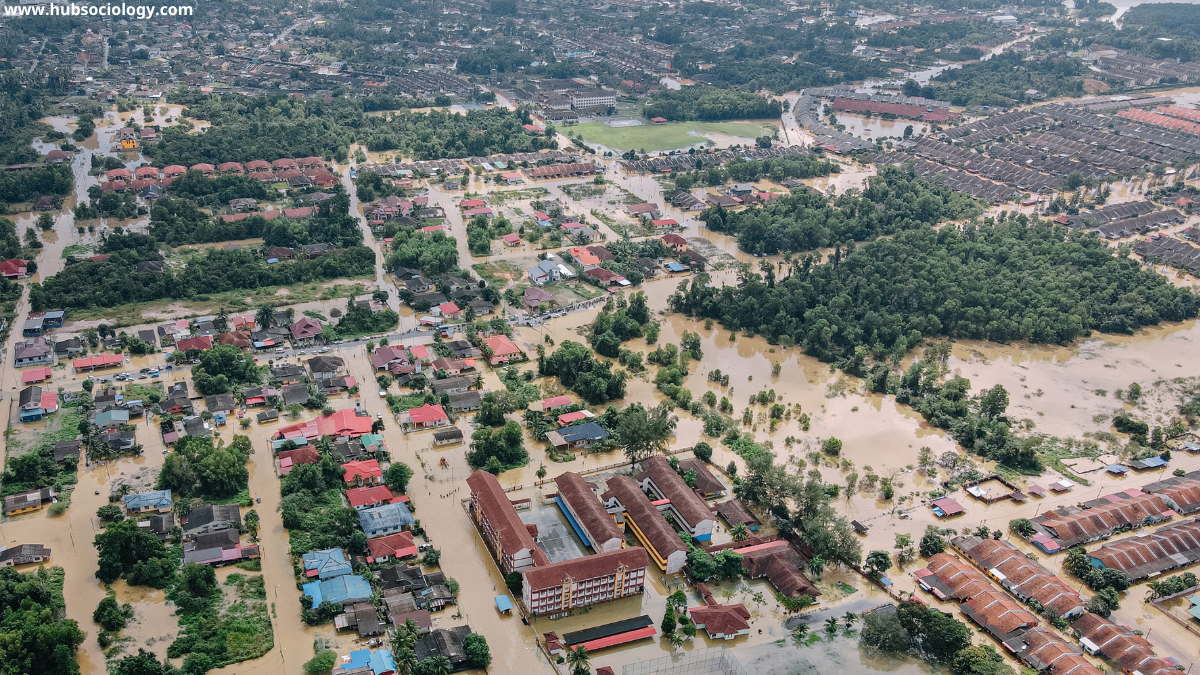
Natural disasters such as earthquakes, floods, cyclones, droughts, wildfires, and pandemics are often perceived as purely natural or environmental events. However, sociology challenges this narrow understanding by emphasizing that disasters are not only acts of nature but also deeply social phenomena. The sociology of natural disasters focuses on how social structures, inequalities, institutions, power relations, and cultural norms shape the causes, impacts, responses, and recovery processes associated with disasters. Communities in crisis reveal much about the functioning of society, exposing both resilience and vulnerability.
From a sociological perspective, disasters are moments of social disruption that magnify existing inequalities while simultaneously generating collective action, solidarity, and social change. This article examines the sociology of natural disasters by analyzing their social dimensions, the unequal impact on communities, institutional responses, community resilience, and the long-term social consequences of crises.

Understanding Natural Disasters as Social Phenomena
Sociology rejects the idea that disasters are purely “natural.” While hazards such as earthquakes or storms originate in nature, disasters occur when these hazards interact with vulnerable populations. Social factors like poverty, class, caste, gender, race, age, and access to resources determine who is most affected.
For example, the same cyclone can have vastly different outcomes depending on housing quality, urban planning, early warning systems, and social preparedness. Thus, disasters are socially constructed events in which human decisions and social organization play a critical role.
Sociologists argue that disasters should be understood as processes rather than sudden events. These processes include pre-disaster vulnerability, the immediate crisis, emergency response, and post-disaster recovery. Each stage is shaped by social institutions, power relations, and collective behavior.
Social Vulnerability and Inequality in Disasters
One of the central concerns of disaster sociology is social vulnerability. Vulnerability refers to the degree to which individuals or groups are unable to anticipate, cope with, resist, and recover from the impacts of disasters. Social vulnerability is unevenly distributed across society.
Marginalized communities often live in high-risk areas such as floodplains, unstable hillsides, or poorly constructed urban settlements. Economic inequality forces the poor into unsafe housing with limited access to infrastructure, healthcare, and insurance. As a result, disasters disproportionately affect the working class, informal laborers, migrants, indigenous populations, and marginalized caste or racial groups.
Gender also plays a crucial role. Women often face higher mortality rates in disasters due to social restrictions, caregiving responsibilities, and limited access to information. After disasters, women are more vulnerable to economic insecurity, domestic violence, and health risks. Similarly, children, the elderly, and persons with disabilities experience heightened risks due to dependence and limited mobility.
Thus, disasters do not create inequality but intensify existing social divisions, making vulnerability a key sociological issue.
Community Structure and Social Capital
Communities are not passive victims in disasters. Sociological studies highlight the importance of social capital, which refers to networks, trust, norms, and social relationships that facilitate collective action. Communities with strong social ties often respond more effectively to crises.
Informal networks such as families, neighbors, religious groups, and local associations play a vital role in rescue, relief, and emotional support. These forms of solidarity often emerge spontaneously, challenging the assumption that disasters lead to social chaos.
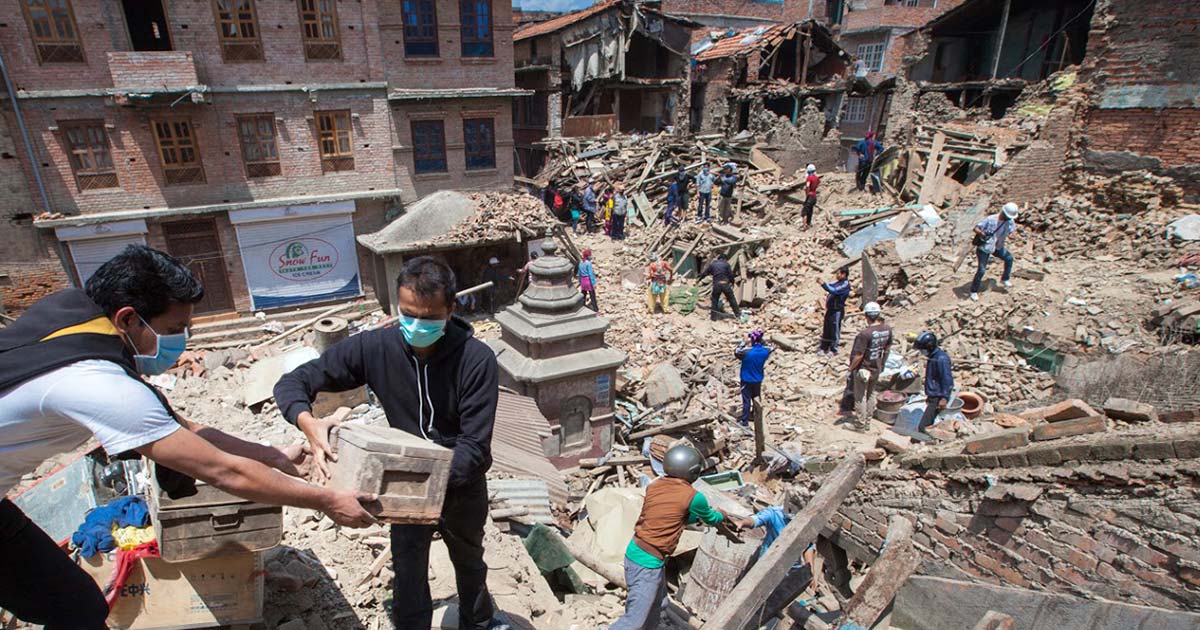
However, community cohesion is not uniform. Social divisions based on class, caste, ethnicity, or political affiliation can weaken collective response. In some cases, competition for scarce resources creates conflict and exclusion, particularly during relief distribution.
The sociology of disasters emphasizes that community resilience is shaped by pre-existing social relations. Strong, inclusive communities tend to recover faster, while fragmented communities struggle to rebuild.
Role of the State and Institutions
The response of the state and institutions is a critical area of sociological analysis. Governments are responsible for disaster preparedness, emergency response, rehabilitation, and reconstruction. However, institutional failures often exacerbate crises.
Bureaucratic inefficiency, corruption, lack of coordination, and political bias can delay relief efforts and deepen suffering. Disaster response is sometimes shaped by political priorities rather than human need, leading to unequal distribution of aid.
At the same time, disasters can expand state power through emergency laws, surveillance, and control measures. Sociologists examine how crises justify extraordinary state interventions that may restrict civil liberties, especially for marginalized groups.
Non-governmental organizations, international agencies, and civil society groups also play a significant role. While they provide crucial support, their interventions may sometimes undermine local knowledge and community autonomy.
Media, Perception, and Social Narratives
Media plays a powerful role in shaping public understanding of disasters. Sociologically, disasters are mediated events where narratives influence policy responses, public sympathy, and resource allocation.
Media coverage often focuses on dramatic visuals and short-term suffering while ignoring structural causes such as poverty, environmental degradation, and policy failures. Certain disasters receive global attention, while others affecting poor or remote communities remain invisible.
The portrayal of affected populations can reinforce stereotypes, depicting victims as helpless, chaotic, or dependent. Such narratives can undermine community agency and justify top-down interventions.
Sociologists emphasize the need to shift disaster narratives from victimhood to resilience, highlighting local capacities, indigenous knowledge, and community leadership.
Collective Behavior and Social Solidarity
Contrary to popular myths of panic and disorder, sociological research shows that disasters often produce altruism, cooperation, and collective problem-solving. People frequently engage in rescue efforts, share resources, and support strangers.
Disasters temporarily suspend normal social boundaries, creating what sociologists call a “collective identity of survival.” This shared experience fosters empathy and social bonding.
However, solidarity is often uneven and temporary. As recovery progresses, social inequalities re-emerge, and conflicts over compensation, land, and resources intensify. The initial unity may give way to frustration, blame, and social fragmentation.
Thus, disasters reveal both the strengths and limits of social solidarity.
Long-Term Social Consequences of Disasters
The sociological impact of disasters extends far beyond immediate destruction. Long-term consequences include displacement, migration, changes in family structures, and shifts in livelihoods.
Forced migration is a major outcome, particularly in climate-related disasters. Displaced populations face social exclusion, loss of identity, and challenges in integration. Disaster-induced migration raises important questions about citizenship, rights, and social belonging.
Disasters also affect mental health, leading to trauma, grief, and long-term psychological stress. These effects are shaped by social support systems and cultural attitudes toward suffering.
In some cases, disasters act as catalysts for social change. They can expose policy failures, generate public debate, and lead to reforms in housing, environmental regulation, and disaster management. However, such transformations depend on political will and social mobilization.
Climate Change and the Sociology of Disasters
Climate change has intensified the frequency and severity of natural disasters, making disaster sociology increasingly relevant. Climate-related disasters are not evenly distributed; they disproportionately affect developing countries and marginalized communities.

Sociologists analyze climate disasters as outcomes of global inequality, industrialization, and environmental exploitation. Communities least responsible for climate change often suffer its worst consequences.
The concept of climate justice highlights the moral and social dimensions of disasters, emphasizing responsibility, accountability, and equity in disaster response and adaptation.
As climate risks grow, the sociology of natural disasters intersects with environmental sociology, development studies, and political sociology.
Community-Based Disaster Management
Sociological approaches increasingly emphasize community-based disaster management. This model recognizes local knowledge, participation, and empowerment as central to effective disaster preparedness and recovery.
Community involvement enhances trust, improves communication, and ensures culturally appropriate responses. It also strengthens local resilience by building skills, leadership, and collective responsibility.
However, community-based approaches must address internal inequalities to avoid reinforcing local power hierarchies. Inclusive participation is essential for equitable outcomes.
Conclusion
The sociology of natural disasters reveals that disasters are not merely environmental crises but deeply social events shaped by inequality, power, institutions, and collective behavior. Communities in crisis reflect the broader structure of society, exposing vulnerabilities while also demonstrating resilience and solidarity.
Understanding disasters sociologically helps move beyond short-term relief toward long-term social transformation. By addressing structural inequalities, strengthening communities, and promoting inclusive governance, societies can reduce vulnerability and build resilience against future crises.
In an era of climate change and increasing environmental uncertainty, the sociological perspective on natural disasters is not only relevant but essential for creating more just, sustainable, and humane responses to crises.
Frequently Asked Questions (FAQs) on Natural Disasters
1. What are natural disasters in sociology?
In sociology, natural disasters are understood as social events where natural hazards interact with vulnerable communities, shaped by social structure, inequality, and institutional response.
2. Why are natural disasters considered social phenomena?
Natural disasters are considered social phenomena because their impact depends on human decisions, social inequality, economic conditions, and preparedness rather than nature alone.
3. How do natural disasters affect communities?
Natural disasters disrupt social life, damage livelihoods, displace populations, and expose inequalities while also generating solidarity and collective action within communities.
4. What is social vulnerability in natural disasters?
Social vulnerability in natural disasters refers to the limited ability of certain groups to cope with, resist, and recover due to poverty, marginalization, age, or gender.
5. How does poverty increase the impact of natural disasters?
Poverty forces people to live in unsafe locations with poor housing and limited access to healthcare, making them more vulnerable during natural disasters.
6. What role does inequality play in natural disasters?
Inequality determines who suffers most in natural disasters, as marginalized groups often receive less protection, delayed relief, and fewer recovery resources.
7. How do natural disasters influence social solidarity?
Natural disasters often create temporary social solidarity, encouraging cooperation, mutual help, and collective survival among affected communities.
8. What is the role of the state during natural disasters?
The state plays a key role in preparedness, emergency response, relief distribution, and rehabilitation during natural disasters, though institutional failures can worsen crises.
9. How do natural disasters affect women and children?
Women and children face higher risks in natural disasters due to caregiving roles, social restrictions, health vulnerabilities, and unequal access to resources.
10. What is community resilience in natural disasters?
Community resilience refers to the capacity of communities to prepare for, respond to, and recover from natural disasters using social networks and local knowledge.
11. How does climate change increase natural disasters?
Climate change intensifies natural disasters by increasing extreme weather events such as floods, cyclones, droughts, and heatwaves.
12. What is the relationship between natural disasters and migration?
Natural disasters often cause displacement and migration, creating long-term social challenges related to housing, employment, and social integration.
13. How does media shape perceptions of natural disasters?
Media influences how natural disasters are understood by framing victims, assigning blame, and shaping public opinion and policy responses.
14. Can natural disasters lead to social change?
Yes, natural disasters can expose policy failures and inequalities, sometimes leading to reforms in disaster management and social welfare systems.
15. Why is the sociological study of natural disasters important?
The sociological study of natural disasters helps identify structural causes of vulnerability and promotes equitable, community-centered disaster responses.