Introduction
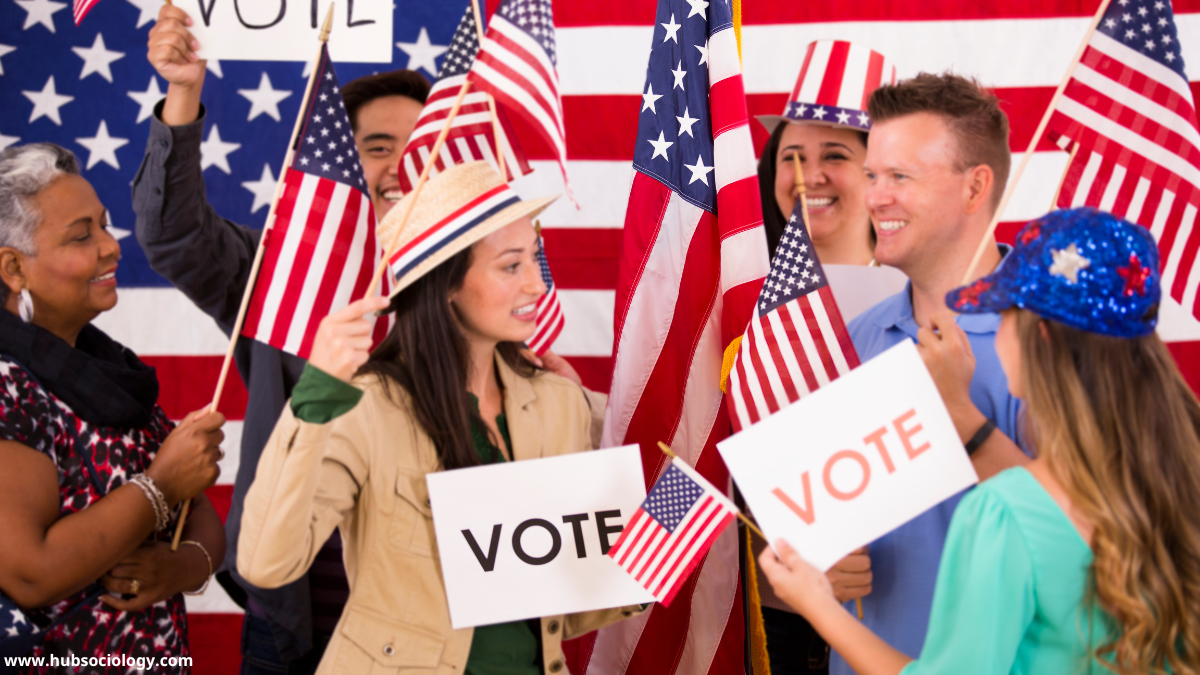
Voting behaviour in America is not merely a political act; it is a deeply social phenomenon shaped by class relations, cultural values, historical experiences, institutional structures, and power dynamics. From a sociological perspective, voting reflects how individuals and groups locate themselves within society and respond to inequalities, identities, and collective interests. Elections in United States are therefore not just contests between candidates but expressions of social divisions and solidarities that have evolved over centuries.
The sociology of voting behaviour seeks to understand why people vote the way they do, why some groups vote more than others, and why many citizens do not vote at all. Unlike political science, which often focuses on institutions and strategies, sociology emphasizes social structure, group identity, and lived experience. In America, voting behaviour is profoundly influenced by race, class, gender, religion, education, region, and media exposure, making it an ideal case for sociological analysis.

Meaning of Voting Behaviour in Sociology
In sociological terms, voting behaviour refers to the patterns, motivations, and social determinants that influence electoral participation and choice. It goes beyond individual preference and examines how social forces guide political action. Voting is understood as a form of social participation, shaped by norms, values, peer influence, and institutional access.
Sociologists argue that voting decisions are rarely made in isolation. Family background, community networks, workplace environment, and cultural narratives all contribute to shaping political orientation. Thus, voting behaviour becomes a mirror of broader social realities rather than a purely rational or personal decision.
Historical Evolution of Voting Behaviour in America
The history of American voting behaviour reveals a gradual expansion of political inclusion alongside persistent exclusion. Initially, voting rights were restricted to property-owning white men. Over time, constitutional amendments and social movements expanded suffrage to African Americans, women, and younger citizens. However, sociologically, legal rights did not automatically translate into equal participation.
Racial segregation, literacy tests, poll taxes, and later voter ID laws created structural barriers that shaped voting behaviour across generations. Even today, historical inequalities continue to influence turnout rates and party alignment. The legacy of slavery, civil rights struggles, and economic marginalization remains embedded in electoral patterns.
Social Class and Voting Behaviour
Class is one of the most significant sociological determinants of voting behaviour in America. Income, occupation, and educational attainment strongly influence political participation and ideological orientation.
Middle- and upper-class individuals tend to vote more frequently due to higher political efficacy, better access to information, and greater trust in institutions. Working-class and economically marginalized groups often experience political alienation, leading to lower turnout. When they do vote, their choices are shaped by economic insecurity, labor conditions, and welfare policies.
From a Marxist perspective, voting behaviour reflects class conflict, where political parties represent competing economic interests. However, in America, class voting is often diluted by race, religion, and cultural issues, making class consciousness less explicit than in some European democracies.
Race and Ethnicity as Central Factors
Race is a defining feature of voting behaviour in America. African American, Latino, Asian American, and White voters exhibit distinct voting patterns shaped by historical experiences and social positioning.
African American voters, for instance, demonstrate high levels of group solidarity in voting, largely due to shared experiences of discrimination and collective struggle. Latino voting behaviour is more diverse, influenced by immigration status, national origin, and socioeconomic mobility. White voting patterns vary significantly by class, education, and region.
Sociologically, race operates not merely as identity but as a structural position, influencing access to resources, exposure to discrimination, and trust in political institutions. Voting thus becomes a mechanism through which racial groups seek representation and protection.
Gender and Voting Behaviour
Gender has emerged as a crucial factor in American voting behaviour, particularly since the late twentieth century. The phenomenon known as the “gender gap” highlights differences in political preferences between men and women.
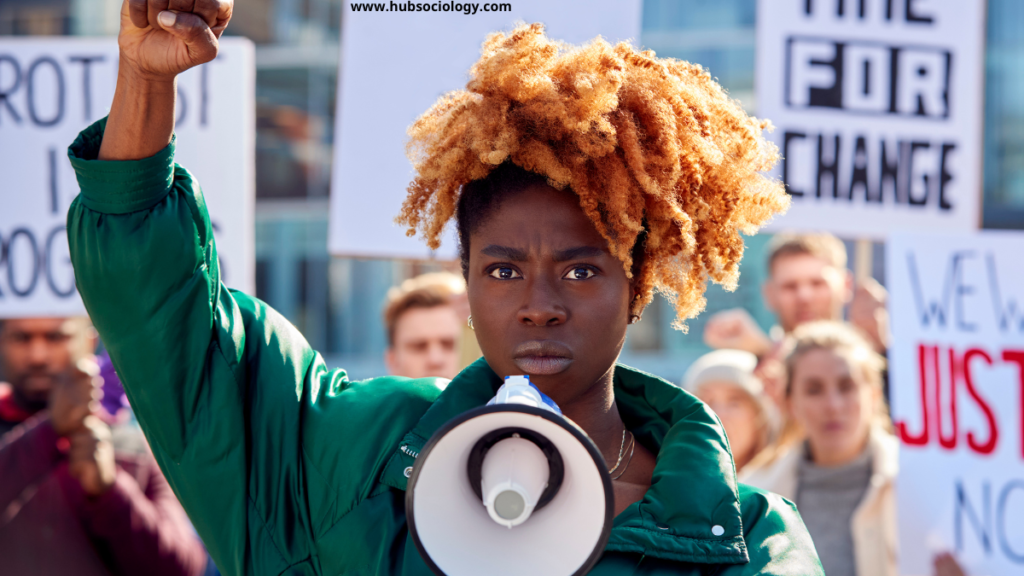
Women voters, on average, show greater support for social welfare, healthcare, and education policies, reflecting their social roles and caregiving responsibilities. Men are more likely to prioritize defense, economic competition, and individualism. Feminist sociologists argue that gendered socialization shapes political attitudes long before individuals reach voting age.
Moreover, intersectionality reveals that gender interacts with race and class, producing varied voting behaviours among women themselves. The political preferences of affluent white women differ significantly from those of working-class women of color.
Religion and Moral Communities
Religion plays a powerful role in shaping voting behaviour by creating moral frameworks and collective identities. Religious institutions function as socializing agents, transmitting values that influence political choices.
Evangelical Christian communities often emphasize traditional family values and moral conservatism, shaping voting preferences accordingly. Conversely, more secular or liberal religious groups tend to support progressive social policies. Sociologically, religion provides not only belief systems but also networks of influence, where political ideas circulate through sermons, community gatherings, and religious media.
Voting behaviour within religious groups demonstrates how moral norms become politicized, transforming private beliefs into public action.
Education and Political Awareness
Education significantly affects voting behaviour by shaping political knowledge, critical thinking, and civic engagement. Higher levels of education are associated with increased voter turnout and more consistent participation.
Educated voters are more likely to engage with policy debates, evaluate candidates critically, and resist simplistic political messaging. Sociologists view education as a form of cultural capital that empowers individuals within the political sphere.
However, education also interacts with ideology. In recent decades, highly educated voters in America have shown increasing support for liberal and progressive platforms, while less-educated voters are more influenced by populist rhetoric and cultural grievances.
Political Parties and Social Alignment
American voting behaviour is closely linked to the two-party system, primarily involving the Democratic Party and the Republican Party. Sociologically, these parties represent coalitions of social groups rather than purely ideological organizations.
The Democratic Party tends to draw support from racial minorities, urban residents, younger voters, and lower-income groups. The Republican Party finds stronger backing among rural populations, religious conservatives, and higher-income groups. These alignments are not fixed but evolve with social change, economic shifts, and cultural conflicts.
Voting behaviour thus reflects group loyalty and perceived group interests rather than individual policy preferences alone.
Media, Technology, and Voting Behaviour
Modern voting behaviour cannot be understood without considering the role of media and digital technology. Social media platforms, news outlets, and algorithm-driven content shape political perceptions and emotional responses.
Sociologists emphasize that media does not merely inform voters but constructs political reality by framing issues, amplifying identities, and reinforcing polarization. Echo chambers and misinformation influence voting decisions, particularly among younger and less politically experienced voters.
Digital campaigning has transformed elections into social performances, where identity signaling and emotional engagement often outweigh policy substance.
Non-Voting and Political Alienation
An important aspect of voting behaviour is non-participation. Millions of Americans choose not to vote, reflecting deep sociological issues such as alienation, distrust, and exclusion.
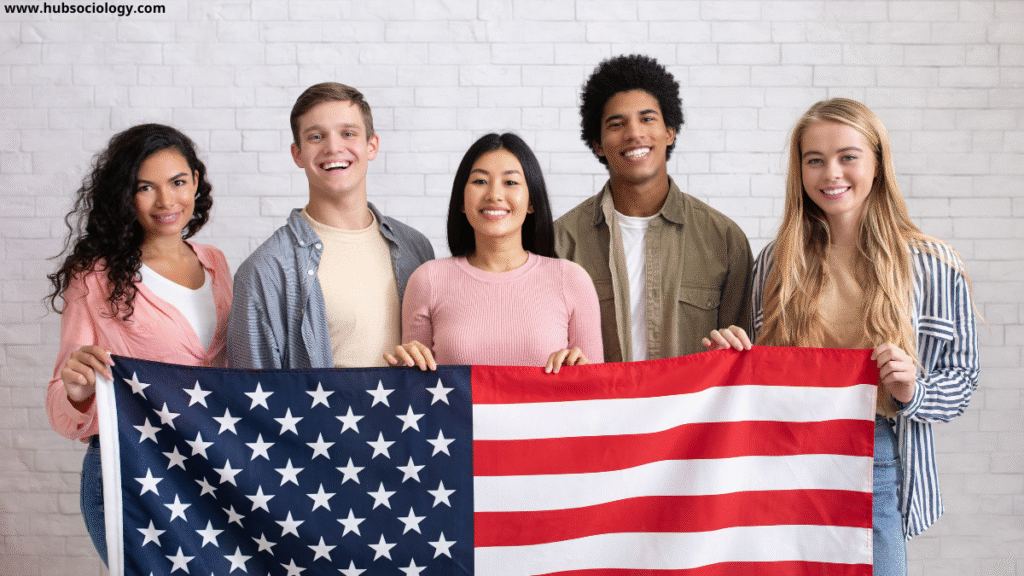
Non-voting is more common among economically marginalized groups, racial minorities facing suppression, and younger citizens who feel disconnected from traditional politics. Sociologists argue that non-voting is not apathy but often a silent protest against perceived systemic failure.
Understanding non-voting behaviour is crucial for assessing the health of American democracy.
Classical Sociological Perspectives
Classical sociologists provide valuable frameworks for understanding voting behaviour. Karl Marx viewed political participation as an expression of class struggle, while Max Weber emphasized status groups and rational choice. Emile Durkheim focused on social integration and collective conscience.
These perspectives highlight how voting is embedded in social structures, moral norms, and power relations rather than isolated individual choice.
Contemporary Trends and Challenges
Contemporary American voting behaviour is marked by polarization, identity politics, and declining institutional trust. Issues such as racial justice, immigration, economic inequality, and cultural conflict dominate electoral discourse.
Youth activism, social movements, and alternative forms of political participation are reshaping traditional voting patterns. At the same time, voter suppression, misinformation, and economic precarity pose serious challenges to democratic participation.
From a sociological standpoint, these trends reflect deeper transformations in American society itself.
Conclusion
The sociology of voting behaviour in America reveals that voting is far more than a technical democratic process. It is a social act shaped by class, race, gender, religion, education, history, and power. Voting patterns reflect collective experiences, structural inequalities, and cultural identities that define American society.
Understanding voting behaviour sociologically allows us to see elections not just as political events but as social phenomena that reveal the strengths and weaknesses of democracy. As American society continues to evolve, so too will the social foundations of voting behaviour, making it a critical area of ongoing sociological inquiry.
Frequently Asked Questions
1. What is meant by Voting Behaviour in America?
Voting Behaviour in America refers to the social patterns, motivations, and factors that influence how different groups of people participate in elections and choose political candidates.
2. Why is Voting Behaviour in America studied from a sociological perspective?
A sociological perspective helps explain how social class, race, gender, religion, and culture shape voting decisions rather than viewing voting as only an individual political choice.
3. How does social class affect Voting Behaviour in America?
Social class influences access to education, political awareness, and trust in institutions, which in turn affects voter turnout and party preference in America.
4. What role does race play in Voting Behaviour in America?
Race plays a central role due to historical discrimination, social inequality, and collective group experiences that shape political alignment and participation.
5. How does education influence Voting Behaviour in America?
Higher levels of education generally increase political participation, critical evaluation of political messages, and consistent voting behaviour.
6. What is the impact of gender on Voting Behaviour in America?
Gender influences voting through social roles, economic position, and cultural expectations, often producing differences in policy priorities between men and women.
7. How does religion shape Voting Behaviour in America?
Religion acts as a moral and social force that guides political values, party loyalty, and attitudes toward social issues in American elections.
8. What is the relationship between political parties and Voting Behaviour in America?
Voting Behaviour in America is closely tied to party identification, where social groups align with parties that best represent their economic and cultural interests.
9. How does media affect Voting Behaviour in America?
Media shapes political opinions by framing issues, influencing emotions, and reinforcing ideological divisions through traditional and digital platforms.
10. Why do many citizens not participate in voting in America?
Non-voting often results from political alienation, distrust in institutions, social inequality, and perceived lack of representation rather than simple apathy.
11. How has history shaped Voting Behaviour in America?
Historical events such as slavery, civil rights movements, and suffrage expansions continue to influence political attitudes and participation patterns.
12. What is the role of youth in Voting Behaviour in America?
Young voters often show lower turnout but higher engagement in social movements, reflecting changing forms of political participation in American society.
13. How does economic inequality influence Voting Behaviour in America?
Economic inequality affects political priorities, trust in governance, and voter turnout, particularly among marginalized communities.
14. What do sociologists say about Voting Behaviour in America?
Sociologists argue that voting reflects social structures, power relations, and group identities rather than purely rational individual choice.
15. Why is Voting Behaviour in America important for democracy?
Understanding Voting Behaviour in America helps evaluate the inclusiveness, fairness, and effectiveness of democratic participation in the United States.
1 thought on “Sociology of Voting Behaviour in America”