Privatization of Education and Marginalized Groups in India: A Sociological Perspective
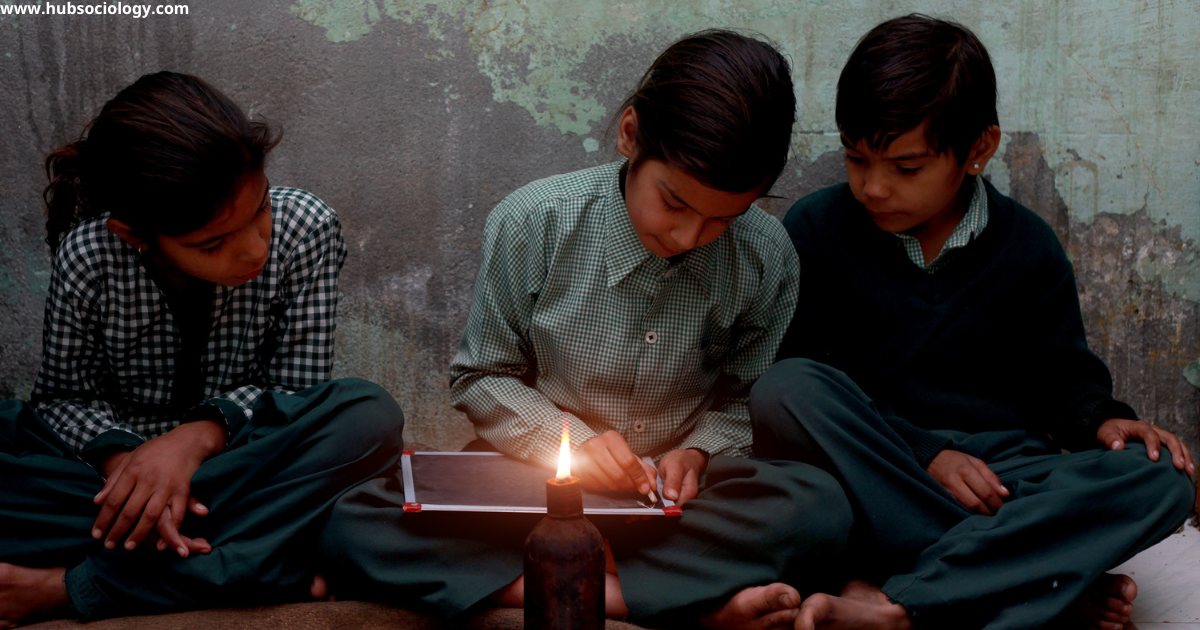
Gender and Regional Inequality in Asia

Introduction on Privatization of Education and Marginalized Groups Education is a fundamental right and a crucial tool for social mobility, economic empowerment, and the reduction of inequalities. In India, the privatization of education has significantly altered the educational landscape, creating both opportunities and challenges, particularly for marginalized groups such as Scheduled Castes (SCs), Scheduled Tribes … Read more

Paradigm Shift under Globalisation in Formulating Social Policies in India: A Sociological Perspective

Community Development Programme and Changes in Indian Villages: A Sociological Perspective

Introduction Globalisation has brought about a significant transformation in the socio-economic and political landscape of nations worldwide. In India, the process of globalisation, initiated in the early 1990s through economic liberalisation, has led to a paradigm shift in the formulation and implementation of social policies. Traditionally, Indian social policies were rooted in welfare-oriented approaches influenced … Read more

Emergence of Social Anthropology in India: A Sociological Perspective

Emergence of Social Anthropology in India A Sociological Perspective

Introduction Social anthropology, as an academic discipline, studies human societies, cultures, and social institutions through empirical research and comparative analysis. In India, the emergence and development of social anthropology have been deeply influenced by colonial history, indigenous intellectual traditions, and post-independence nation-building processes. Unlike Western anthropology, which often studied “other” cultures from a distance, Indian … Read more

Nationalist Understanding of India: Jawaharlal Nehru – A Sociological Perspective

Nationalist Understanding of India: Jawaharlal Nehru

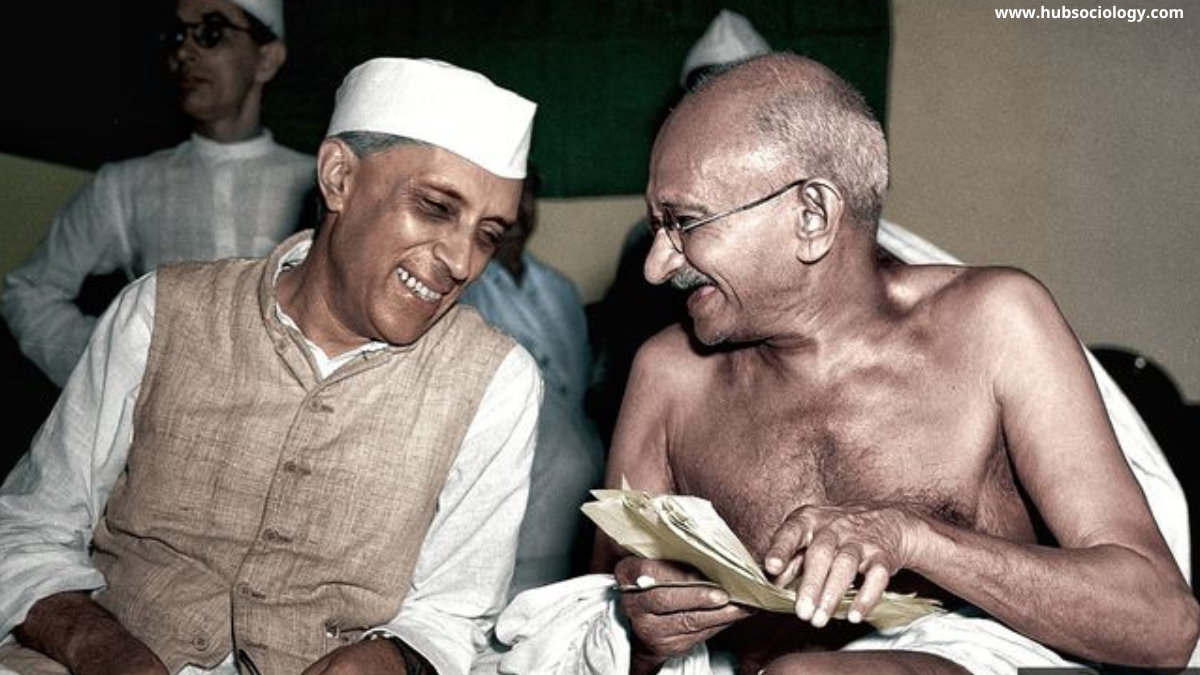
Introduction on Nationalist Understanding of India Jawaharlal Nehru, India’s first Prime Minister, was not just a political leader but also a key intellectual figure who shaped the nationalist understanding of India. His vision of India was deeply rooted in a sociological imagination that sought to reconcile tradition with modernity, diversity with unity, and socialism with … Read more

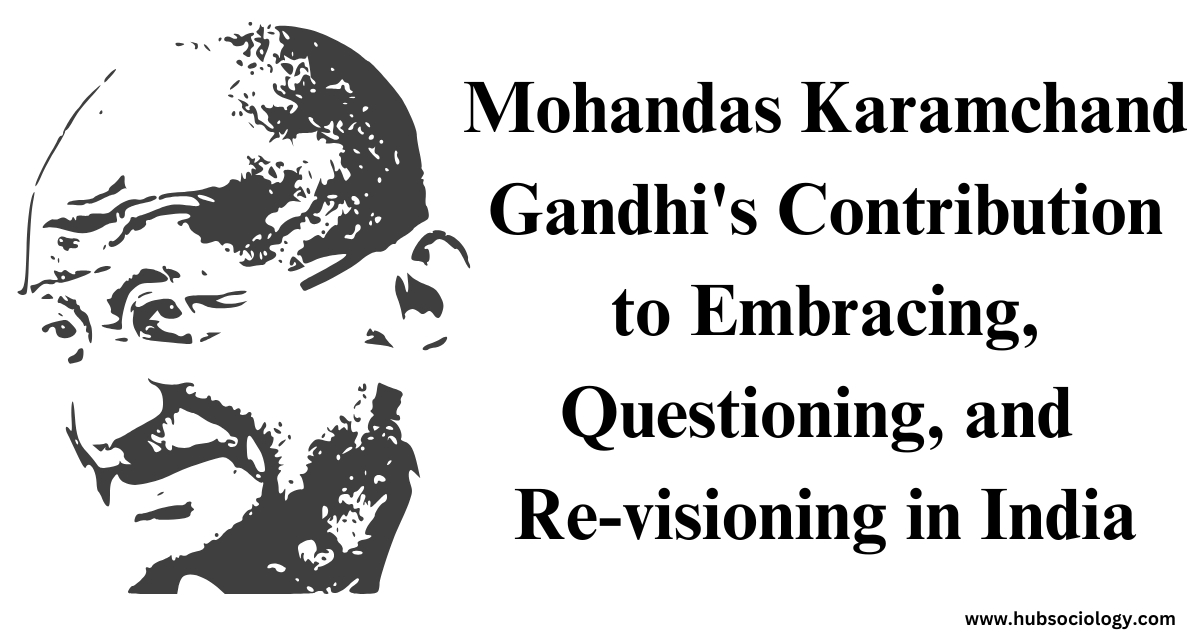
Mohandas Karamchand Gandhi’s Contribution to Embracing, Questioning, and Re-visioning in India

Mohandas Karamchand Gandhi's Contribution to Modernize India

Mohandas Karamchand Gandhi, often referred to as Mahatma Gandhi, is one of the most influential figures in modern history. His contributions to India’s struggle for independence and his philosophy of non-violence (Ahimsa) and truth (Satyagraha) have been widely studied and celebrated. However, Gandhi’s impact extends far beyond the political realm; his ideas and actions have … Read more

Rabindranath Tagore’s Contribution to Embracing, Questioning, and Re-visioning India

Rabindranath Tagore's Contribution to Embracing, Questioning, and Re-visioning India

Rabindranath Tagore, the polymath poet, philosopher, and social reformer, remains one of India’s most influential figures in shaping the nation’s cultural, social, and intellectual landscape. His contributions extend far beyond his literary genius, encompassing a profound engagement with the sociological fabric of India. Tagore’s work reflects a unique interplay of embracing tradition, questioning societal norms, … Read more

Sir Syed Ahmad Khan’s Contribution to Embracing, Questioning, and Re-visioning in India

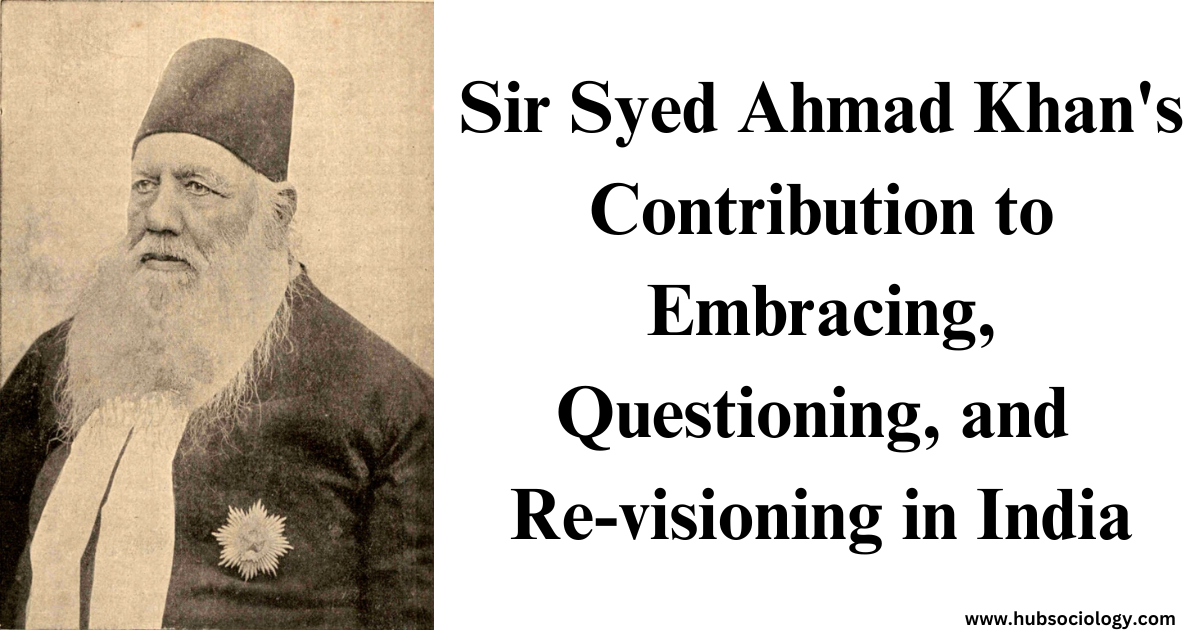
Sir Syed Ahmad Khan's Contribution to Embracing, Questioning, and Re-visioning in India

Sir Syed Ahmad Khan (1817–1898) was a visionary reformer, educator, and social thinker whose contributions to Indian society during the 19th century were transformative. His work was deeply rooted in the sociological realities of his time, and his efforts to embrace modernity, question regressive traditions, and re-vision the future of Indian Muslims and the broader … Read more

Indian Muslims: The Largest and Most Backward Religious Minority of India

Religious Diversities in India: A Sociological Perspective

India, a land of diverse cultures, religions, and languages, is home to one of the largest Muslim populations in the world. With over 200 million adherents, Indian Muslims constitute approximately 14.2% of the country’s population, making them the largest religious minority in India. Despite their significant numbers, Indian Muslims have historically faced socio-economic, educational, and … Read more

Religious Minorities of India: A Sociological Perspective

Weberian Approach to Study of Religion in Sociological Aspect

India, often described as a “land of diversity,” is home to a multitude of religions, languages, and cultures. While Hinduism is the dominant religion, constituting nearly 80% of the population, India is also home to significant religious minorities, including Muslims, Christians, Sikhs, Buddhists, Parsis, and Jains. These communities, though numerically smaller, play a vital role … Read more

National and State Minorities in India: A Sociological Perspective

Kinship Groups: Lineage, Clan, and Moiety

India, often described as a “melting pot” of cultures, religions, languages, and ethnicities, is a land of immense diversity. This diversity is not only a source of pride but also a complex social reality that shapes the nation’s political, economic, and cultural landscapes. Within this framework, the concept of minorities—both national and state—plays a critical … Read more