Introduction
Cultural globalization—the movement, hybridization, and diffusion of cultural practices, symbols, and identities across borders—has reshaped societies around the world. In East Asia, this process has unfolded with unique characteristics due to the region’s long civilizational history, strong state structures, rapid economic development, and increasingly influential cultural industries. Countries such as China, Japan, South Korea, and, to some extent, Taiwan and Hong Kong, have experienced cultural flows that are multidirectional: they receive influences from the West, transmit their own cultural products globally, and negotiate internal transformations in identity, values, and social relations. Sociologically, the study of cultural globalization in East Asia reveals complex interactions between global capitalism, nationalism, digital culture, youth identity, and socio-political structures.
This article explores these dynamics through key sociological frameworks, examining how East Asian societies negotiate global influences, produce cultural power, and reconfigure identities in an interconnected world.
Historical Context: Foundations of Global–Local Encounters
To understand contemporary globalization in East Asia, it is important to trace earlier waves of cultural contact. East Asia’s modernization in the late nineteenth and twentieth centuries was heavily influenced by Western scientific, political, and educational institutions. Japan’s Meiji Restoration marked one of the earliest successful efforts to combine Western modernity with local cultural traditions, setting a pattern later followed in various forms by South Korea, Taiwan, and China after their respective periods of war, colonization, or socialist isolation.
This earlier phase laid the foundation for cultural globalization by creating societies that were already familiar with hybridization—blending the global and local, or what sociologists term glocalization. In this context, contemporary global cultural flows did not simply replace local practices; they were absorbed, modified, and reinterpreted through established cultural frameworks shaped by Confucian traditions, collectivism, and state-led modernization.
Global Cultural Flows and the East Asian Response
The Spread of Western Popular Culture
The post–Cold War era brought an intensified influx of Western media, technologies, and lifestyles into East Asia. Hollywood films, American fast food chains, global consumer brands, and English-language education symbolized modernity and cosmopolitan identity. Urban youth in Tokyo, Seoul, Shanghai, Taipei, and Hong Kong adopted Western fashion, music genres, and entertainment formats, signaling a shift in cultural consumption.
However, sociologically, this did not lead to homogenization. Instead, Western influences were localized. For example, McDonald’s or Starbucks outlets became social spaces adapted to regional taste preferences and cultural norms. Western fashion trends were blended with local aesthetics, contributing to new hybrid youth identities that were both global and rooted in East Asian urban culture.
Digital Media and the Acceleration of Global Contact
The rise of the internet, smartphones, and social media dramatically accelerated cultural globalization. In East Asia, high digital penetration allowed young people to become active participants in global cultural communities. Platforms such as YouTube, TikTok, Weibo, Niconico, Line, and Instagram facilitated transnational interactions that bypassed traditional state and corporate control. This created a generation proficient in global cultural grammar—memes, fandom participation, online activism, and digital creative production.
Digital culture also transformed traditional hierarchies in East Asian societies. In collectivist cultures where conformity had historically been emphasized, online spaces provided opportunities for individual expression, alternative lifestyles, and subcultural experimentation. Sociologists note that this has contributed to changing family structures, youth aspirations, and gender norms.
The Rise of East Asian Cultural Power: From Importers to Exporters
Japan’s Cultural Influence
Japan was the first East Asian country to become a global cultural powerhouse. From the 1980s onward, Japanese anime, manga, video games, fashion, and consumer electronics shaped global youth culture. Iconic series like Dragon Ball, Naruto, and Sailor Moon, along with brands like Sony and Nintendo, symbolized Japan’s soft power. Sociologically, this represented a reversal of earlier cultural flows: instead of being a receiver, Japan became a sender of cultural imagination.

Japan’s cultural exports reinforced a unique national identity that combined tradition with futurism. Globally, anime and manga communities fostered transnational fan cultures that shared common symbols, aesthetics, and narratives, contributing to cultural globalization from East to West.
South Korea’s Hallyu (K-wave)
Beginning in the late 1990s, South Korea’s cultural wave—Hallyu—became a defining force in global entertainment. K-dramas, K-pop, fashion trends, beauty standards, and Korean cuisine achieved remarkable global popularity. Sociologists interpret Hallyu as the outcome of several intersecting factors: state investment in creative industries, technological innovation, neoliberal restructuring during the Asian financial crisis, and the rise of a digitally engaged youth culture.
K-pop fandom, in particular, illustrates how cultural globalization creates global communities. Fans from different continents collaborate in coordinated streaming, fundraising, and cultural activism. This reveals how cultural products become tools of identity formation, empowerment, and social belonging across borders.
China’s Growing Cultural Influence
China’s globalization story is shaped by the dual role of state control and market dynamism. Chinese films, historical dramas, mobile apps like TikTok (Douyin), and consumer platforms such as Alibaba and Tencent have gained global visibility. The Chinese government has also invested in promoting Mandarin-language media and Confucian cultural diplomacy through Confucius Institutes and international broadcasting.
Yet China’s cultural globalization is distinct. While Chinese products circulate widely, political tensions, censorship concerns, and geopolitical competition influence global perceptions. Sociologically, China’s case highlights the tension between cultural openness and political regulation in shaping global cultural flows.
Cultural Hybridization and Identity Formation
Negotiating Global and Local Identities
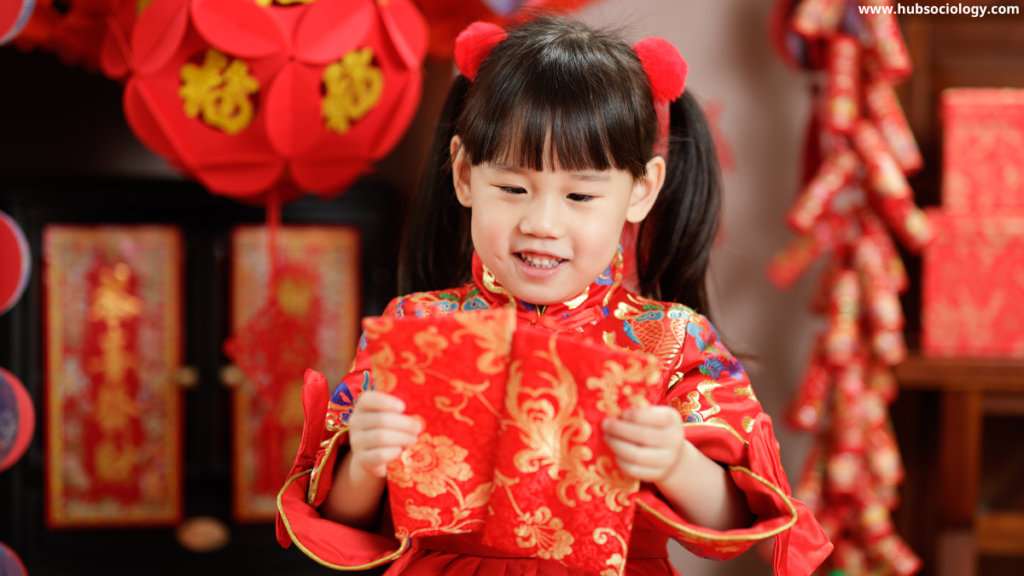
Cultural globalization has redefined what it means to be East Asian in the twenty-first century. Urban youth in Seoul, Tokyo, Beijing, and Taipei often embrace cosmopolitan lifestyles—global music, fashion, travel, and food—while participating in local traditions such as Lunar New Year, ancestral rituals, or traditional arts. The result is hybrid identity: individuals feel simultaneously part of the global community and their local cultural heritage.
This process is not uniform. Rural youth may experience globalization differently, with limited access to global cultural products or stronger adherence to traditional norms. Moreover, generational divides have intensified, as younger people often prioritize self-expression and global connectivity, while older generations may emphasize discipline, collective responsibility, and cultural continuity.
Gender, Body, and Beauty
Beauty culture in East Asia has globalized rapidly, influenced by Western ideals, K-pop aesthetics, digital filters, and global beauty brands. Cosmetic surgery in South Korea, beauty apps in China, and fashion subcultures in Japan illustrate how global beauty norms blend with local cultural values emphasizing discipline, refinement, and social appearance.
Sociologists note that beauty culture simultaneously empowers and pressures individuals. It offers new avenues for self-expression and professional mobility, but also reinforces gendered expectations, commercialism, and body politics.
Youth Culture and Consumerism
Consumer culture plays a central role in East Asian globalization. Young people increasingly express identity through branded clothing, entertainment choices, technology consumption, and lifestyle spending. Shopping malls, cafés, and digital marketplaces become spaces of cultural participation.
However, consumerism also exacerbates class inequalities. Access to global trends often depends on economic resources, producing symbolic boundaries between affluent urban youth and working-class or rural populations.
Nation, State and Cultural Politics
Soft Power Competition in East Asia
East Asian countries use cultural globalization strategically to enhance their global influence. Japan promotes “Cool Japan,” South Korea advances Hallyu diplomacy, and China invests heavily in cultural infrastructure and media industries. These initiatives seek to shape global perceptions, attract tourism, and strengthen geopolitical legitimacy.
This soft-power competition illustrates how culture becomes a political instrument. States attempt to modernize national identity, appeal to global audiences, and project cultural confidence, while still maintaining local values and political stability.
Censorship, Control, and Cultural Negotiation
Despite globalization’s dissolving boundaries, East Asian states maintain significant control over cultural content. China’s censorship regime regulates film, television, literature, and digital platforms to align culture with state ideology. South Korea and Japan also enforce regulations related to morality, copyright, and national security.
This interplay of regulation and global influence demonstrates that cultural globalization in East Asia is not a passive process. States actively shape cultural flows, determining which global elements are accepted, rejected, or modified.
Nationalism and Cultural Revival
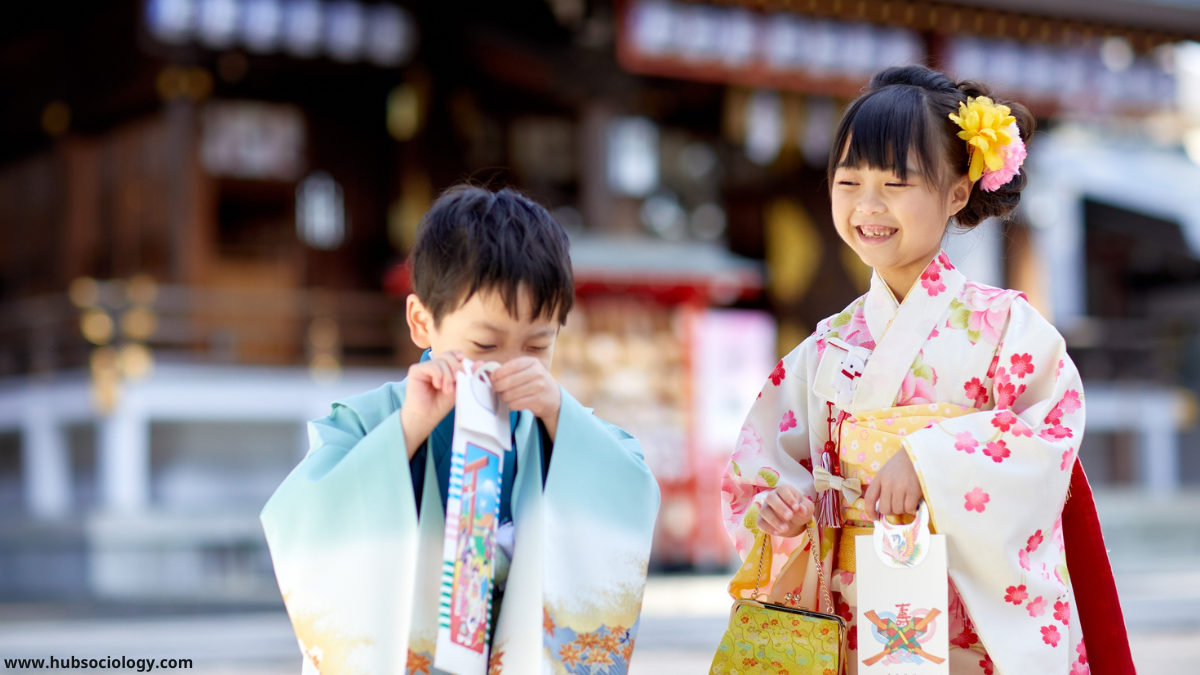
Globalization has also sparked cultural revival movements. China promotes Confucian values, Japan revitalizes traditional arts, and South Korea celebrates Hanbok and traditional festivals. These revivals reflect a sociological response to cultural anxiety—the fear that globalization may erode national identity or cultural coherence.

Thus, cultural globalization produces a paradox: increased global interconnectedness encourages societies to reassert their cultural uniqueness and strengthen national narratives.
Cultural Globalization and Social Inequality
Urban–Rural Divides
In East Asia, access to global cultural resources is uneven. Urban centers such as Tokyo, Seoul, Shanghai, and Taipei are deeply integrated into global networks. Rural areas, however, often experience globalization indirectly—through migration, remittances, television, or limited digital media.
This uneven access creates cultural gaps: urban populations may adopt global lifestyles more quickly, while rural communities maintain traditional norms. As a result, cultural globalization can deepen socioeconomic inequality and cultural fragmentation.
Class Inequality and Cultural Capital
Cultural globalization also reshapes class structures. Individuals with higher income or education are better able to participate in global culture—studying abroad, consuming global brands, mastering English, or engaging in transnational networks.
Pierre Bourdieu’s concept of cultural capital helps explain this divide: those with access to global cultural resources gain symbolic power and opportunities, reinforcing class stratification.
Hybrid Cultural Spaces and Diasporic Communities
East Asian Diasporas as Cultural Bridges
Millions of East Asians live in North America, Europe, and Southeast Asia. Diasporic communities act as cultural transmitters, circulating music, films, languages, and traditions across borders. Korean American fandom, Chinese diasporic entrepreneurship, and Japanese cultural festivals abroad illustrate how diasporas shape global perceptions of East Asian identity.
Transnational Families and Migrant Workers
Transnational family life—common among migrant workers in Japan, Korea, and Chinese cities—creates hybrid identities among children who grow up in multicultural environments. Foreign brides in rural East Asia, migrant workers from Southeast Asia, and international students contribute to diverse cultural landscapes, challenging the idea of homogeneous national culture.
Challenges and Critiques of Cultural Globalization in East Asia
Cultural globalization in the region also faces multiple criticisms. Some scholars argue that Western cultural dominance persists, influencing local aspirations and consumer desires. Others point to commercialization and cultural commodification, where traditional practices become tourist attractions rather than lived experiences.
Cultural homogenization fears remain strong, especially in China and Korea, where concerns about “cultural invasion” shape political narratives. Additionally, global culture can intensify individualistic values, challenging collectivist traditions and weakening social cohesion.
Intellectual property disputes, cultural appropriation debates, and rising geopolitical tensions add further complexity to cultural interactions.
Conclusion
Cultural globalization in East Asia is a dynamic, multilayered process shaped by historical experiences, state policies, digital technologies, youth culture, and global capitalism. Rather than simple cultural homogenization, East Asian societies exhibit active cultural negotiation—absorbing, modifying, and re-exporting cultural elements in creative ways. The region has become not only a recipient but a major producer of global cultural power, influencing music, film, fashion, technology, and lifestyle trends worldwide.
From a sociological perspective, cultural globalization in East Asia reveals the interplay between global forces and local structures, illustrating how culture becomes a site of identity formation, social conflict, political strategy, and economic opportunity. As East Asia continues to rise in global influence, its cultural transformations will remain central to understanding the future of globalization itself.
Do you like this this Article ? You Can follow as on :-
Facebook – https://www.facebook.com/hubsociology
WhatsApp Channel – https://whatsapp.com/channel/0029Vb6D8vGKWEKpJpu5QP0O
Gmail – hubsociology@gmail.com
15 FAQs on Cultural Globalization in East Asia
1. What is cultural globalization in the context of East Asia?
Cultural globalization in East Asia refers to the flow of ideas, media, lifestyles, and cultural practices across borders, shaping local identities while interacting with traditional East Asian values.
2. How does globalization influence youth culture in East Asia?
Youth culture becomes more cosmopolitan through global music, fashion, and digital platforms, while still maintaining local cultural meanings and hybrid identities.
3. Why is East Asia a major contributor to global cultural production?
Industries like Japanese anime, Korean K-pop, and Chinese digital platforms have global reach due to strong state support, technology, and creative innovation.
4. What sociological theories explain cultural globalization in East Asia?
Theories such as glocalization, cultural hybridization, cultural imperialism, and soft power help explain global–local interactions in the region.
5. How has K-pop influenced global cultural flows?
K-pop has created transnational fandoms, global youth identities, and international cultural networks, making South Korea a leading cultural exporter.
6. How does China regulate cultural globalization?
China adopts selective globalization, allowing global cultural flows while maintaining strict state control over media, entertainment, and digital content.
7. What role does digital technology play in East Asian cultural globalization?
Digital platforms accelerate cultural exchange, create global communities, and enable user-generated content, empowering youth participation.
8. How has Japanese popular culture shaped global youth identity?
Anime, manga, and gaming culture have created global fan communities and influenced aesthetics, storytelling, and youth subcultures worldwide.
9. Does cultural globalization weaken traditional East Asian values?
Globalization challenges some traditional norms but often results in hybridization, where modern lifestyles coexist with Confucian values and family systems.
10. How does cultural globalization affect social inequality in East Asia?
Urban, educated, and affluent groups access global culture more easily, while rural and working-class populations experience cultural globalization unevenly.
11. What is the relationship between cultural globalization and nationalism?
Global influences sometimes spark cultural revival movements and strengthen national identity, as states seek to preserve cultural distinctiveness.
12. How do East Asian diasporas contribute to cultural globalization?
Diasporic communities transmit East Asian traditions abroad and bring global cultural experiences back to their home countries, creating hybrid cultural spaces.
13. What challenges arise from cultural globalization in East Asia?
Issues include cultural homogenization, commercialization, censorship, geopolitical tensions, and debates over authenticity and cultural appropriation.
14. How do beauty standards reflect cultural globalization in East Asia?
Global media, K-pop aesthetics, and Western beauty norms influence appearance ideals, leading to hybrid beauty cultures and increased cosmetic industries.
15. What future trends will shape cultural globalization in East Asia?
AI-driven media production, expanding cultural industries, rising soft-power competition, and digital nationalism will shape the next phase of global cultural interaction.