
Urban poverty and segregation have long been defining features of American cities, shaping socioeconomic experiences and life chances for millions of people. From the early industrial period to the contemporary era of globalization, American urban spaces have reflected deep inequalities rooted in class, race, housing markets, labor structures, and public policy. Sociologists approach urban poverty and segregation not as isolated problems but as interconnected social processes that reveal much about power, institutions, and the organization of American society.
This article examines the historical evolution, structural causes, and contemporary manifestations of urban poverty and segregation, as well as their consequences for communities and broader urban life.

Historical Foundations of Urban Inequality
Urban poverty and segregation in America did not emerge spontaneously; they evolved within particular historical structures. Beginning in the late 19th and early 20th centuries, rapid industrialization brought waves of immigrants, African Americans fleeing the Jim Crow South, and rural migrants into expanding cities. These populations sought economic opportunity but encountered discriminatory housing, exploitative labor markets, and racial prejudice. Segregated neighborhoods formed as a result of both informal social practices and explicit institutional policies.
One of the most influential mechanisms was redlining, a practice institutionalized by the Home Owners’ Loan Corporation (HOLC) and later reinforced by the Federal Housing Administration. Neighborhoods with predominantly Black or immigrant populations were marked as “hazardous” and excluded from mortgage lending. This shaped the geography of American cities for decades, restricting minority families to overcrowded and underfunded urban zones while subsidizing suburban homeownership for white Americans.
The post–World War II boom intensified this pattern. Large-scale suburbanization, white flight, and the decline of industrial jobs left many inner-city neighborhoods impoverished. The transformation of the urban economy—from manufacturing to service-based industries—further marginalized those who lacked education, networks, or access to new kinds of employment. By the 1970s and 1980s, American cities had entered what sociologist William Julius Wilson termed an era of concentrated poverty, where entire neighborhoods suffered from joblessness, crime, poor schooling, and isolation from the mainstream economy.
Structural Causes of Urban Poverty
From a sociological perspective, urban poverty persists because of a combination of structural and institutional factors rather than individual failings. Several key forces reproduce urban poverty across generations:
1. Economic Restructuring and Deindustrialization
During the mid-20th century, major American cities like Detroit, Chicago, Cleveland, and Baltimore relied heavily on manufacturing. The shift of factories to suburban zones, southern states, and later abroad eliminated millions of stable, unionized jobs. Urban workers—especially African Americans—were disproportionately dependent on these sectors. The disappearance of industrial employment destabilized entire communities, leading to chronic unemployment and deteriorating living conditions.
2. Housing Market Inequalities
Housing segregation remains one of the most powerful drivers of urban poverty. Real estate agents, banks, and developers have historically directed affluent, white residents toward desirable suburban areas while limiting minority groups to less resourced inner-city neighborhoods. Even after the Fair Housing Act (1968), discriminatory practices like racial steering, predatory lending, and unequal mortgage approval rates continued. The legacy of redlining ensures that property values in minority neighborhoods remain low, reducing opportunities for families to build wealth.
3. Unequal Public Services
Schools, transportation, policing, healthcare, and sanitation services vary dramatically across urban neighborhoods. Because local taxes largely fund public schools, wealthier neighborhoods can afford better infrastructure, well-paid teachers, and modern facilities. Poor neighborhoods, by contrast, face chronic underfunding, contributing to lower educational achievement and fewer pathways to upward mobility.
4. Spatial Mismatch
Urban sociologists highlight the “spatial mismatch” between where poor people live and where jobs are located. As jobs moved to suburban office parks and industrial zones, many inner-city residents lacked access to cars or reliable public transport. This mismatch creates barriers to employment even for those willing and able to work.
5. Institutional Racism
Racial inequality deeply shapes urban poverty. Policies affecting policing, criminal justice, education, and welfare have historically disadvantaged African American and Latino communities. Mass incarceration, for instance, has destabilized many urban neighborhoods, removing able-bodied adults from the workforce and burdening families with long-term economic challenges.
Patterns and Forms of Urban Segregation
Segregation in American cities operates along multiple dimensions—race, class, ethnicity, and increasingly immigration status. Segregation is more than physical separation; it creates social isolation, resource divergence, and differential life chances.
Racial Segregation
Despite legal equality, racial segregation persists at significant levels. African American and Latino communities are disproportionately concentrated in certain neighborhoods, often characterized by lower-quality schools, fewer parks, and limited economic opportunities. Research demonstrates that segregation correlates with poor health outcomes, higher crime rates, reduced educational attainment, and restricted social mobility.
Economic Segregation
As income inequality has grown, wealthy enclaves have become increasingly exclusive while poor communities face intense concentration of disadvantage. Gentrification—although beneficial in terms of urban development—often leads to displacement, pushing low-income residents into more marginalized zones. This class-based segregation reinforces social stratification and limits cross-class interactions.
Ethnic Enclaves
Many American cities also host ethnic enclaves, such as Chinatowns, Little Havanas, and South Asian corridors. While these areas can provide cultural support, employment networks, and communal identity, they may also face economic marginalization and limited political influence depending on immigration policies and labor dynamics.
Consequences of Urban Poverty and Segregation
Urban poverty and segregation produce wide-ranging effects on individuals, communities, and cities as a whole.
1. Educational Inequality
Segregated neighborhoods usually correspond to segregated schools. Students in underfunded schools face overcrowded classrooms, lack of advanced courses, teacher shortages, and limited extracurricular opportunities. Educational disparities reproduce social inequality, making it harder for children from poor neighborhoods to break out of poverty.
2. Health Disparities
Environmental hazards, stress, limited access to healthcare, and food deserts contribute to serious health issues in impoverished urban communities. Life expectancy in some poor urban areas can be more than 20 years shorter than in wealthier districts of the same city.
3. Crime and Criminalization
Although poverty does not inherently cause crime, structural deprivation and lack of opportunities can increase participation in informal or illicit economies. Overpolicing, discriminatory surveillance, and aggressive law enforcement practices often criminalize entire communities, reinforcing cycles of distrust and social marginalization.
4. Housing Instability and Homelessness
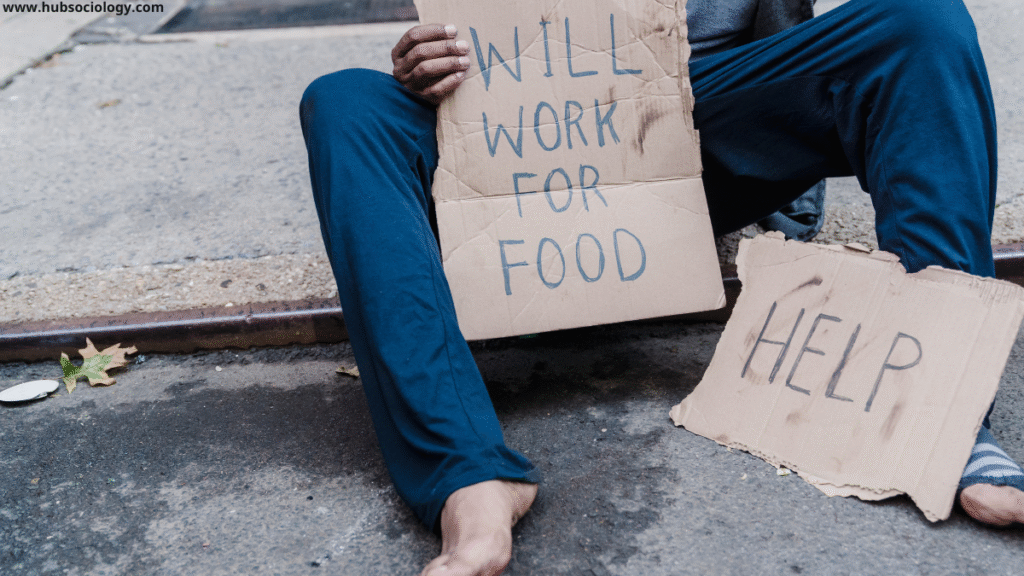
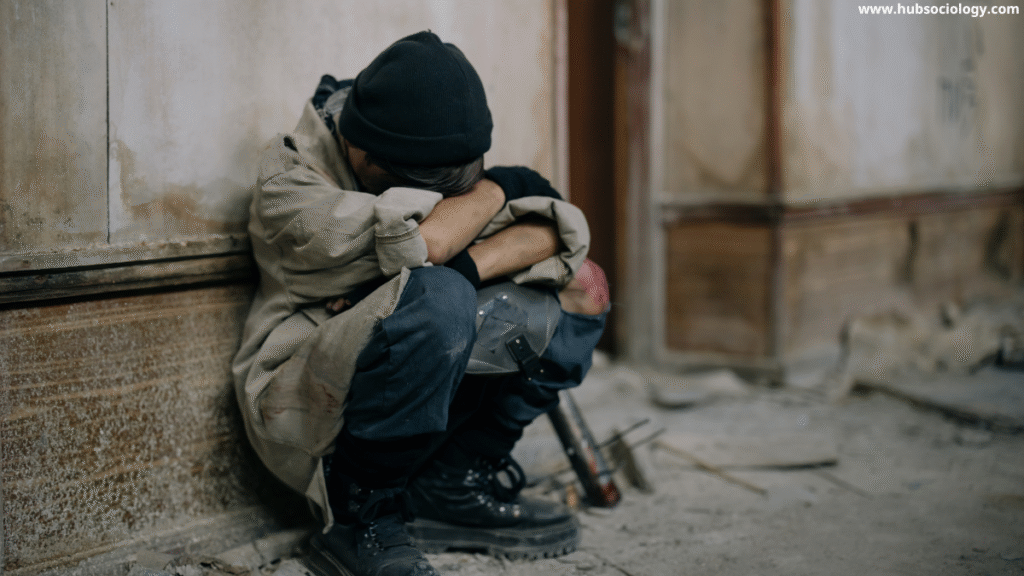
High rents, low wages, and exclusionary housing policies lead to chronic housing insecurity. Many families spend more than half their income on rent, leaving them vulnerable to eviction or homelessness. Homelessness is not merely a personal crisis but a systemic failure involving inadequate housing policies and insufficient social support.
5. Social Isolation and Limited Mobility
Segregation limits social networks, which are crucial for job access, mentorship, and social capital. When residents of poor neighborhoods are isolated from mainstream economic and social life, mobility becomes extremely difficult. Sociologists argue that segregation reduces the bridging social ties that help individuals escape poverty.
Urban Policy Responses: Successes and Failures
American cities have experimented with numerous policy interventions to address poverty and segregation, with mixed outcomes.
Urban Renewal Programs
In the mid-20th century, urban renewal sought to modernize cities but often displaced low-income families and minority communities. Entire Black neighborhoods were demolished for highways, commercial centers, or industrial projects, exacerbating segregation.
Public Housing
Public housing offered affordable options for low-income residents but was frequently underfunded and mismanaged. Many projects were built in marginalized zones, reinforcing racial and economic segregation. Over time, poor maintenance and concentrated poverty led to crime and deterioration.
Housing Vouchers and Mobility Programs
Programs like the Section 8 Housing Choice Voucher Program and the Moving to Opportunity (MTO) experiment aimed to give low-income families access to better neighborhoods. Research shows that children who moved to lower-poverty areas experienced improved educational and health outcomes, though adult outcomes were mixed.
Community Development and Anti-Poverty Programs
Community-based initiatives, nonprofit partnerships, and federal programs such as the War on Poverty (1960s) and the Community Development Block Grants (CDBG) helped revitalize neighborhoods. However, limited funding and political resistance restricted their long-term impact.
Gentrification: A Double-Edged Sword
While gentrification can improve infrastructure and reduce crime, it often displaces long-term residents. Without equitable policies—such as rent controls, inclusionary zoning, and community land trusts—gentrification deepens inequality and transforms cultural landscapes.
The Sociology of Race, Space and Power
Understanding urban poverty and segregation requires recognizing that space itself is socially constructed. Sociologists argue that urban spaces reflect relationships of power—who gets access to resources, who controls land, and whose neighborhoods receive investment.
Michel Foucault’s concept of power and spatial control helps explain how cities regulate behavior, access, and mobility through zoning laws, policing strategies, and surveillance. Similarly, Pierre Bourdieu’s idea of cultural and social capital shows how families in affluent neighborhoods benefit from networks, habits, and educational advantages unavailable to the urban poor.
Urban poverty is ultimately inseparable from racial capitalism—the historic intertwining of race and economic exploitation. In American cities, segregation has ensured that racialized groups experience disproportionate poverty, limited mobility, and unequal citizenship.
Contemporary Urban Challenges and Emerging Trends
Today’s American cities face new and evolving forms of inequality. The rise of technology industries has produced extreme wealth alongside rising living costs. Housing shortages in cities like Los Angeles, New York, and San Francisco have worsened homelessness. Meanwhile, climate change disproportionately affects poor urban communities through heat waves, flooding, and inadequate infrastructure.
At the same time, grassroots movements and policy innovations offer hope. Tenant unions, community land trusts, affordable housing mandates, and police reform initiatives demonstrate growing awareness of structural inequality. Urban sociologists continue to advocate for equitable development that prioritizes community voices.
Conclusion
Urban poverty and segregation in American cities are not accidental outcomes but products of long-standing structural forces. Economic restructuring, racial discrimination, uneven development, and institutional inequalities have shaped the geography of opportunity and disadvantage. These forces continue to create stark divides between affluent neighborhoods and impoverished communities.
A sociological perspective emphasizes that to reduce urban poverty and dismantle segregation, policymakers must address root causes—housing inequality, racial discrimination, access to education, labor market barriers, and disinvestment in essential services. Ultimately, the future of American cities depends on embracing inclusive, equitable, and community-centered strategies that recognize the social rights and dignity of all urban residents.
Do you like this this Article ? You Can follow as on :-
Facebook – https://www.facebook.com/hubsociology
WhatsApp Channel – https://whatsapp.com/channel/0029Vb6D8vGKWEKpJpu5QP0O
Gmail – hubsociology@gmail.com
FAQs on Urban Poverty and Segregation in American Cities
1. What is urban poverty in the American context?
Urban poverty refers to conditions where individuals and families living in cities experience low income, unstable housing, limited access to healthcare, inadequate education, and restricted economic opportunities. It is shaped by structural and institutional inequalities rather than personal failings.
2. What does segregation mean in American cities?
Segregation refers to the physical and social separation of groups—most commonly by race and class—into different neighborhoods. It results in unequal access to resources, public services, and opportunities.
3. How did historical policies contribute to segregation?
Historical policies such as redlining, racially restrictive covenants, and discriminatory mortgage lending prevented minority families from accessing homeownership and better neighborhoods. These practices institutionalized racial segregation for decades.
4. What is the relationship between urban poverty and segregation?
Urban poverty and segregation reinforce each other. Segregated neighborhoods often receive fewer public resources, have weaker job markets, and face social isolation, leading to concentrated poverty. Poverty, in turn, restricts mobility, keeping people in segregated areas.
5. Why are African American and Latino communities disproportionately affected?
Institutional racism, unequal access to housing and education, discriminatory policing, and labor-market inequalities have historically marginalized African American and Latino populations, concentrating them in high-poverty neighborhoods.
6. How does the housing market reproduce urban inequality?
Discriminatory lending, zoning laws, property tax systems, and market-driven gentrification create uneven housing conditions. Wealthier neighborhoods enjoy safer environments and better schools, while low-income areas face disinvestment.
7. What is “concentrated poverty”?
Concentrated poverty occurs when a high percentage of residents in a neighborhood live below the poverty line. These areas often face higher crime, poor schooling, inadequate services, and limited job opportunities.
8. What role does deindustrialization play in urban poverty?
The loss of manufacturing jobs in American cities removed stable, well-paying employment opportunities. This shift especially harmed urban workers who relied on factory work, leaving many communities without economic anchors.
9. How does segregation affect access to education?
Schools in segregated, low-income neighborhoods receive fewer resources, have outdated facilities, larger class sizes, and fewer advanced programs. This creates educational disparities that limit social mobility.
10. What is the “spatial mismatch” problem?
Spatial mismatch refers to the physical distance between where poor urban residents live and where jobs are located, especially in suburban areas. Limited transportation access deepens unemployment and economic hardship.
11. How does gentrification relate to urban poverty?
Gentrification brings development and investment but often displaces long-term, low-income residents due to rising rents and living costs. Without protections, it can worsen segregation by pushing vulnerable families farther from city centers.
12. What are the health consequences of living in impoverished urban neighborhoods?
Residents face higher rates of chronic illness, mental stress, pollution exposure, food insecurity, and inadequate healthcare. Life expectancy is significantly lower in high-poverty neighborhoods compared to affluent areas.
13. Can policy interventions reduce urban poverty and segregation?
Yes. Policies like affordable housing mandates, mobility programs, improved public transit, equitable school funding, and anti-discrimination enforcement can reduce inequalities when properly funded and implemented.
14. How do policing practices affect segregated neighborhoods?
Aggressive policing, racial profiling, and over-surveillance disproportionately target low-income minority neighborhoods, contributing to mistrust, criminalization, and cycles of incarceration that destabilize families.
15. Is segregation declining or increasing in American cities today?
While explicit discrimination is illegal, segregation persists through economic inequality, housing costs, zoning regulations, and market dynamics. Some cities show modest declines in racial segregation, but economic segregation is rising.